
7 Smart Ways to Verify Digital Asset Backing Today

Verifying the backing of digital assets can be a confusing process, especially as new technologies and complex financial documents enter the market. Trusting surface-level claims is risky when your investments depend on real proof and transparency. You deserve clear, actionable steps that cut through the noise and help you confirm whether your digital assets are truly secure.
This guide lays out practical methods that give you confidence in your verification process. By focusing on strategies like reviewing blockchain proofs, analyzing audit reports, and monitoring transparency updates, you’ll see exactly what experts and trusted organizations look for. Get ready to discover insider techniques that can help you make smarter decisions and avoid costly mistakes when evaluating digital asset backing.
Table of Contents
- 1. Check Blockchain Proofs And Public Ledgers
- 2. Review Audit Reports From Trusted Firms
- 3. Examine Reserve Documentation And Disclosures
- 4. Verify Legal Filings And Compliance
- 5. Research Asset Locations And Ownership
- 6. Confirm Community And Third-Party Endorsements
- 7. Monitor Ongoing Updates And Transparency Reports
Quick Summary
| Takeaway | Explanation |
|---|---|
| 1. Verify transaction history on public ledgers | Always check transaction records to ensure asset legitimacy and track historical performance before investing. |
| 2. Examine audit reports from reputable firms | Review audit quality and scope from trusted organizations to understand asset financial health and identify potential risks. |
| 3. Assess reserve documentation thoroughly | Critical documents detailing asset reserves should be comprehensive and independently verified to ensure transparency and reliability. |
| 4. Investigate legal filings and compliance | Verify the asset’s registration and compliance with regulatory bodies to establish its legal legitimacy and protect your investment. |
| 5. Monitor ongoing updates and transparency | Continuously track updates and disclosures to understand asset performance and identify any changes or emerging risks in your investment. |
1. Check Blockchain Proofs and Public Ledgers
Blockchain proofs are your digital security checkpoint when verifying asset backing. By examining public ledgers, you can validate the authenticity and transparency of digital assets before making any investment decisions.
Understanding blockchain ledgers is crucial because they serve as a decentralized and immutable record of all transactions. Blockchain consensus mechanisms provide a transparent method for tracking digital assets without relying on centralized intermediaries. These public ledgers use advanced cryptographic techniques to ensure every transaction is recorded permanently and cannot be altered.
To verify digital assets, you should focus on two key aspects of blockchain proofs: transaction history and consensus mechanism. Start by examining the complete transaction record on the public ledger. Look for consistent transaction patterns, verify the timestamps, and check the total number of transactions associated with the asset. This approach helps confirm the asset’s legitimacy and track its historical performance.
Cryptographic signatures play a critical role in this verification process. Blockchain document verification relies on digital signatures that provide an additional layer of security. Each transaction is cryptographically signed, creating an unalterable record that proves the authenticity of digital asset transfers.
Key Verification Steps:
- Review complete transaction history
- Check consensus mechanism details
- Validate cryptographic signatures
- Analyze transaction frequency and volume
- Confirm asset tracking transparency
Pro tip: Always cross-reference blockchain proofs with multiple independent sources to ensure comprehensive verification of your digital assets.
2. Review Audit Reports from Trusted Firms
Audit reports are your financial forensic toolkit for verifying digital asset backing. These comprehensive documents provide a detailed snapshot of an asset’s financial health and authenticity.
Audit quality reports serve as critical verification mechanisms that help investors understand the true nature of their digital assets. Professional auditors conduct rigorous examinations of financial records, ensuring transparency and identifying potential risks or discrepancies that might impact asset value.
When reviewing audit reports from trusted firms, focus on several key areas. First, examine the auditor’s reputation and industry standing. Look for reports from well known accounting firms with established track records in digital asset verification. Pay attention to the scope of the audit technical details about asset verification processes and the depth of financial analysis conducted.
Key Audit Report Elements to Examine:
- Auditor’s professional credentials
- Detailed asset valuation methodology
- Verification of asset reserves
- Risk assessment framework
- Comprehensive financial disclosures
- Independence and objectivity statements
Audit standards and benchmarks provide additional context for understanding these reports. Professional auditing organizations establish guidelines that ensure consistent and thorough examination of financial records. These standards help investors distinguish between superficial assessments and genuinely comprehensive audits.
Practical tip: Request the full audit report rather than relying on summarized versions. Detailed reports often contain nuanced information that executive summaries might omit.
Pro tip: Always cross reference audit reports from multiple sources and verify the credentials of the auditing firm to ensure maximum reliability of the digital asset backing information.
3. Examine Reserve Documentation and Disclosures
Reserve documentation represents your financial detective toolkit for verifying digital asset backing. These critical documents provide transparent insights into the actual resources supporting your investment.
Reserve disclosure guidelines establish a comprehensive framework for understanding how assets are documented and verified. Investors should approach reserve documentation with a critical eye, looking beyond surface level information to understand the true depth and reliability of asset backing.
When examining reserve documentation, focus on several key verification elements. First, assess the comprehensiveness of the documentation. Look for detailed descriptions that outline the precise nature of the reserves, their quantification methods, and the professional standards used in their assessment.
Key Reserve Documentation Elements:
- Precise asset quantity measurements
- Detailed valuation methodologies
- Professional verification credentials
- Independent assessment reports
- Clear classification of reserve types
- Comprehensive risk assessment frameworks
Testimony on reserve documentation highlights the importance of understanding unaudited estimates and strict definitional standards. Professional documentation should provide clear, unambiguous information about the assets backing your digital investment.
Critical indicators of reliable reserve documentation include third party verification, consistent reporting standards, and transparent methodologies for asset valuation. Pay special attention to documents that provide granular details about asset composition, location, and potential extraction or utilization strategies.
Pro tip: Request supplemental documentation and cross reference multiple sources to build a comprehensive understanding of the asset reserves backing your digital investment.
4. Verify Legal Filings and Compliance
Legal filings are your protective shield in the digital asset landscape. These critical documents establish the regulatory framework and legal legitimacy of your digital investments.
Digital asset legal status requires careful examination across multiple jurisdictional perspectives. Understanding the complex legal landscape helps investors identify potential risks and ensure their assets are properly registered and protected under existing regulations.
When verifying legal compliance, focus on several key documentation areas. First, investigate the asset registration status with relevant regulatory bodies. Look for comprehensive filings that demonstrate the digital asset project has met all necessary legal requirements and obtained appropriate certifications.
Key Legal Compliance Elements to Examine:
- Regulatory body registration documents
- Securities and exchange commission filings
- Jurisdiction specific compliance certificates
- Corporate governance documentation
- Ownership and transfer right disclosures
- Regulatory enforcement history
SEC regulatory requirements provide a critical framework for understanding digital asset legal standards. These guidelines help investors assess whether a digital asset meets established legal and financial reporting standards.
Additionally, examine the project’s legal history. Look for transparent documentation about previous regulatory interactions, any potential legal challenges, and the organization’s approach to maintaining ongoing compliance. Consistent and proactive legal documentation signals a mature and responsible digital asset project.
Pro tip: Request official legal documentation directly from the issuing organization and verify their authenticity through independent legal counsel specializing in digital asset regulations.
5. Research Asset Locations and Ownership
Asset location verification is your investigative roadmap for understanding digital asset authenticity. Knowing precisely where and how your assets are owned provides critical insight into their true value and potential risks.
Common ownership research reveals the complex landscape of asset ownership and institutional governance. Understanding ownership structures helps investors identify potential conflicts of interest and assess the transparency of digital asset projects.
When researching asset locations and ownership, investors should conduct a comprehensive investigation that goes beyond surface level information. Start by mapping out the complete ownership chain identifying all institutional and individual stakeholders associated with the digital asset.
Key Ownership Verification Elements:
- Institutional stakeholder identification
- Geographic asset location details
- Ownership percentage breakdowns
- Corporate governance structure
- Beneficial ownership documentation
- Historical ownership transitions
Look for transparent documentation that clearly outlines the asset ownership ecosystem. Pay special attention to jurisdictional details that might impact asset control legal rights and potential regulatory implications.
Critical red flags include opaque ownership structures fractional or unclear ownership documentation and lack of comprehensive stakeholder disclosure. Legitimate digital asset projects will provide clear comprehensive information about their ownership and asset locations.
Pro tip: Use multiple independent sources to cross verify ownership information and look for consistent documentation across different institutional records.
6. Confirm Community and Third-Party Endorsements
Endorsements from reputable third parties serve as your external validation system for digital assets. These expert confirmations provide an additional layer of credibility beyond internal claims.
Digital asset endorsement frameworks highlight the critical role of trusted intermediaries in establishing confidence. Community and third party perspectives offer independent assessments that can reveal potential risks or strengths not immediately apparent.
When evaluating endorsements, look beyond surface level recommendations. Seek out comprehensive assessments from recognized industry experts, regulatory bodies, and institutional stakeholders who have deep understanding of digital asset ecosystems.
Key Endorsement Verification Elements:
- Credentials of endorsing organizations
- Depth of independent analysis
- Historical track record of recommendations
- Potential conflicts of interest
- Comprehensive risk assessment documentation
- Professional reputation of endorsers
Tokenization and third party verification demonstrates how expert perspectives contribute to building trust. Legitimate digital assets will have transparent endorsements from recognized industry authorities.
Carefully examine the backgrounds of organizations providing endorsements. Look for consistent messaging across multiple independent sources and be wary of endorsements that seem overly promotional or lack substantive analysis.
Pro tip: Create a scorecard comparing endorsements from multiple trusted sources to develop a comprehensive and nuanced understanding of the digital asset’s credibility.
7. Monitor Ongoing Updates and Transparency Reports
Transparency reports are your real-time window into the health and authenticity of digital assets. Continuous monitoring provides critical insights into the evolving landscape of your investment.
Digital transparency mechanisms demonstrate the importance of consistent and comprehensive reporting. Ongoing updates reveal potential risks, changes in asset backing, and the overall stability of digital asset projects.
Effective monitoring requires a systematic approach to tracking information. Create a dedicated process for reviewing official communications, regulatory filings, and independent assessments that provide insights into the digital asset ecosystem.
Key Transparency Monitoring Elements:
- Frequency of official updates
- Comprehensiveness of disclosure reports
- Consistency of financial information
- Regulatory compliance notifications
- Independent audit update schedules
- Management communication transparency
Digital tools for accountability highlight the importance of proactive information tracking. Look for digital asset projects that provide regular comprehensive updates across multiple communication channels.
Pay special attention to the depth and consistency of reporting. Legitimate digital asset projects will demonstrate a commitment to transparent communication, providing clear insights into asset performance, governance decisions, and potential market impacts.
Pro tip: Set up automated alerts and create a dedicated tracking system to ensure you never miss critical updates about your digital asset investments.
Below is a comprehensive table summarizing the main points and strategies discussed in the article regarding tools and practices for verifying the backing and authenticity of digital assets.
| Category | Description | Major Actions |
|---|---|---|
| Blockchain Proofs and Public Ledgers | Use blockchain technology for decentralized and immutable verification of digital asset authenticity. | Inspect transaction history, validate cryptographic signatures, and cross-check data with multiple sources. |
| Audit Reports from Trusted Firms | Employ reputable audit reports to ascertain an asset’s financial health and authenticity. | Examine auditor credentials, verify scope of analysis, and request detailed reports. |
| Reserve Documentation and Disclosures | Analyze reserve documentation for transparency regarding the assets backing investments. | Check quantification methods, valuation methodologies, and external assessments. |
| Legal Filings and Compliance | Ensure digital assets comply with legal regulations and are registered with relevant authorities. | Review compliance certificates, regulatory filings, and the organization’s legal interaction history. |
| Asset Locations and Ownership | Investigate asset locations and ownership structures to assess their legitimacy. | Map ownership chains, identify stakeholders, and examine jurisdictional documentation. |
| Community and Third-Party Endorsements | Rely on reputable endorsements to validate digital assets from independent third-party perspectives. | Assess the credentials of endorsers, analyze the depth of their analysis, and check for consistent conclusions across sources. |
| Ongoing Updates and Transparency | Adopt systematic monitoring of assets through transparency reports and consistent updates from asset issuers. | Set up automated alerts, review disclosure regularly, and track independent audit outcomes. |
Secure Your Investment with Transparent Gold and Silver-Backed Digital Assets
Verifying digital asset backing requires more than just a quick glance at blockchain proofs or audit reports. You need clear, accessible evidence that your investment is supported by real-world assets, thorough reserve documentation, and verified legal compliance. This article highlights challenges such as confirming asset location, ownership transparency, and ongoing updates—key issues many investors face in today’s complex digital economy.
At Maya Preferred, we address these pain points head on by offering a blockchain-based platform where gold and silver-backed assets come with complete transparency and trust. Our tokens like MPRA, MPRD, and MCAT are fully supported by audited reserves and detailed disclosures. Every transaction and reserve detail is verifiable, giving you confidence beyond typical digital asset claims.
Take control of your asset verification today and explore how our project bridges the gap between precious metals and modern blockchain technology.
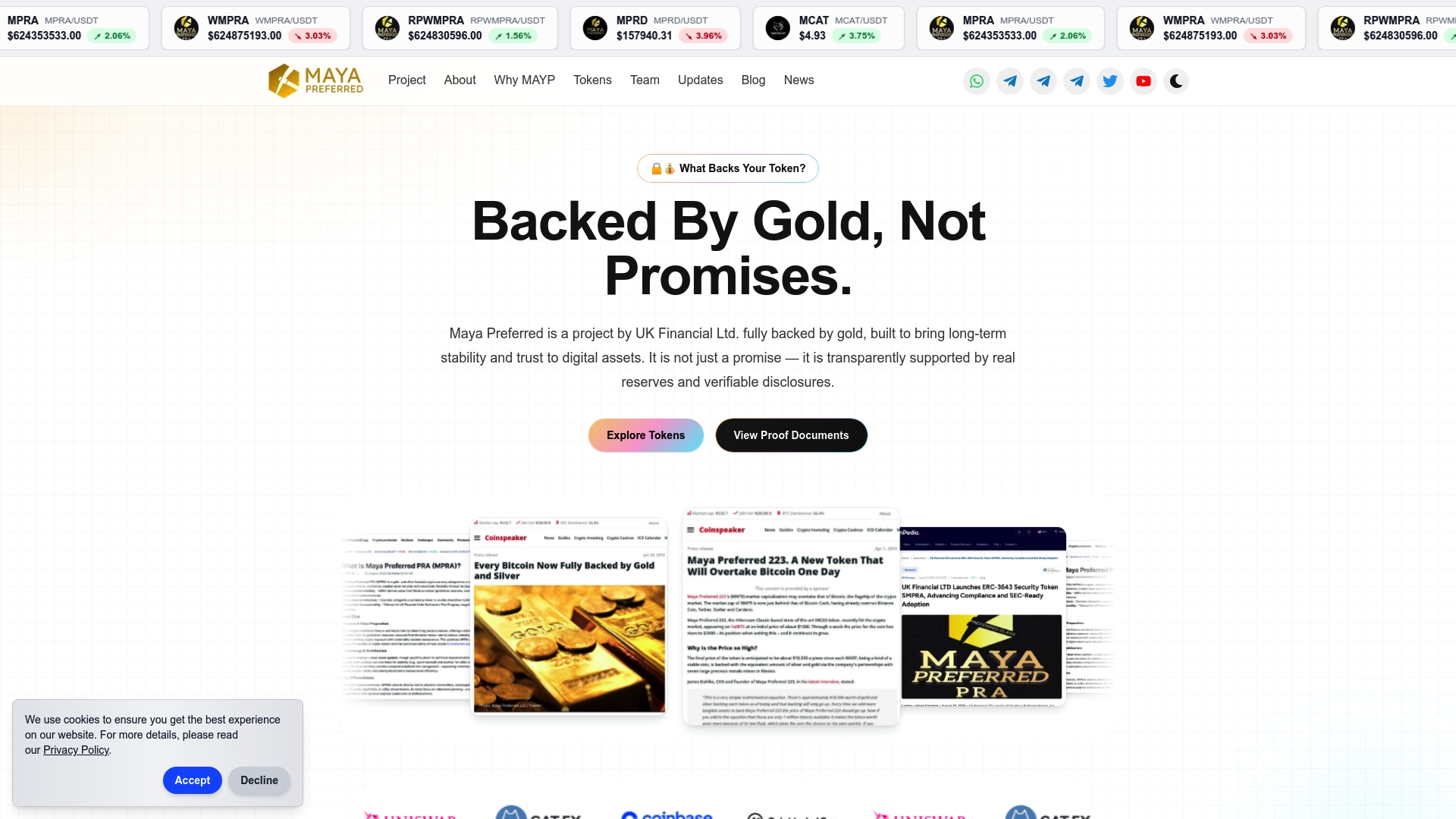
Don’t settle for uncertain digital investments. Visit Maya Preferred’s landing page now to review our comprehensive documentation, ongoing compliance updates, and community endorsements. Start investing in assets you can trust and verify with ease.
Frequently Asked Questions
How can I check the authenticity of a digital asset’s blockchain proof?
To verify the authenticity of a digital asset’s blockchain proof, review the complete transaction history, check the consensus mechanism, and validate cryptographic signatures. Start by examining the public ledger and confirming transaction patterns within the last 30 days.
What should I look for in an audit report when verifying digital asset backing?
When reviewing an audit report, focus on the auditor’s professional credentials, asset valuation methodology, and risk assessment framework. Request the full audit report to ensure you have comprehensive information about the asset’s financial health and significant disclosures.
What elements are crucial in reserve documentation when confirming asset backing?
Key elements include precise asset quantity measurements, detailed valuation methodologies, and professional verification credentials. Make sure to obtain reserve documentation that includes independent assessment reports within the last quarter to guarantee its reliability.
How do I verify the legal compliance of a digital asset?
To verify legal compliance, investigate the asset’s registration status with regulatory bodies and review relevant legal filings. Focus on obtaining and reviewing corporate governance documentation to confirm ownership rights and compliance within the last year.
Why are community and third-party endorsements important for digital assets?
Endorsements from reputable third parties add an additional layer of credibility by providing independent assessments of the digital asset. Seek endorsements from recognized organizations and compare their evaluations to substantiate the asset’s legitimacy and reliability status.
How can I monitor ongoing updates and transparency reports for my digital assets?
To continuously monitor updates, create a system for reviewing official communications and transparency reports from the asset project. Set up automated alerts for key disclosures to receive relevant information about your digital asset’s performance and governance decisions promptly.