
Asset-Backed Cryptocurrencies Explained: Real Value & Risks

Most traditional cryptocurrencies can swing by double-digit percentages in a single day, leaving even seasoned American investors craving more stability. The rush to find asset-backed cryptocurrencies with transparent gold and silver reserves is on, as North American and European investors want digital options that feel tangible and reliable. This guide uncovers how these tokens bridge technology with the timeless value of precious metals, offering strategies to help you invest with greater confidence.
Table of Contents
- What Are Asset-Backed Cryptocurrencies?
- Types of Asset-Backed Digital Tokens
- How Gold and Silver Reserve Backing Works
- Transparency, Audits, and Investor Protection
- Legal Framework and Compliance Standards
- Risks, Costs, and What Investors Should Avoid
Key Takeaways
| Point | Details |
|---|---|
| Asset-Backed Cryptocurrencies Reduce Volatility | These digital tokens are linked to real-world assets, providing stability compared to traditional cryptocurrencies. |
| Types of Asset-Backed Tokens | The four main categories include Fiat-Backed, Commodity-Backed, Crypto-Backed, and Algorithmic tokens, each with distinct characteristics. |
| Importance of Transparency and Audits | Strong transparency practices and regular audits are crucial for ensuring investor protection and verifying asset backing. |
| Investors Must Conduct Due Diligence | Thoroughly review reserve documentation, regulatory compliance, and the overall management structure before investing. |
What Are Asset-Backed Cryptocurrencies?
Asset-backed cryptocurrencies represent a sophisticated financial innovation designed to address the extreme volatility inherent in traditional digital currencies. Unlike conventional cryptocurrencies that fluctuate dramatically, these specialized tokens maintain stability by being directly linked to tangible, real-world assets such as gold, silver, or government-issued currencies.
The fundamental concept behind asset-backed cryptocurrencies involves creating digital tokens that derive their value from underlying physical reserves. Stablecoins are cryptocurrencies specifically designed to maintain a stable value relative to a specified asset, providing investors with a more predictable and reliable digital investment vehicle. These tokens function as critical bridges between traditional financial systems and emerging blockchain technologies, offering unprecedented transparency and reduced market speculation.
Most asset-backed cryptocurrencies operate through a straightforward mechanism: for every digital token issued, the issuing organization maintains an equivalent value in physical assets stored in secure, audited vaults. This approach provides several key advantages for investors:
- Direct Asset Representation: Each token represents a verifiable claim on a specific quantity of physical assets
- Reduced Volatility: Price stability derived from tangible asset reserves
- Enhanced Transparency: Regular audits and public documentation of asset holdings
- Lower Speculation Risk: Value tied to real-world assets rather than market sentiment
Investors seeking alternative digital assets find asset-backed cryptocurrencies particularly attractive because they combine the technological innovation of blockchain with the time-tested reliability of physical asset ownership. Unlike purely speculative cryptocurrencies, these tokens offer a more conservative approach to digital investing, appealing to those who want exposure to blockchain technology without extreme risk.
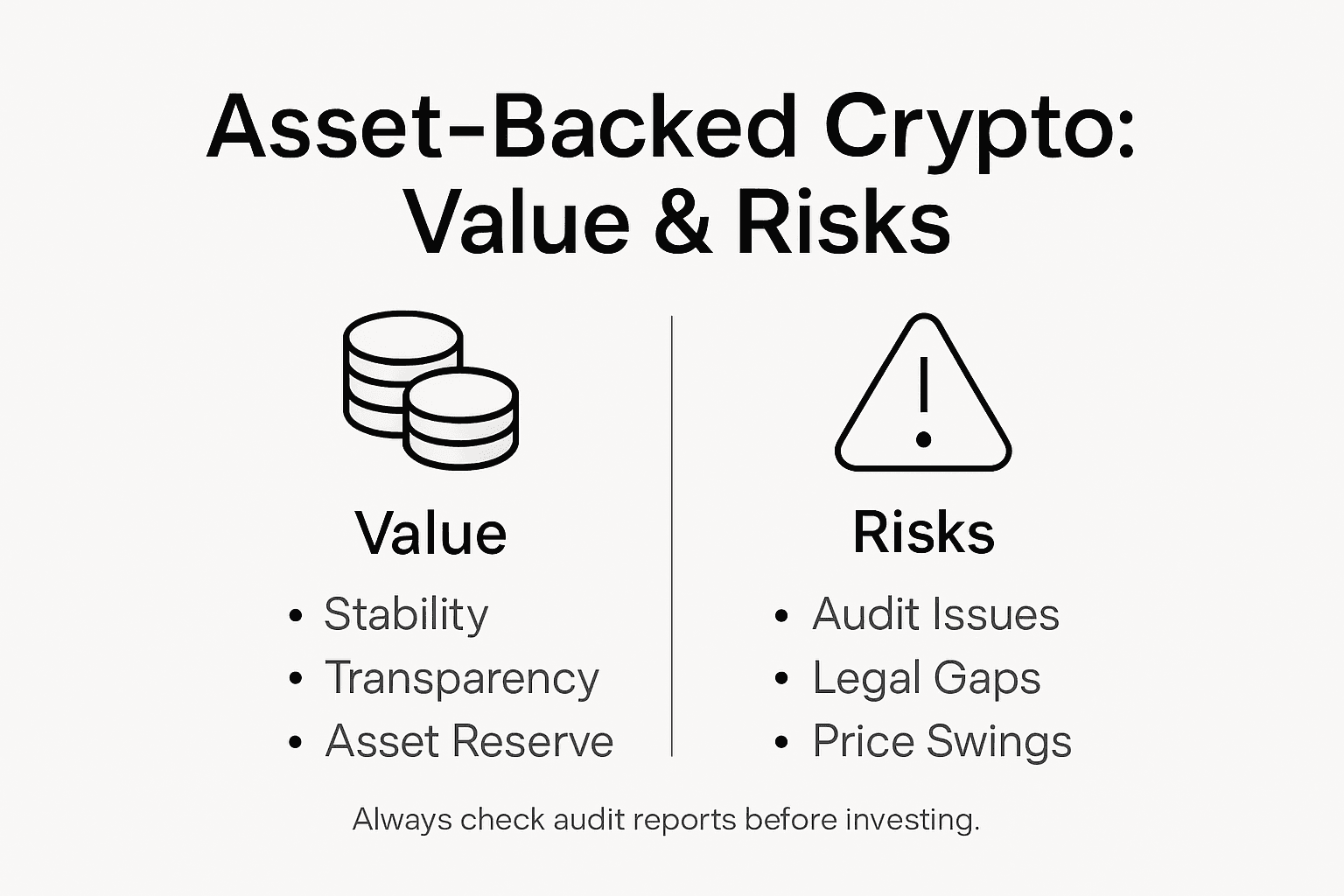
Pro tip: Before investing in any asset-backed cryptocurrency, always verify the organization’s asset reserves, audit documentation, and regulatory compliance to ensure the legitimacy of their backing mechanism.
Types of Asset-Backed Digital Tokens
Asset-backed digital tokens represent a diverse ecosystem of cryptocurrency innovations, each designed to provide unique stability mechanisms and investment opportunities. Stablecoins can be classified into four primary types based on their underlying asset backing and stability strategies, offering investors multiple approaches to digital asset investment.
The four primary categories of asset-backed digital tokens include:
-
Fiat-Backed Tokens: These digital assets maintain reserves in traditional government currencies like the US dollar or Euro. By holding equivalent cash reserves, these tokens provide direct price stability and low volatility.
-
Commodity-Backed Tokens: Directly linked to physical assets such as gold, silver, or other precious metals, these tokens represent a claim on a specific quantity of tangible resources. Investors appreciate these tokens for their intrinsic value and hedge against economic uncertainty.
-
Crypto-Backed Tokens: Utilizing other cryptocurrencies as collateral, these tokens maintain stability through over-collateralization strategies. They represent a more complex approach to digital asset backing, often requiring higher reserve ratios to manage potential market fluctuations.
-
Algorithmic Tokens: The most sophisticated category, these tokens use complex mathematical algorithms to dynamically adjust token supply, aiming to maintain price stability without direct asset reserves. The stablecoin industry has seen these tokens represent a smaller but innovative market segment, attracting technologically sophisticated investors.
Each token type offers distinct advantages and risks. Fiat and commodity-backed tokens provide the most straightforward stability, while crypto and algorithmic tokens offer more complex and potentially more volatile investment vehicles. Investors must carefully evaluate the specific backing mechanism, reserve transparency, and long-term stability potential of each token type.
Here’s a comparison of the four main types of asset-backed digital tokens and their key characteristics:
| Token Type | Reserve Asset | Stability Mechanism | Investor Profile |
|---|---|---|---|
| Fiat-Backed | Government currencies | Direct cash reserve | Risk-averse, seeking predictability |
| Commodity-Backed | Gold, silver, metals | Physical asset storage | Inflation hedgers, traditionalists |
| Crypto-Backed | Other cryptocurrencies | Over-collateralization | Tech-savvy, comfortable with volatility |
| Algorithmic | None (algorithmic) | Dynamic supply control | Innovative, high-risk tolerance |
Pro tip: Always conduct thorough due diligence by examining the specific reserve documentation, auditing processes, and regulatory compliance of any asset-backed digital token before making an investment.
How Gold and Silver Reserve Backing Works
Gold and silver reserve backing represents a sophisticated approach to creating stable digital assets with tangible economic foundations. Stablecoins backed by precious metals maintain their value by holding physical metal reserves at a precise one-to-one ratio with issued tokens, providing investors with a unique blend of digital flexibility and traditional asset security.
The mechanics of gold and silver reserve backing involve several critical components:
- Physical Asset Storage: Verified quantities of gold or silver are securely stored in professional vault facilities, with each token representing a direct claim on a specific weight of precious metal
- Regular Auditing: Independent third-party auditors conduct frequent inspections to confirm the existence and quantity of reserved metals
- Transparent Reporting: Detailed documentation tracks the exact relationship between digital tokens and physical metal reserves
- Redemption Mechanisms: Token holders typically have the option to exchange their digital assets for physical metal if desired
The commercial viability of these asset-backed tokens depends on maintaining clear use cases and sustainable business models, which requires meticulous management of reserve ratios and ongoing transparency. Unlike traditional cryptocurrencies that fluctuate based on market speculation, gold and silver-backed tokens derive their stability from the intrinsic value of physical assets.
Investors are attracted to these tokens because they offer several unique advantages. The precious metal reserves provide a natural hedge against currency inflation, while the blockchain technology ensures rapid, secure transactions. The tangible backing reduces the speculative volatility common in unanchored cryptocurrencies, making these tokens an attractive option for risk-averse digital asset investors.

Pro tip: Before investing in any gold or silver-backed cryptocurrency, carefully review the token’s reserve documentation, verify the credibility of storage facilities, and confirm the frequency and transparency of independent audits.
For investors evaluating gold and silver-backed cryptocurrencies, here is a summary of critical due diligence factors:
| Factor | Why It Matters | What to Look For |
|---|---|---|
| Vault Accreditation | Ensures secure storage | Third-party certifications |
| Audit Frequency | Confirms asset reserves | Regular, independent audit reports |
| Redemption Options | Access to physical assets | Clear and workable redemption process |
| Transparency Level | Verifies backing claims | Detailed public reporting |
Transparency, Audits, and Investor Protection
Investor protection in the asset-backed cryptocurrency ecosystem hinges critically on rigorous transparency and comprehensive audit mechanisms. The Stablecoin Transparency and Accountability for a Better Ledger Economy (STABLE) Act proposes a comprehensive regulatory framework mandating precise reserve reporting and accountability, signaling a major shift towards enhanced investor safeguards.
Key components of effective transparency and investor protection include:
- Mandatory Reserve Verification: Requiring issuers to maintain reserves equivalent to total issued tokens
- Independent Third-Party Audits: Regular examinations by registered accounting firms to confirm asset backing
- Executive Accountability: Requiring corporate leadership to certify financial reports under legal penalty
- Monthly Public Reporting: Detailed disclosures tracking token reserves and asset compositions
Blockchain technology plays a critical role in enhancing audit efficiency through automated transaction verification and continuous cryptographic monitoring. However, significant technical risks remain, including potential vulnerabilities in consensus mechanisms and existing regulatory gaps that could compromise investor protections.
The most sophisticated asset-backed cryptocurrency projects differentiate themselves through exceptional transparency practices. This includes providing real-time reserve information, enabling independent verification of asset holdings, and maintaining clear redemption protocols. Investors should look for projects that go beyond minimal regulatory requirements, offering unprecedented visibility into their asset management strategies and financial health.
Pro tip: Always request and thoroughly review a project’s most recent independent audit report, examining not just the headline numbers but the detailed methodologies and verification processes underlying the asset-backed token’s claims.
Legal Framework and Compliance Standards
The regulatory landscape for asset-backed cryptocurrencies is rapidly evolving, with government agencies working to establish comprehensive oversight mechanisms. Recent developments in U.S. regulatory agencies, including the Securities and Exchange Commission, are focused on creating clear regulatory frameworks for digital assets, signaling a significant shift towards more structured governance of cryptocurrency markets.
Key components of the emerging legal and compliance framework include:
- Comprehensive Asset Reporting: Detailed documentation requirements for token issuers
- Consumer Protection Mechanisms: Enhanced safeguards against fraudulent activities
- Anti-Money Laundering (AML) Compliance: Stringent verification processes for token transactions
- Reserve Requirement Regulations: Mandatory maintenance of asset reserves matching issued tokens
The International Monetary Fund has outlined global policy frameworks emphasizing the critical need for coordinated international regulation, with primary focus on ensuring consumer protection, financial stability, and comprehensive compliance measures. These frameworks address systemic risks while attempting to balance regulatory oversight with technological innovation.
The most advanced asset-backed cryptocurrency projects are proactively adopting compliance standards that exceed minimal regulatory requirements. This approach involves implementing robust internal controls, maintaining transparent reporting mechanisms, and developing sophisticated risk management strategies. Investors should prioritize platforms that demonstrate a commitment to regulatory compliance, as this indicates a more mature and responsible approach to digital asset management.
Pro tip: Carefully review a cryptocurrency project’s compliance documentation, paying special attention to their AML policies, reserve verification processes, and regulatory certifications before making any investment decisions.
Risks, Costs, and What Investors Should Avoid
Asset-backed cryptocurrencies, while offering enhanced stability compared to traditional digital currencies, still present significant investment risks that require careful consideration. The Bank for International Settlements identifies multiple critical risk categories investors must understand before committing capital, ranging from market volatility to operational vulnerabilities.
Key risks investors should be aware of include:
- Market Risk: Potential price fluctuations despite asset backing
- Liquidity Risk: Challenges in converting tokens to physical assets or cash
- Cybersecurity Threats: Potential breaches of digital infrastructure
- Governance Risks: Potential mismanagement or lack of transparent reporting
- Regulatory Uncertainty: Evolving legal frameworks that could impact token value
The U.S. Department of the Treasury warns investors about complex risks associated with crypto assets, including fraud, theft, and information asymmetry. These risks are particularly pronounced in less regulated markets, where investor protections may be minimal. Sophisticated investors must conduct extensive due diligence, examining not just the asset backing, but the entire ecosystem surrounding the token.
Investors should be particularly cautious of projects displaying red flags such as lack of transparent auditing, unclear redemption mechanisms, or inconsistent reserve documentation. The most prudent approach involves thoroughly investigating a project’s governance structure, understanding its underlying asset composition, and verifying the credibility of its management team. While asset-backed cryptocurrencies offer more stability than traditional crypto investments, they are not without risk.
Pro tip: Always allocate no more than 5-10% of your investment portfolio to asset-backed cryptocurrencies, and continuously monitor the project’s regulatory compliance, asset reserves, and market performance.
Discover Stability and Transparency with Gold and Silver-Backed Tokens
The article highlights the challenges of volatile cryptocurrencies and the critical need for real asset backing like gold and silver to secure investor trust and reduce risk. If you are looking to move beyond speculation and gain confidence through transparent, verifiable reserves and regular audits, Maya Preferred offers a clear solution. Our blockchain-based project connects you directly with tokens backed by tangible assets, providing stability and peace of mind in your digital investments.
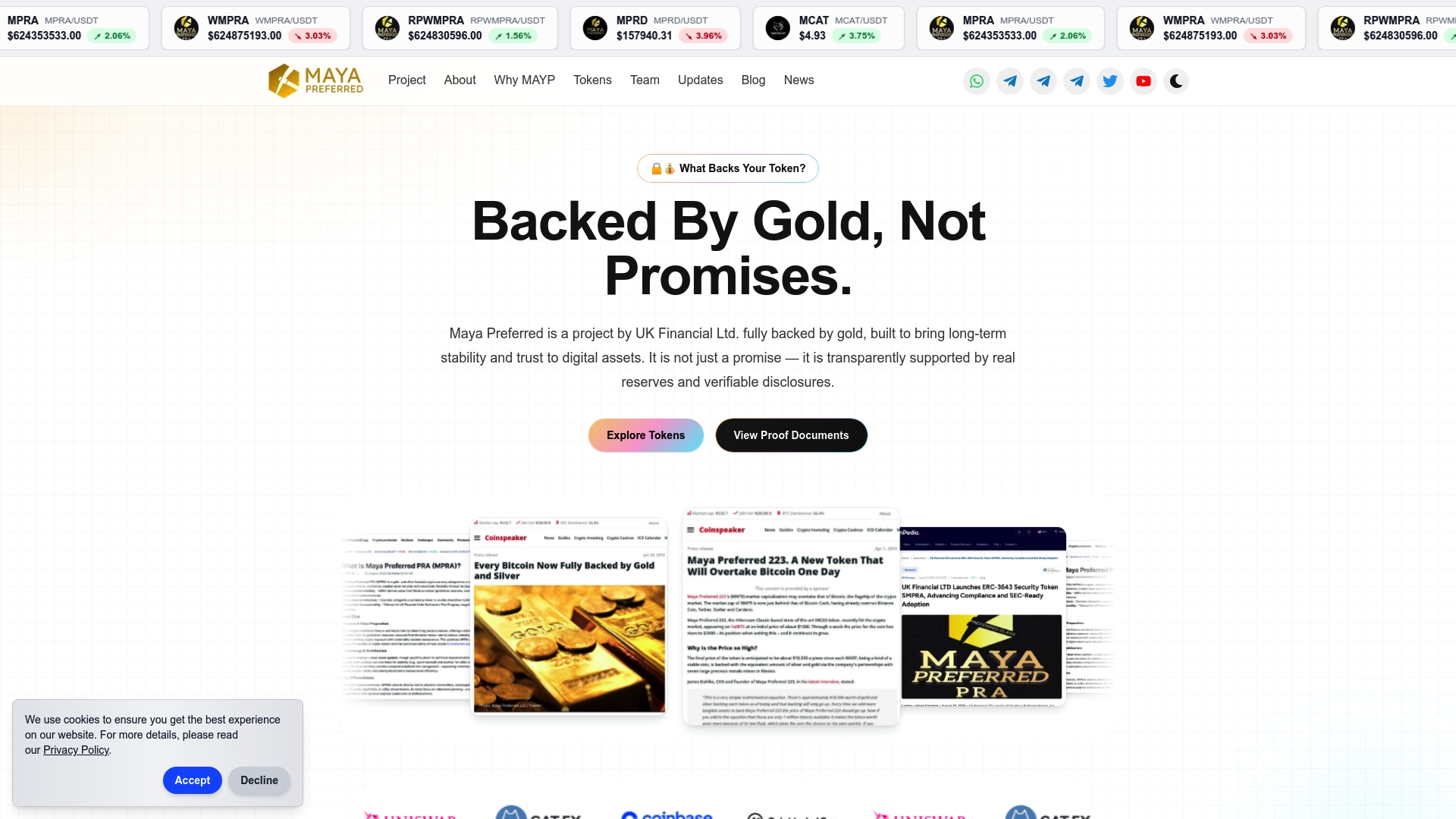
Explore how MPRA, MPRD, and MCAT tokens combine the security of precious metals with innovative blockchain technology. Visit Maya Preferred to access full reserve disclosures, audit documents, and detailed project information. Join a community focused on accountability, regulatory compliance, and long-term value. Take control of your investment portfolio today by investing in asset-backed cryptocurrencies that deliver real value and transparency.
Learn more about our approach and start your journey towards safer digital asset investments at Maya Preferred.
Frequently Asked Questions
What are asset-backed cryptocurrencies?
Asset-backed cryptocurrencies are digital tokens designed to maintain stability by being directly linked to real-world assets, such as gold, silver, or fiat currencies, which reduces their volatility compared to traditional cryptocurrencies.
How do gold and silver reserve-backed tokens work?
Gold and silver reserve-backed tokens represent a specific claim on physical quantities of these precious metals, ensuring that for every token issued, there is an equivalent amount securely stored in vaults, providing intrinsic value and reduced price fluctuations.
What are the types of asset-backed digital tokens?
There are four primary types of asset-backed digital tokens: fiat-backed tokens, which are backed by government currencies; commodity-backed tokens, which are linked to physical assets like gold or silver; crypto-backed tokens, which use other cryptocurrencies as collateral; and algorithmic tokens, which maintain stability through dynamic supply adjustments without direct asset reserves.
What are the risks associated with investing in asset-backed cryptocurrencies?
Investing in asset-backed cryptocurrencies carries risks such as market volatility, liquidity challenges, cybersecurity threats, governance issues, and regulatory uncertainties that can affect the value and performance of these digital assets.