
Benefits of Asset-Backed Tokens for Modern Investors

Most American investors want more than just hype from the digital asset market. Around 70 percent of North American portfolio owners now seek gold and silver-backed cryptocurrencies as a way to combine blockchain innovation with tangible value. This growing demand highlights the importance of transparency and stability in the search for reliable alternatives. Discover how asset-backed tokens create new opportunities for people who value both security and flexible access to physical gold and silver.
Table of Contents
- Asset-Backed Tokens Defined And Debunked
- Types: Gold, Silver, Hybrid, And Utility
- How Asset-Backed Tokens Maintain Stability
- Transparency, Audits, And Investor Protections
- Risks, Costs, And Legal Compliance Compared To Alternatives
Key Takeaways
| Point | Details |
|---|---|
| Understanding Asset-backed Tokens | They create opportunities for fractional ownership of real-world assets, bridging traditional finance with blockchain. |
| Types of Tokens | Investors can choose from Gold-backed, Silver-backed, Hybrid, and Utility tokens, each designed for various investment needs. |
| Stability and Transparency | These tokens utilize full collateralization and blockchain technology for stability, ensuring transparency through rigorous audits. |
| Regulatory Compliance | Navigating the legal landscape is vital; potential investors should ensure a comprehensive understanding of regulations and risks involved. |
Asset-backed tokens defined and debunked
Asset-backed tokens represent a revolutionary approach to digital investment that bridges traditional financial assets with blockchain technology. These digital representations transform physical assets like real estate, precious metals, or commodities into tradable tokens, allowing investors unprecedented access to fractional ownership. Asset-backed cryptocurrency tokens fundamentally change how we perceive investment opportunities by providing liquidity and transparency in markets traditionally restricted to institutional investors.
At their core, asset-backed tokens function by dividing tangible assets into smaller, more accessible digital units. This tokenization process enables investors to purchase fractional shares of high-value assets that were previously challenging to acquire. Unlike traditional cryptocurrencies which derive value from speculation, these tokens are directly connected to real-world assets, offering a more stable and transparent investment mechanism. Digital asset representation allows investors to gain exposure to valuable assets without managing physical ownership, reducing complexity and transaction costs.
The key advantages of asset-backed tokens include enhanced liquidity, reduced barriers to entry, and increased market accessibility. Investors can now trade portions of assets like gold, real estate, or art with minimal friction, enabling more diverse and flexible investment strategies. Blockchain technology ensures each token’s authenticity, ownership history, and underlying asset connection through immutable, transparent records. This approach democratizes investment opportunities, allowing smaller investors to participate in markets traditionally reserved for high-net-worth individuals or institutional entities.
Pro tip: Before investing in asset-backed tokens, always verify the credibility of the token issuer and conduct thorough due diligence on the underlying asset’s documentation and valuation.
Types: Gold, silver, hybrid, and utility
Asset-backed tokens represent a diverse ecosystem of digital investment instruments, each designed to serve specific investor needs and market segments. Tokenized assets encompass multiple categories, ranging from security tokens to utility tokens, providing investors with unprecedented flexibility in digital asset management. Understanding these distinct token types allows investors to make more informed and strategic investment decisions tailored to their financial goals.
Gold and Silver Tokens are among the most popular asset-backed digital instruments, offering investors direct exposure to precious metals without the logistical challenges of physical ownership. These tokens are typically backed by physical gold or silver reserves stored in secure vaults, with each token representing a specific fractional ownership of the underlying metal. Investors can benefit from the stability of precious metals while enjoying the liquidity and ease of digital trading. Hybrid Tokens combine characteristics of multiple asset types, potentially integrating features of security tokens, utility tokens, and commodity-backed tokens to create more complex and versatile investment vehicles.

Utility tokens represent a unique category of digital assets designed to provide specific access or functionality within a blockchain ecosystem. Unlike purely speculative cryptocurrencies, these tokens grant holders rights to use particular products, services, or platforms. For example, a utility token might provide discounted access to a specific blockchain service or enable participation in a decentralized network’s governance. This approach creates a more tangible and purpose-driven digital asset that goes beyond traditional investment models, offering investors practical utility alongside potential financial returns.
Pro tip: Always conduct comprehensive due diligence on the specific backing assets and regulatory compliance of any token before making an investment decision.
The following table highlights the main types of asset-backed tokens and their distinctive features for investors:
| Token Type | Underlying Asset | Investment Purpose | Liquidity Level |
|---|---|---|---|
| Gold-backed | Physical gold reserves | Portfolio stability, inflation hedge | High (digital trading) |
| Silver-backed | Physical silver reserves | Precious metal exposure | High |
| Hybrid | Multiple asset classes | Diversified, flexible investment | Variable (depends on assets) |
| Utility | Platform access/services | Functional benefits, user engagement | High (ecosystem-based) |
How asset-backed tokens maintain stability
Asset-backed tokens utilize sophisticated mechanisms to provide unprecedented stability in the volatile digital asset marketplace. Stablecoins employ multiple strategies to maintain consistent value, addressing the fundamental volatility challenges that plague traditional cryptocurrencies. By anchoring digital tokens to tangible, real-world assets, investors gain a reliable financial instrument that bridges the gap between traditional and digital investment paradigms.
The primary stabilization method involves full collateralization, where each token is directly backed by a specific quantity of physical assets such as gold, silver, or fiat currency. This approach ensures that the token’s value remains closely correlated with its underlying asset, providing a predictable and transparent investment vehicle. Partial collateralization represents another strategy, where tokens maintain value through a combination of reserved assets and algorithmic supply management. These sophisticated mechanisms allow for more flexible token economics while still providing a robust framework for price stability.
Blockchain technology further enhances the stability of asset-backed tokens by creating an immutable, transparent record of asset backing and token circulation. Asset-backed tokens link directly to real-world assets, enabling investors to track their investment’s underlying value with unprecedented precision. The combination of physical asset backing, algorithmic controls, and blockchain transparency creates a powerful alternative to traditional speculative cryptocurrencies, offering investors a more reliable and predictable digital asset investment strategy.
Pro tip: Investigate the specific collateralization ratio and asset verification processes before investing in any asset-backed token to ensure genuine value protection.
Transparency, audits, and investor protections
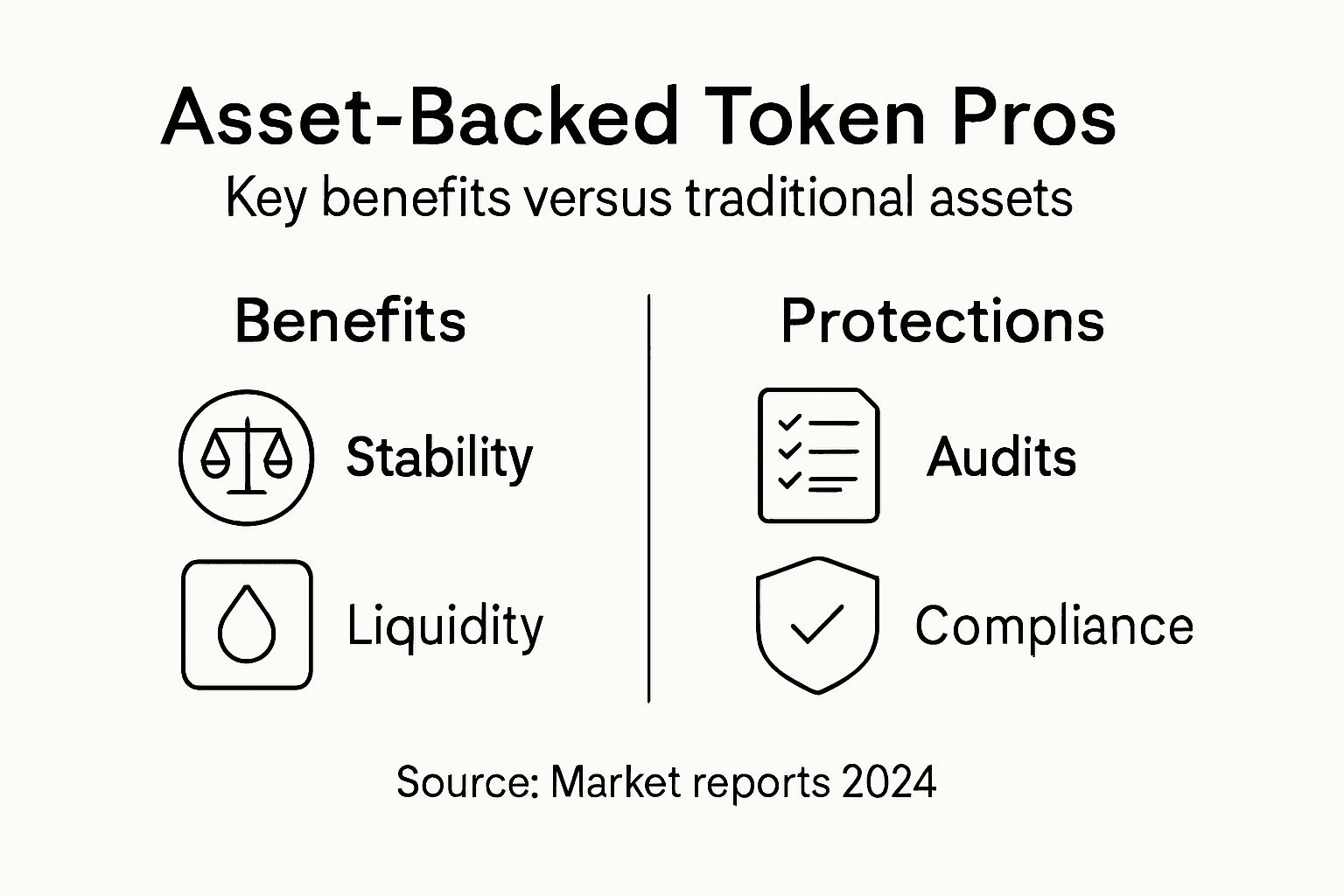
Investor confidence in digital assets fundamentally depends on rigorous transparency and comprehensive verification mechanisms. Transparent vault audits play a critical role in establishing trust by providing independent confirmation of physical asset reserves. These meticulous verification processes go beyond traditional financial reporting, offering real-time blockchain-enabled transparency that allows investors to instantly validate the underlying assets supporting their digital investments.
The audit process for asset-backed tokens involves multiple layers of verification, including physical asset inspections, comprehensive documentation reviews, and blockchain-based tracking systems. Independent auditors conduct thorough examinations of stored assets, ensuring that the claimed backing matches the token’s circulating supply. These audits typically involve detailed inventory checks, secure vault inspections, and cross-referencing documentation to guarantee the integrity of the asset-backed token ecosystem. Blockchain technology enhances this process by creating an immutable, publicly accessible record of asset ownership and movement.
Tokenized assets require specialized compliance approaches that address the unique challenges of digital asset markets. Robust anti-money laundering (AML) measures and know-your-customer (KYC) protocols provide additional layers of investor protection. These compliance frameworks help mitigate risks associated with digital assets, ensuring that token issuers maintain high standards of financial integrity and transparency. Advanced blockchain forensics and real-time monitoring tools enable unprecedented levels of investor protection, transforming how financial oversight is conducted in the digital asset space.
Pro tip: Always request and carefully review the most recent independent audit reports and verify the token issuer’s compliance certifications before making any investment.
Risks, costs, and legal compliance compared to alternatives
Navigating the complex landscape of asset-backed tokens requires a nuanced understanding of their legal and financial implications. Tokenised assets present intricate legal frameworks that differ significantly from traditional investment vehicles. These digital assets can be categorized into complete and incomplete tokenization models, each carrying distinct legal rights, transferability challenges, and compliance considerations that directly impact investor risk and potential returns.
Regulatory compliance represents a substantial cost and complexity factor for asset-backed tokens. Unlike conventional financial instruments, these digital assets must navigate multiple layers of regulatory oversight. European Union’s MiCA regulation exemplifies the evolving landscape, mandating rigorous transparency, reserve backing, and governance requirements. These compliance measures introduce significant operational costs but simultaneously provide enhanced investor protection and market stability compared to less regulated alternatives such as traditional cryptocurrencies or unstructured investment products.
The risk profile of asset-backed tokens differs markedly from conventional investment instruments. While they offer greater stability through physical asset backing, investors must carefully evaluate jurisdiction-specific legal structures, potential redemption mechanisms, and the technical infrastructure supporting the token. Factors such as the completeness of legal rights, the robustness of asset-backing mechanisms, and the transparency of reserve management play crucial roles in determining the overall risk and investment potential. Blockchain technology provides an additional layer of security and transparency, but does not eliminate the fundamental need for thorough due diligence and understanding of the token’s specific legal and economic characteristics.
Pro tip: Consult with a legal professional specializing in digital asset regulations to comprehensively understand the specific compliance requirements and potential risks associated with asset-backed tokens in your jurisdiction.
Here’s a comparison of asset-backed tokens vs. traditional investment options in terms of risk, legal structure, and transparency:
| Factor | Asset-backed Tokens | Traditional Investments |
|---|---|---|
| Risk Level | Lower (due to asset backing) | Varies, often market-based |
| Legal Structure | Complex, evolving regulations | Established legal frameworks |
| Transparency | Blockchain-enabled, real-time | Periodic reporting, often limited |
| Investor Protection | Audit and compliance focused | Regulated protections |
Unlock the Power of Asset-Backed Tokens for a Stable Investment Future
Investors face challenges like volatility, transparency concerns, and complex legal frameworks when exploring digital assets. The article highlights how asset-backed tokens offer stability by tying value to real-world assets such as gold and silver, reducing risk, and enhancing trust through full collateralization and independent audits. If you seek low-risk exposure to precious metals with the benefits of blockchain transparency and liquidity, Maya Preferred provides a proven solution. Our gold and silver-backed tokens including MPRA, MPRD, and MCAT offer clear proof of reserves and comprehensive compliance, ensuring you gain both stability and confidence in your portfolio.
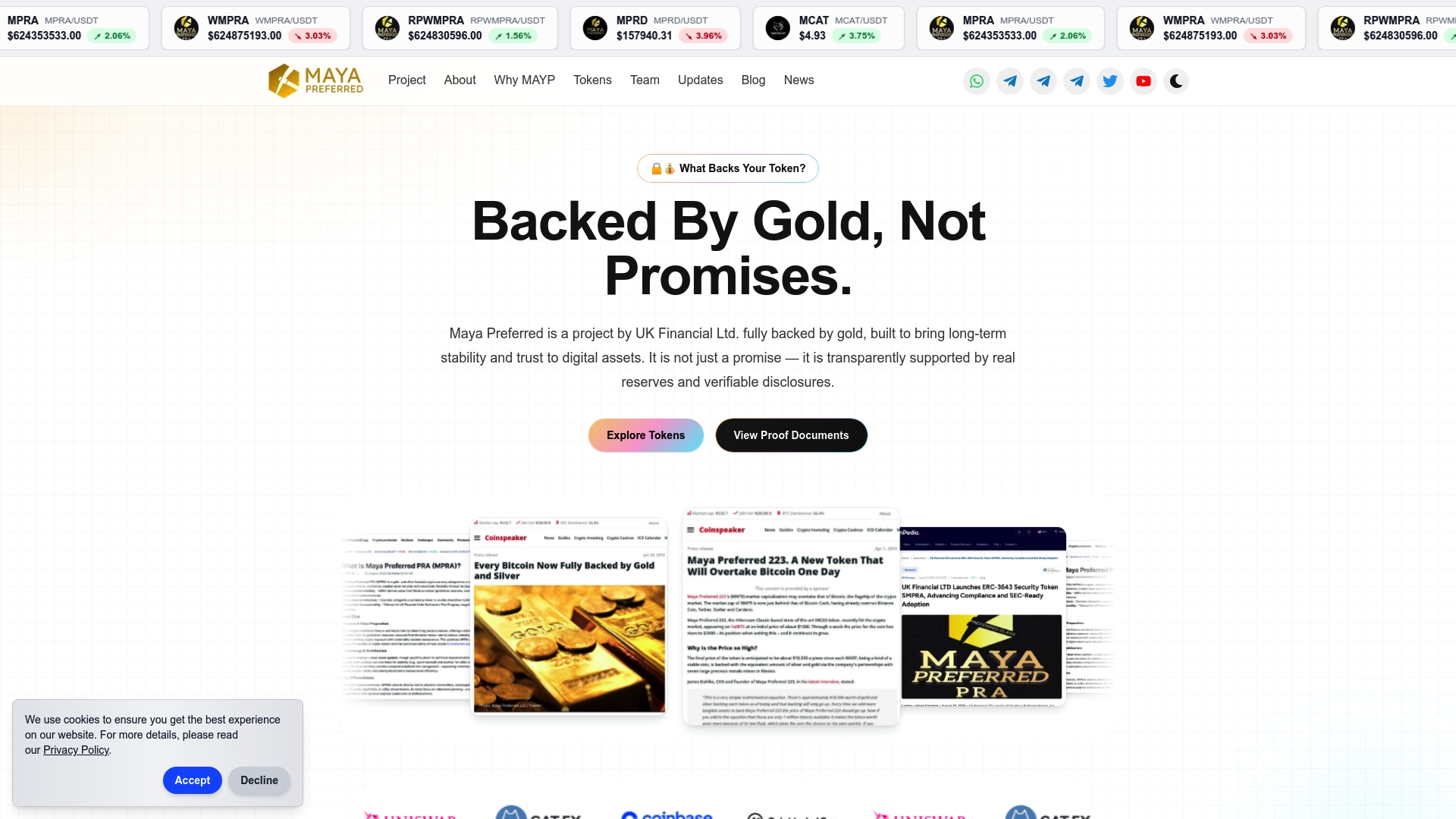
Explore how Maya Preferred bridges traditional precious metals investment with innovative blockchain technology. Visit our official site for detailed proofs of asset backing and regulatory information. Jumpstart your journey with asset-backed cryptocurrencies designed for transparency and long-term stability at Maya Preferred. Discover the future of secure investing and be part of a trusted community that values real assets and rigorous disclosures.
Frequently Asked Questions
What are asset-backed tokens?
Asset-backed tokens are digital representations of physical assets like real estate, precious metals, or commodities, allowing investors to engage in fractional ownership and gain liquidity in traditionally restricted markets.
How do asset-backed tokens provide stability compared to traditional cryptocurrencies?
Asset-backed tokens maintain stability by being fully or partially collateralized by tangible assets, which helps ensure their value is closely correlated with the underlying asset rather than subject to the volatility common in traditional cryptocurrencies.
What are the benefits of investing in gold-backed and silver-backed tokens?
Gold-backed and silver-backed tokens offer investors exposure to precious metals without the hassles of physical ownership, providing the advantages of liquidity, portfolio stability, and a hedge against inflation.
Why are audits and transparency important for asset-backed tokens?
Audits and transparency are crucial for asset-backed tokens as they build investor confidence by verifying the physical assets backing the tokens through independent inspections and comprehensive documentation reviews, ensuring that investors can trust the integrity and value of their investments.