
Master Cryptocurrency Portfolio Diversification Process for Stability

Gold and silver-backed cryptocurrencies are gaining attention among investors frustrated by sudden swings in the digital asset market. As shifting volatility continues to challenge portfolio stability, the search for effective diversification tools grows more urgent. This guide explains how a strategic approach to asset-backed tokens, especially those backed by precious metals, can help build a more resilient portfolio and lower the anxiety often fueled by unpredictable price movements. Stay informed and discover how these unique assets can support your investment goals.
Table of Contents
- Step 1: Assess Current Holdings And Risk Profile
- Step 2: Identify Suitable Asset-Backed Cryptocurrencies
- Step 3: Allocate Funds Across Gold And Silver-Backed Tokens
- Step 4: Verify Diversification Through Portfolio Analysis
- Step 5: Monitor Market Conditions And Rebalance Regularly
Quick Summary
| Key Insight | Explanation |
|---|---|
| 1. Assess Your Holdings | Regularly evaluate your cryptocurrency assets and understand your risk tolerance. This sets the foundation for a successful portfolio strategy. |
| 2. Choose Asset-Backed Tokens | Focus on selecting cryptocurrencies backed by real-world assets for stability and reduced volatility. Use transparent criteria for selection. |
| 3. Maintain a Strategic Allocation | Allocate funds primarily to gold-backed tokens, as they provide lower volatility and better security against market fluctuations. |
| 4. Regularly Verify Diversification | Conduct systematic portfolio analysis quarterly to ensure effective diversification and adjust based on performance metrics. |
| 5. Monitor and Rebalance Frequently | Stay vigilant on market conditions and schedule regular portfolio rebalancing to align with your financial goals and risk profile. |
Step 1: Assess current holdings and risk profile
Successfully managing your cryptocurrency portfolio begins with a comprehensive assessment of your existing digital assets and understanding your personal risk tolerance. By carefully evaluating your current holdings and risk profile, you can develop a strategic approach to diversification that protects your investments.
Starting with a detailed inventory of your cryptocurrency assets requires methodical tracking. Use spreadsheet software or specialized portfolio management tools to log each token’s current value, acquisition price, and percentage of your total portfolio. Pay special attention to advanced volatility stress testing models that can help you understand potential market fluctuations. Your analysis should include key metrics like:
- Current market value of each cryptocurrency
- Purchase price and date
- Percentage allocation in your portfolio
- Historical performance trends
- Correlation between different assets
Risk assessment goes beyond simple number crunching. It involves understanding your personal financial goals, investment horizon, and comfort level with potential market volatility. Cryptocurrency risk integration studies demonstrate that different digital assets carry unique risk profiles. Some cryptocurrencies might offer better risk management characteristics than others, depending on their underlying technology and market behavior.
Your risk tolerance is not static – it evolves with your financial situation and market conditions.
To determine your risk profile, consider factors like your age, income stability, existing investment portfolio, and financial objectives. Are you a conservative investor seeking minimal volatility, or are you comfortable with higher-risk, potentially higher-reward assets?
Pro tip: Conduct a quarterly review of your cryptocurrency holdings to ensure your portfolio remains aligned with your risk tolerance and financial goals.
Step 2: Identify suitable asset-backed cryptocurrencies
Identifying the right asset-backed cryptocurrencies is crucial for building a stable and resilient investment portfolio. This step involves carefully evaluating different types of tokenized assets that provide real-world value and reduce overall portfolio volatility.
Begin by understanding the core categories of asset-backed cryptocurrencies. Empirical research on stablecoins highlights three primary types: fiat-backed, commodity-backed, and crypto-backed tokens. Focus on those with transparent backing mechanisms and clear verification processes. Your selection criteria should include:
- Verifiable asset reserves
- Regulatory compliance
- Liquidity and trading volume
- Historical price stability
- Mechanism for asset redemption
Cryptocurrency risk integration studies reveal that not all asset-backed cryptocurrencies offer the same risk management benefits. USD-backed stablecoins tend to provide more consistent price stability, while gold-backed tokens might introduce additional market complexity during economic fluctuations.

Here’s a comparison of the three main types of asset-backed cryptocurrencies:
| Type | Example Asset | Risk Profile | Common Use Case |
|---|---|---|---|
| Fiat-backed | U.S. Dollar | Low volatility | Price stability |
| Commodity-backed | Gold, Silver | Moderate volatility | Inflation hedge |
| Crypto-backed | Ether, Bitcoin | Higher volatility | Decentralized collateral |
Asset-backed cryptocurrencies are not a monolithic category – each carries unique risk characteristics.
Carefully examine the underlying assets, audit reports, and regulatory environment for each potential investment. Look for tokens with robust third-party verification, regular financial disclosures, and a clear redemption process that demonstrates genuine asset backing.
Pro tip: Prioritize asset-backed cryptocurrencies with comprehensive, transparent documentation and frequent, independently verified asset reserve reports.
Step 3: Allocate funds across gold and silver-backed tokens
Allocating your cryptocurrency portfolio funds across gold and silver-backed tokens requires a strategic approach that balances risk management and potential returns. This critical step helps you create a more stable investment strategy that leverages the unique benefits of precious metal-backed digital assets.
Precious metal-backed stablecoin research recommends a measured approach to diversifying across gold and silver tokens. Begin by establishing a core allocation strategy that considers your overall risk tolerance and investment goals. Typically, investors should consider the following distribution guidelines:
- Allocate 60-70% to gold-backed tokens
- Reserve 20-30% for silver-backed tokens
- Maintain 10% flexibility for rebalancing
Gold-backed cryptocurrency analysis demonstrates that these tokens provide unique diversification benefits, particularly during global economic uncertainties. Gold-backed tokens like PAXG offer lower correlation with traditional tech stocks, providing an additional layer of portfolio protection.
Precious metal-backed tokens are not just cryptocurrencies – they are strategic financial instruments.
Carefully evaluate each token’s backing mechanism, liquidity, and historical performance. Look for tokens with transparent asset reserves, regular audits, and clear redemption processes. Pay attention to the specific characteristics of each token, including the purity of underlying metals, storage locations, and verification methods.
Pro tip: Regularly rebalance your gold and silver token allocations quarterly to maintain optimal portfolio stability and adapt to changing market conditions.
Step 4: Verify diversification through portfolio analysis
Verifying the effectiveness of your cryptocurrency portfolio diversification requires systematic analysis and strategic assessment. This crucial step helps you validate that your investment strategy is performing as expected and providing the desired risk mitigation benefits.
Mean-variance optimization techniques provide a robust framework for evaluating your portfolio’s performance. Begin by calculating key metrics that reveal your portfolio’s diversification effectiveness, including:
- Total portfolio volatility
- Correlation between different assets
- Risk-adjusted returns
- Downside risk potential
- Standard deviation of returns
Systematic cryptocurrency portfolio research emphasizes the importance of regular performance verification. Your analysis should go beyond simple return calculations and focus on understanding how each asset contributes to overall portfolio stability. Calculate the Sharpe ratio to measure risk-adjusted performance and assess whether your asset allocation strategy is delivering consistent results.
Diversification is not a one-time event but a continuous process of strategic assessment and refinement.
Pay close attention to the correlations between your gold and silver-backed tokens, traditional cryptocurrencies, and other assets. Look for opportunities to rebalance your portfolio when certain tokens demonstrate increased volatility or decreased performance relative to your initial investment strategy.
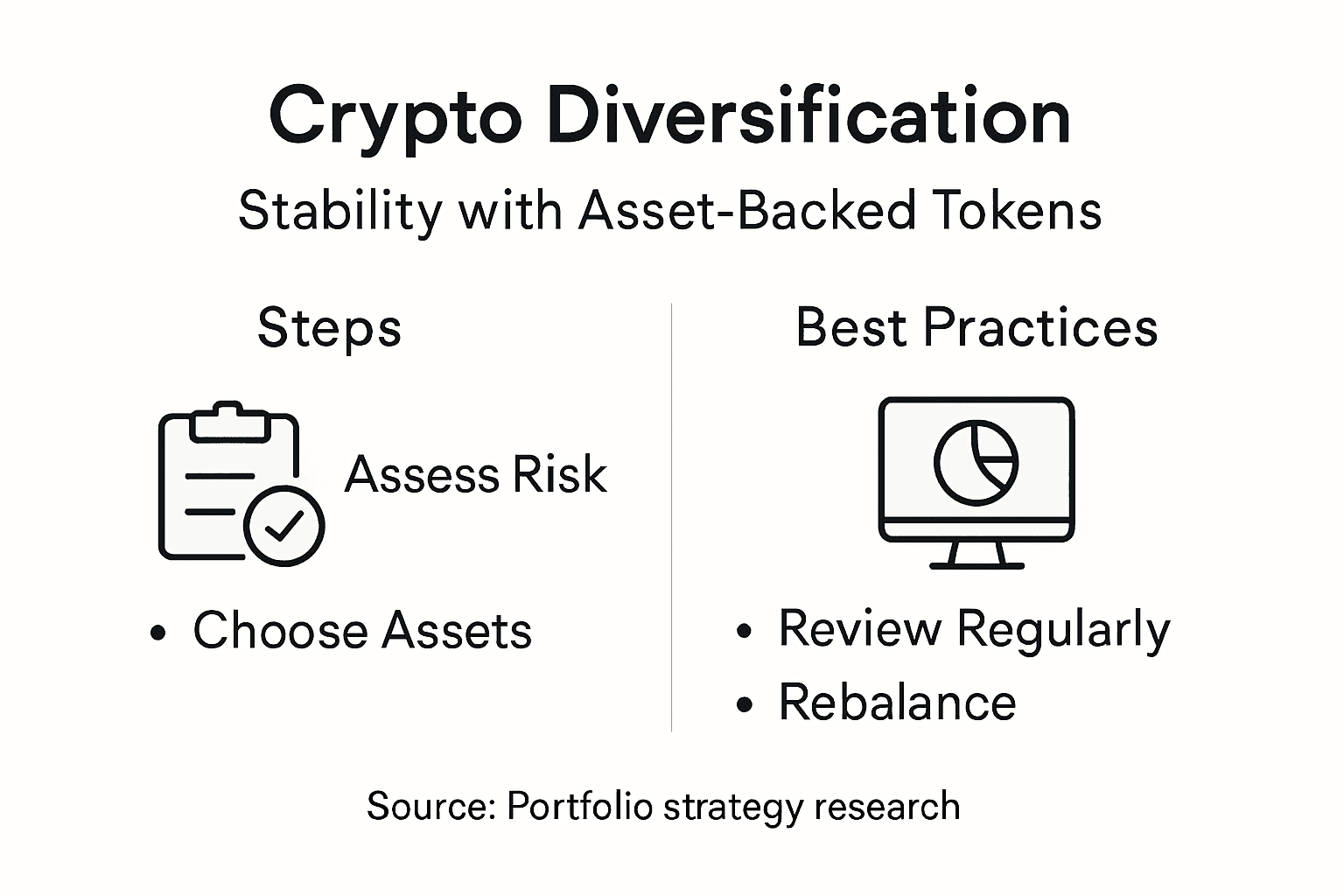
Pro tip: Conduct a comprehensive portfolio analysis quarterly and be prepared to make strategic adjustments based on your findings.
Step 5: Monitor market conditions and rebalance regularly
Successfully managing a cryptocurrency portfolio requires consistent monitoring and strategic adjustments to maintain optimal performance. This step focuses on developing a systematic approach to tracking market conditions and making timely rebalancing decisions that protect your investment.
Dynamic portfolio management research emphasizes the critical importance of frequent portfolio evaluation in volatile cryptocurrency markets. Implement a structured monitoring process that includes tracking key performance indicators and market trends. Your monitoring strategy should focus on:
- Price movements of individual tokens
- Overall market capitalization shifts
- Correlation between different asset classes
- Macroeconomic indicators affecting cryptocurrency markets
- Regulatory changes impacting digital assets
Cryptocurrency rebalancing strategies reveal that frequent performance assessment is crucial for maintaining portfolio stability. Consider establishing a consistent rebalancing schedule, with most research suggesting weekly or monthly reviews. During these reviews, compare your current asset allocation against your original strategy and make incremental adjustments to maintain your desired risk profile.
Key factors to monitor when rebalancing a crypto portfolio:
| Indicator | What It Reveals | Why It Matters |
|---|---|---|
| Asset correlation | Diversification effectiveness | Reduces portfolio risk |
| Market cap trends | Industry momentum | Identifies growth opportunities |
| Volatility spikes | Sudden market shifts | Triggers rebalancing decisions |
| Regulatory news | Policy impact | Adjusts risk exposure |
Market conditions change rapidly – your portfolio strategy must be equally dynamic.
Pay close attention to the performance of your gold and silver-backed tokens, comparing their behavior against traditional cryptocurrencies and broader market trends. Look for emerging patterns that might signal the need for strategic reallocations or shifts in your investment approach.
Pro tip: Set up automated alerts and tracking tools to help you monitor market conditions more efficiently and make data-driven rebalancing decisions.
Strengthen Your Crypto Portfolio with Transparent Gold and Silver-Backed Tokens
Navigating cryptocurrency portfolio diversification for stability requires trustworthy, asset-backed options that deliver real-world value. This article highlights the importance of assessing risk profiles and strategically allocating funds across precious metal-backed tokens like gold and silver. If your goal is to reduce volatility while maintaining growth potential, understanding the backing and transparency behind each token is critical. Many investors face challenges verifying asset reserves and regulatory compliance, which can lead to uncertainty and increased risk.
That is why Maya Preferred offers a blockchain-based platform focusing exclusively on gold and silver-backed digital assets, designed to bring clarity and confidence to your investment strategy. With detailed proof documents, audits, and ongoing disclosures, tokens such as MPRA, MPRD, and MCAT stand out by blending traditional precious metals stability with blockchain innovation. Explore how our transparent reserves and robust compliance can help you build a portfolio that aligns with your risk tolerance and long-term goals.
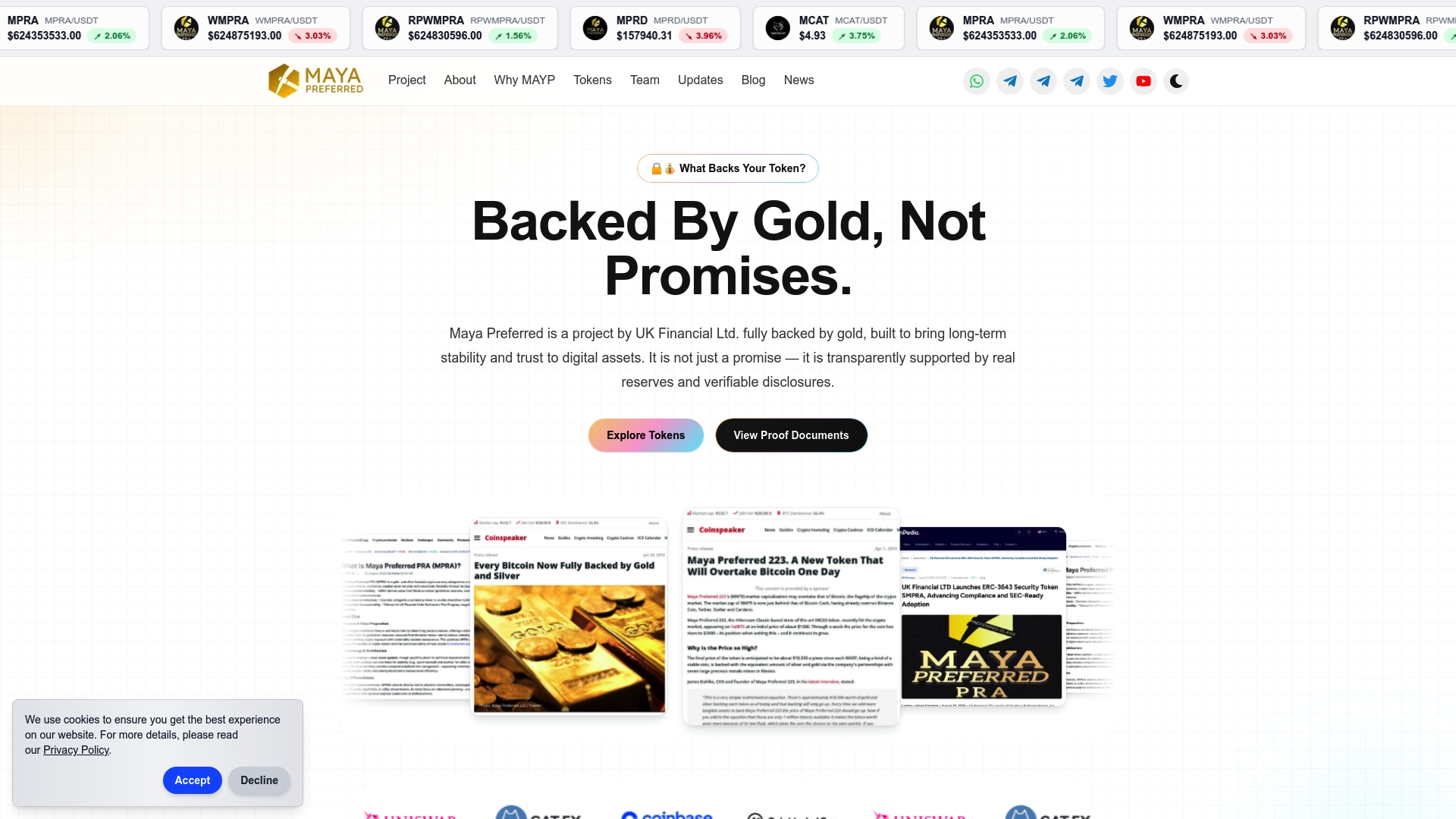
Begin mastering your cryptocurrency portfolio diversification today by visiting Maya Preferred and discover how asset-backed digital tokens can add the stability and trust your investments deserve. Act now to connect with a future where real assets empower your digital holdings.
Frequently Asked Questions
How can I assess my current cryptocurrency holdings for effective diversification?
To assess your current cryptocurrency holdings, create a detailed inventory that includes the current value, purchase price, and percentage of your total portfolio for each asset. Utilize spreadsheet software to track these metrics accurately and evaluate their historical performance trends.
What factors should I consider when determining my risk profile for cryptocurrency investments?
When determining your risk profile, consider your age, income stability, existing investments, and financial goals. This evaluation will help you align your investment strategy with your comfort level regarding market volatility.
How do I choose suitable asset-backed cryptocurrencies for my portfolio?
To choose suitable asset-backed cryptocurrencies, focus on those with transparent backing mechanisms, regulatory compliance, and verifiable asset reserves. Compare different types, such as fiat-backed, commodity-backed, and crypto-backed tokens, based on their historical price stability and risk characteristics.
What is the recommended allocation for gold and silver-backed tokens in my cryptocurrency portfolio?
A suggested allocation for your cryptocurrency portfolio is to allocate 60-70% to gold-backed tokens, 20-30% to silver-backed tokens, and keep 10% flexible for rebalancing. Adjust these percentages based on your risk tolerance and investment goals while maintaining a balanced approach.
How often should I monitor my cryptocurrency portfolio for effective rebalancing?
You should monitor your cryptocurrency portfolio frequently, ideally on a weekly or monthly basis, to assess performance and market conditions. During these reviews, compare your current asset allocation against your original strategy and make necessary adjustments to maintain your desired risk profile.
What key metrics should I calculate to verify my portfolio’s diversification effectiveness?
To verify your portfolio’s diversification effectiveness, calculate total portfolio volatility, correlations between assets, risk-adjusted returns, and downside risk potential. Regularly assess these metrics, such as calculating the Sharpe ratio, to ensure your asset allocation strategy is performing as expected.