
7 Essential Digital Asset Investment Tips for Security

Over $300 billion has already flowed into asset-backed digital tokens worldwide, reshaping how American and European investors manage their portfolios. As the demand for transparency and security grows, blockchain platforms are connecting real-world assets like gold and real estate to innovative tokens. This guide distills the essential strategies and checks for securing your investments with asset-backed tokens, ensuring you can confidently navigate digital assets while staying informed about compliance and market trends.
Table of Contents
- Understand Asset-Backed Digital Tokens
- Verify Real-World Asset Documentation
- Check Project Transparency And Audits
- Assess Token Utility And Use Cases
- Evaluate Market Stability And Liquidity
- Diversify Portfolio With Precious Metals Tokens
- Monitor Regulatory Updates And Compliance
Quick Overview
| Key Insight | Explanation |
|---|---|
| 1. Understand Asset-Backed Tokens | Asset-backed digital tokens link real-world assets to blockchain, providing secure ownership and trading mechanisms for investors. |
| 2. Verify Asset Documentation | Robust documentation is essential; ensure legal ownership, physical existence, and transferability to protect investments. |
| 3. Demand Project Transparency | Regular, independent audits and comprehensive disclosures build trust and reveal operational integrity, reducing investment risks. |
| 4. Assess Token Utility | Evaluate a token’s unique functionalities and problem-solving capabilities to ensure it offers genuine value beyond speculation. |
| 5. Monitor Regulatory Changes | Stay updated on evolving regulations and compliance standards in digital assets to safeguard investments and ensure legal adherence. |
1. Understand Asset-Backed Digital Tokens
Asset-backed digital tokens represent a revolutionary approach to connecting physical assets with blockchain technology. These unique digital instruments provide investors with a secure method of owning and trading real-world assets through blockchain platforms.
At their core, asset-backed tokens are digital representations of tangible assets like gold, real estate, or commodities, secured by blockchain’s transparent and immutable ledger. The European Parliament briefing highlights how these tokens bridge physical and digital asset ownership757580_EN.pdf), creating new opportunities for fractional investment and global accessibility.
Unlike traditional cryptocurrencies with volatile valuations, asset-backed tokens derive their value directly from underlying physical assets. This means each token represents a verifiable claim on a specific quantity of a real-world asset, providing investors with enhanced security and predictability. The EU’s Markets in Crypto-Assets regulation defines these tokens as asset-referenced tokens that maintain stable value by referencing tangible asset baskets.
Investors benefit from several key advantages with asset-backed digital tokens. These include increased transparency, lower transaction costs, faster international transfers, and the ability to own fractional shares of high-value assets that were previously inaccessible. By tokenizing assets, investors can diversify portfolios and access global markets with minimal barriers.
To effectively invest in asset-backed tokens, conduct thorough research on the token’s underlying assets, verify the issuer’s credibility, and understand the legal framework governing the specific token. Always examine the asset-to-token ratio, verify independent audits, and assess the liquidity and transferability of the digital asset.
Pro tip: Before investing in any asset-backed token, request and review the complete asset documentation, including proof of reserves, independent audit reports, and legal compliance certificates to ensure your investment’s legitimacy and security.
2. Verify Real-World Asset Documentation
Real-world asset documentation serves as the critical foundation for secure digital asset investments, providing investors with transparent proof of ownership and asset legitimacy. Rigorous verification processes protect your investment from potential fraud and ensure the credibility of tokenized assets.
Digital asset research highlights the essential role of comprehensive documentation in maintaining trust and regulatory compliance for blockchain-based asset tokenization. When evaluating digital tokens, investors must demand comprehensive documentation that clearly establishes the legal ownership, physical existence, and transferability of underlying assets.
Effective documentation verification involves several critical steps. Key documentation requirements include:
- Original property titles or ownership certificates
- Independent asset valuation reports
- Detailed physical asset descriptions
- Legal jurisdiction verification documents
- Current insurance and appraisal certificates
- Proof of asset location and custody arrangements
Investors should pay special attention to the chain of ownership and ensure all documentation is current, legally valid, and authenticated by recognized professional entities. The documentation must explicitly demonstrate how digital tokens directly connect to specific physical assets, providing a clear legal pathway for ownership transfer.
Advanced investors often request additional verification through third-party audits and compliance checks. Compliance guides emphasize implementing robust Know Your Customer (KYC) and Anti Money Laundering (AML) protocols to further validate asset documentation and investor credentials.
Pro tip: Always request and thoroughly review complete documentation packages, maintaining digital and physical copies of all verification materials to protect your investment and establish a clear legal trail of ownership.
3. Check Project Transparency and Audits
Project transparency and comprehensive auditing represent the cornerstone of secure digital asset investments, providing investors with critical insights into a project’s operational integrity and potential risks. Understanding how to evaluate these key elements can protect you from potential financial vulnerabilities.
Professional accounting organizations emphasize that specialized auditing skills are essential for assessing blockchain and digital asset projects. Investors must look beyond surface level information and demand rigorous, independent assessments of project infrastructure, security protocols, and regulatory compliance.
Key Audit Components to examine include:
- Technical infrastructure reviews
- Smart contract code audits
- Security vulnerability assessments
- Regulatory compliance documentation
- Financial transaction transparency reports
- Independent third party verification processes
Transparency goes far beyond simple financial disclosures. Investors should seek projects that provide comprehensive, regular, and easily accessible documentation about their operational processes, team qualifications, technological frameworks, and ongoing development strategies.
Blockchain audit processes help detect potential vulnerabilities early and maintain stakeholder confidence through systematic reviews. Advanced investors pay close attention to the frequency, depth, and credibility of audit reports, understanding that consistent external validation is a strong indicator of project reliability.
Pro tip: Request and thoroughly review at least two independent audit reports from recognized blockchain security firms before making any investment, ensuring the audits cover technical, financial, and regulatory aspects of the project.
4. Assess Token Utility and Use Cases
Token utility represents the fundamental purpose and functional value of a digital asset beyond simple financial speculation. Understanding a token’s specific use cases is critical for making informed investment decisions in the complex world of blockchain technologies.
The World Economic Forum highlights how tokenized assets are transforming digital ownership models by providing innovative mechanisms for investment, governance, and asset management. Sophisticated investors look beyond price fluctuations to evaluate the intrinsic utility and problem-solving potential of each token.
Key Token Utility Assessment Criteria include:
- Specific technological problem the token solves
- Unique functionality within its ecosystem
- Governance and voting rights
- Transaction efficiency and cost reduction
- Potential for long-term value generation
- Integration with existing technological infrastructures
Academic research reveals that token design fundamentally determines project success, with well-constructed tokens creating sustainable demand through innovative utility mechanisms. Tokens are not merely financial instruments but programmable assets that can represent ownership, facilitate transactions, enable governance participation, and create new economic interactions.
Investors should thoroughly examine the token’s whitepaper, technical documentation, and roadmap to understand its comprehensive utility framework. Look for tokens that demonstrate clear, measurable utility beyond speculative trading potential, with strong use cases that solve real-world challenges.
Pro tip: Evaluate a token’s utility by questioning whether its proposed solution is genuinely unique and cannot be easily replicated by traditional centralized systems, indicating true technological innovation.
5. Evaluate Market Stability and Liquidity
Market stability and liquidity are cornerstone metrics that determine the potential success and reliability of digital asset investments. Understanding how to assess these critical factors can protect investors from potential financial risks and volatile market conditions.
The International Monetary Fund provides crucial insights into how asset tokenization impacts financial market efficiency and potential systemic risks. Investors must look beyond surface level price movements to comprehensively evaluate an asset’s underlying market dynamics.
Key Liquidity and Stability Assessment Factors include:
- Trading volume across multiple exchanges
- Bid ask spread indicators
- Market depth and order book analysis
- Historical price volatility patterns
- Total number of active token holders
- Trading frequency and transaction velocity
- Presence of market makers and institutional investors
Sophisticated investors develop a multifaceted approach to evaluating market stability. This involves analyzing not just current trading metrics but also understanding the broader ecosystem including regulatory environment, technological infrastructure, and long term project fundamentals.
Liquidity represents more than simple trading volume. It reflects the ease with which an asset can be bought or sold without causing significant price fluctuations. Low liquidity assets can trap investors with limited exit strategies, making comprehensive market analysis crucial before committing financial resources.
Pro tip: Develop a systematic scoring method for liquidity assessment, tracking at least six months of consistent trading data across multiple reputable exchanges to gain a comprehensive understanding of an asset’s true market stability.
6. Diversify Portfolio with Precious Metals Tokens
Precious metals tokens represent a revolutionary investment strategy that bridges traditional asset stability with cutting edge digital innovation. These blockchain-based digital representations offer investors unprecedented opportunities to access and diversify their investment portfolios with tangible asset classes.
Digital asset research reveals how tokenization unlocks new possibilities for trading precious metals like gold, silver, platinum, and palladium through secure and transparent blockchain platforms. Unlike physical metal investments that require complex storage and transportation, digital tokens provide seamless fractional ownership and instantaneous global trading capabilities.
Key Benefits of Precious Metals Tokens include:
- Fractional ownership opportunities
- Lower transaction costs
- Enhanced liquidity
- Global accessibility
- Reduced physical storage challenges
- Transparent ownership verification
- Simplified international trading
Sophisticated investors recognize that precious metals tokens offer a unique hedge against market volatility. These tokens combine the time tested stability of physical metals with the technological advantages of blockchain platforms, creating a powerful diversification instrument.
By integrating precious metals tokens into your investment portfolio, you can achieve greater risk management through asset class diversification. These digital representations allow investors to maintain exposure to traditional safe haven assets while leveraging modern technological infrastructure.
Pro tip: Begin your precious metals token investment strategy by allocating a small percentage of your portfolio and gradually increasing your position as you become more comfortable with the asset class and understand its unique market dynamics.
7. Monitor Regulatory Updates and Compliance
Navigating the complex landscape of digital asset regulations requires constant vigilance and proactive understanding. Regulatory environments are rapidly evolving, making compliance a critical component of responsible digital asset investment strategies.
Chainalysis reports significant global shifts in cryptocurrency regulatory frameworks, highlighting the increasingly sophisticated approach governments are taking toward digital asset oversight. Investors must stay informed about these dynamic changes to protect their financial interests and maintain legal compliance.
Critical Regulatory Monitoring Areas include:
- International compliance requirements
- Know Your Customer (KYC) protocols
- Anti Money Laundering (AML) standards
- Capital reserve regulations
- Tax reporting obligations
- Cross border transaction rules
- Securities classification standards
The International Network of Accountants and Auditors emphasizes the importance of understanding emerging accounting standards and transaction oversight mechanisms for digital asset investments. Sophisticated investors recognize that regulatory compliance is not just a legal requirement but a fundamental aspect of risk management.
Successful digital asset investors develop a systematic approach to tracking regulatory updates. This involves subscribing to official regulatory newsletters, following reputable cryptocurrency legal blogs, and potentially consulting with specialized legal professionals who understand the nuanced world of digital asset regulations.
Pro tip: Create a dedicated monthly review process where you systematically check updates from key regulatory bodies like the SEC, EU Financial Supervisory Authority, and FATF to stay ahead of potential compliance changes.
Below is a comprehensive table summarizing the key insights, strategies, and recommendations for evaluating and investing in asset-backed digital tokens as discussed in the article.
| Aspect | Description | Key Recommendations |
|---|---|---|
| Asset-Backed Tokens | Digital tokens representing ownership of real-world assets, such as gold or real estate | Conduct thorough research on issuer credibility and legal compliance |
| Documentation Verification | Ensures transparency and legality through ownership and valuation proof | Review original property titles, independent valuation reports, and chain of custody documentation |
| Transparency & Audits | Independent project assessments providing clarity into technological and financial soundness | Examine audit coverage of technical infrastructure, regulatory compliance, and security vulnerabilities |
| Token Utility | Determines the token’s functional relevance and potential for problem-solving in its ecosystem | Review whitepapers, technical documentation, and use cases |
| Market Stability & Liquidity | Evaluates trade feasibility and risk related to market conditions and asset liquidity | Track trading volume, price stability, and market depth across exchanges |
| Precious Metals Tokenization | Digital representation of metals like gold allows global, fractional ownership and seamless trading | Begin with small allocations and increase as understanding improves |
| Regulatory Compliance | Adhering to government-imposed standards for digital assets | Regularly check for updates in areas such as KYC, AML, and tax obligations |
Secure Your Digital Asset Investments with Trust and Transparency
Investing in asset-backed digital tokens requires unwavering confidence in transparency, authenticity, and regulatory compliance. This article highlights crucial challenges such as verifying real-world asset documentation, understanding token utility, and ensuring market stability. At Maya Preferred, we make these challenges easier to overcome by providing full access to detailed proof documents, independent audits, and legal filings for our gold and silver-backed tokens including MPRA, MPRD, and MCAT. Our platform bridges the gap between traditional precious metals investments and innovative blockchain technology so you can invest securely and confidently.
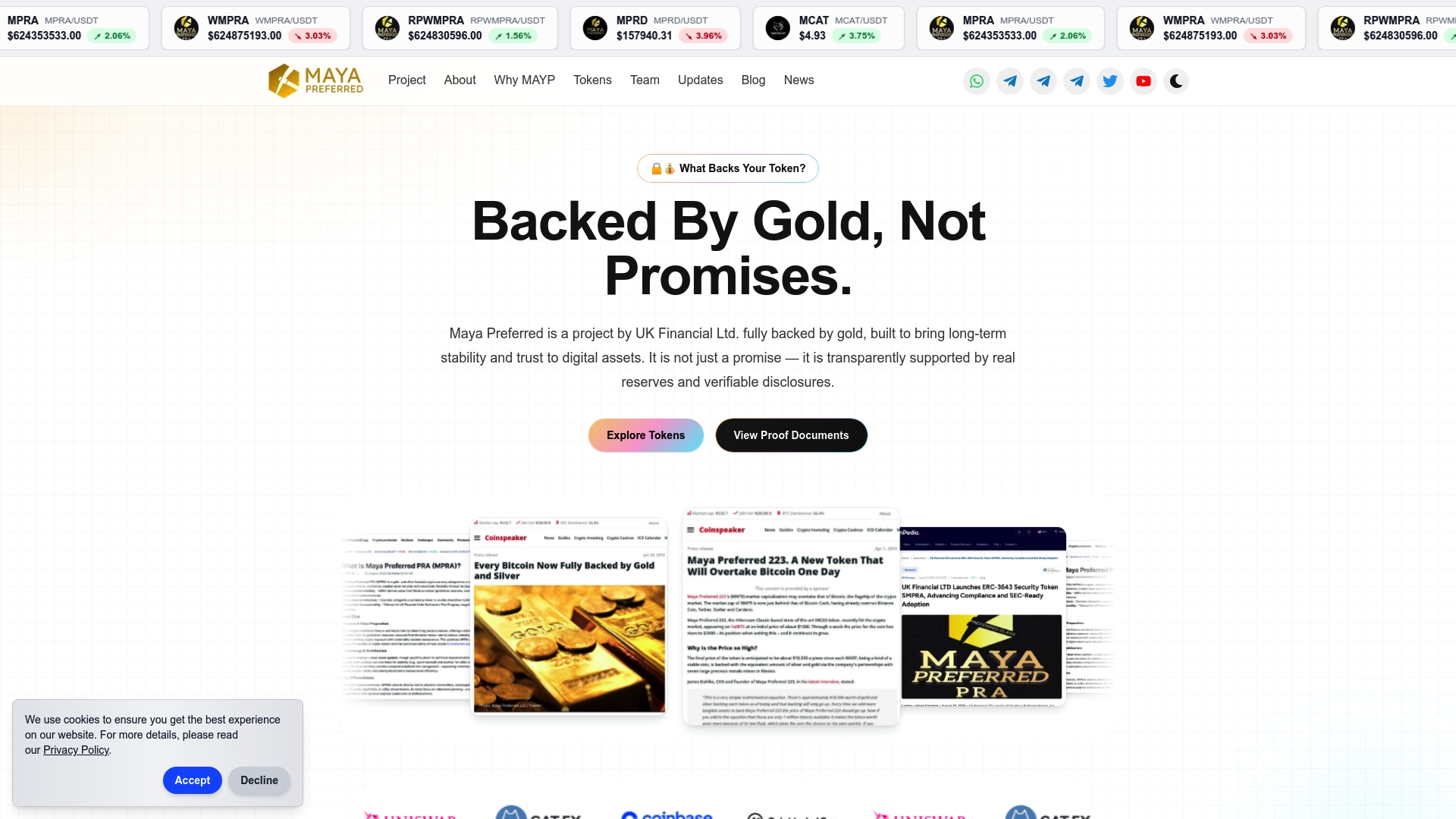
Ready to benefit from asset-backed tokens that emphasize clear ownership, regulatory compliance, and true market liquidity? Explore how Maya Preferred creates lasting investor confidence through proven transparency and tangible asset reserves. Visit Maya Preferred today to review comprehensive asset disclosures, utility roles, and start your journey toward stable and secure digital asset investing. Don’t wait to protect your portfolio with tokens grounded in real value supported by rigorous documentation.
Frequently Asked Questions
What are asset-backed digital tokens, and how do they ensure security?
Asset-backed digital tokens are digital representations of tangible assets secured by blockchain technology. To ensure security, verify the legitimacy of the underlying assets and demand comprehensive documentation that demonstrates ownership and transferability.
How can I verify the documentation of real-world assets behind a digital token?
To verify the documentation, request original property titles, independent asset valuations, and legal jurisdiction verification documents. Review these materials carefully to confirm the asset’s existence and authenticity before investing.
What should I look for in project transparency and audits?
In assessing project transparency, check for regular, accessible documentation about operational processes, security protocols, and team qualifications. Always review at least two independent audit reports to ensure that they cover key financial and regulatory aspects effectively.
How can I evaluate the utility and use cases of a digital token?
To assess a token’s utility, examine its specific problem-solving capabilities, governance roles, and transaction efficiencies. Review the token’s whitepaper to ensure that its proposed solution is unique and relevant in its ecosystem.
What factors should I consider when evaluating market stability and liquidity?
Consider trading volume, historical price volatility, and the total number of active token holders. Develop a scoring system for liquidity assessment by tracking consistent trading data over the last six months across reputable exchanges.
How can I stay updated on regulatory changes affecting digital assets?
To stay informed, create a monthly review process where you check for updates from key regulatory bodies and subscribe to relevant newsletters. This proactive approach will help you maintain compliance and adapt to any changes that could impact your investments.