
Defining Digital Asset Security: Protecting Gold-Backed Tokens

Protecting your wealth means more than hoping for the best when it comes to digital assets. With the rise of secure gold and silver-backed tokens, investors in North America and Europe face new challenges around custody, audit transparency, and legal clarity. This guide highlights the importance of confidentiality, integrity, and availability in digital asset security, helping you identify the key steps to safeguard your portfolio and make informed decisions amid an evolving regulatory landscape.
Table of Contents
- Digital Asset Security And Key Concepts
- Types Of Asset-Backed Digital Tokens
- How Gold And Silver Reserves Ensure Value
- Verification, Audits, And Proof Of Reserves
- Investor Risks And Regulatory Compliance
- Common Mistakes In Digital Asset Investing
Key Takeaways
| Point | Details |
|---|---|
| Understanding Digital Assets | Digital assets exist as encrypted data on a blockchain and require a mix of technical safeguards and legal frameworks to ensure security. |
| Three Core Pillars of Security | Protecting digital assets relies on confidentiality, integrity, and availability; losing any one compromise overall security. |
| Importance of Custody and Key Management | Effective custody arrangements are critical; verify that platforms use insured, regulated custodians to safeguard your assets. |
| Regulatory Awareness | Stay informed about regulatory changes as they can impact token economics and property rights; choose platforms demonstrating compliance across jurisdictions. |
Digital asset security and key concepts
Digital asset security starts with understanding what you’re actually protecting. Unlike traditional investments you can hold in your hand, tokenized assets exist as encrypted data on a blockchain network. This fundamental difference means security requires both technical safeguards and clear legal frameworks. Without both working together, your gold-backed tokens remain vulnerable to operational risks, regulatory uncertainty, and technical exploits.
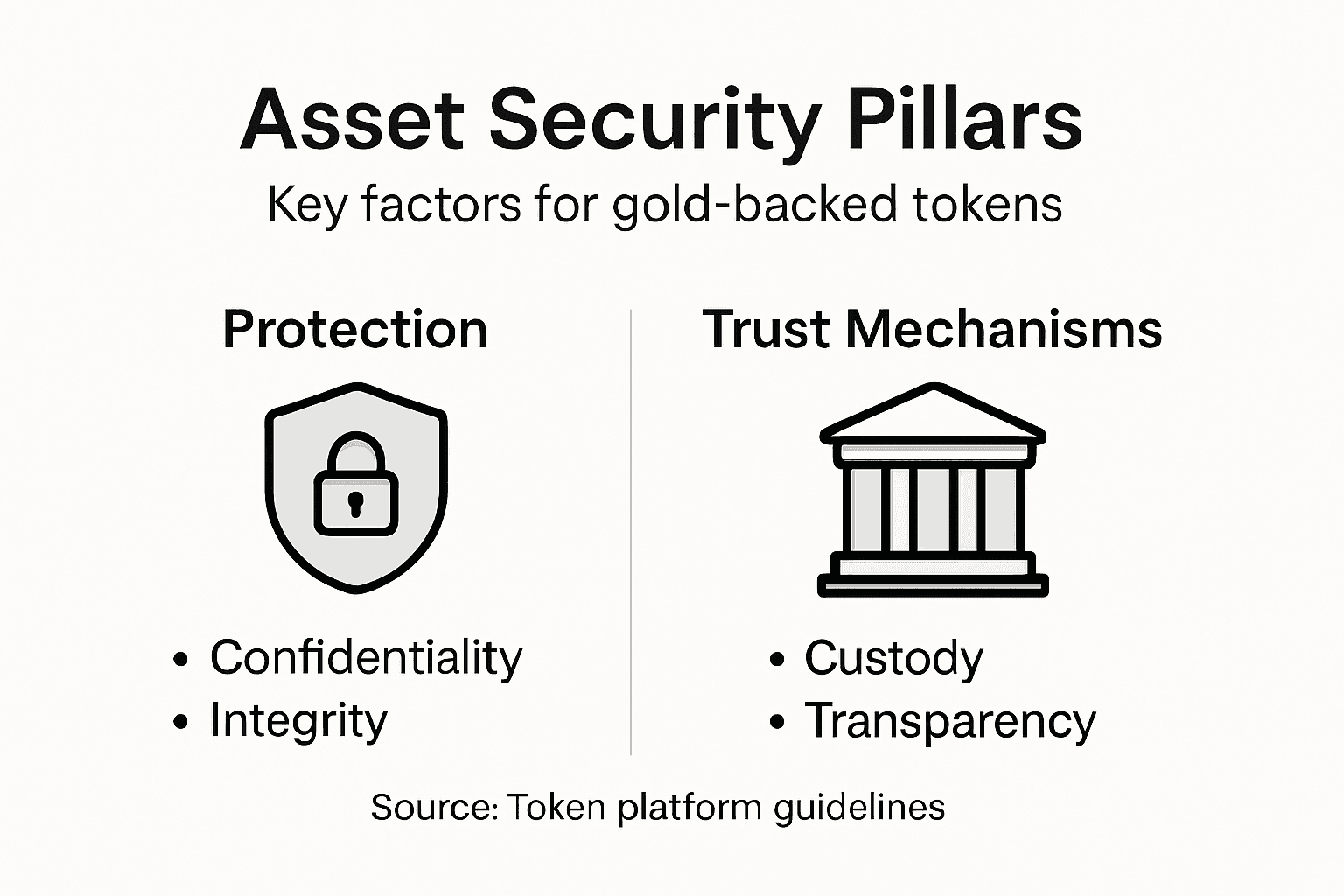
The foundation of digital asset protection rests on three core pillars: confidentiality, integrity, and availability. Confidentiality ensures only authorized parties can access your private keys and account information. Integrity guarantees your token ownership records cannot be altered or falsified once recorded on the blockchain. Availability means you can access and transfer your assets whenever needed without unexpected service interruptions. These three elements work in tandem—losing any one of them undermines your entire security posture.
Token classification matters more than most investors realize. Not all blockchain tokens function the same way or receive the same regulatory treatment. Some tokens represent ownership claims on underlying assets (like gold reserves), while others function primarily as utility tokens enabling transactions within a specific ecosystem. Understanding legal property rights in tokens becomes critical when evaluating whether your asset-backed tokens truly grant you enforceable claims on the physical gold or silver backing them. This distinction directly impacts your legal protections if the issuing platform fails or faces regulatory action.
Custody and key management represent your most immediate security concern. Your private keys are the only proof of ownership for your digital assets. A compromised key means someone else can transfer your tokens permanently. Whether you use self-custody (controlling your own keys), institutional custodians, or hardware wallets, the approach must align with your risk tolerance and technical expertise. Many North American and European institutional investors prefer regulated custodians who maintain insurance coverage and undergo regular audits, even if this reduces direct control.
Governance and transparency mechanisms protect you against platform manipulation. Legitimate asset-backed token platforms maintain auditable reserves, publish verification reports, and implement governance structures that prevent unilateral changes to token mechanics. These operational safeguards complement the technical security measures and provide accountability when technical failures occur.
Pro tip: Verify the custody arrangement and audit status of any gold-backed token platform before investing—this single verification step eliminates the majority of security risks associated with unregulated or opacity-prone platforms.
Types of asset-backed digital tokens
Asset-backed digital tokens come in distinct categories, each serving different investment objectives and offering varying levels of stability. Understanding these types helps you select tokens aligned with your portfolio goals and risk tolerance. The token ecosystem extends far beyond simple cryptocurrency, encompassing real-world assets converted into verifiable digital ownership claims.
Precious metal tokens represent the most direct parallel to traditional commodity investing. These tokens maintain one-to-one backing with physical gold, silver, or other precious metals held in verified vaults. When you purchase a gold-backed token, you own a fractional claim on actual metal reserves rather than speculative digital assets. This tangible backing provides stability absent in purely speculative cryptocurrencies, making precious metal tokens particularly appealing to North American and European investors seeking portfolio diversification without currency risk.

Equity-backed tokens grant ownership stakes in companies, projects, or mining operations. Asset-backed tokens classification systems reveal how these tokens can represent shares in mining companies, real estate developments, or blockchain projects themselves. Unlike traditional stock ownership requiring brokerage accounts and regulatory compliance in specific jurisdictions, equity tokens offer borderless ownership with transparent blockchain verification of your holdings.
Fiat stablecoins anchor to government-issued currencies like the United States dollar or Euro. They provide cryptocurrency’s operational speed with fiat currency’s stability. While useful for trading and liquidity, fiat stablecoins lack the inflation protection and tangible value proposition offered by precious metal or equity-backed alternatives.
Commodity-backed tokens extend beyond precious metals to include agricultural products, oil, or other tradeable goods. These tokens enable fractional investment in commodities historically requiring large capital commitments or sophisticated trading infrastructure. Your ability to own a fraction of a barrel of oil or a ton of wheat opens investment opportunities previously restricted to institutional traders and wealthy individuals.
The key distinction separating quality tokens from speculative ones lies in verifiable backing and transparent custody. Legitimate platforms maintain auditable reserves, publish regular verification reports, and implement governance structures preventing arbitrary token issuance without corresponding asset backing.
Here’s a comparison of asset-backed token types and their main benefits:
| Token Type | Backing Asset | Investor Benefit | Common Risks |
|---|---|---|---|
| Precious Metal | Physical gold/silver | Inflation protection, stability | Custody, audit transparency |
| Equity-Backed | Company shares/projects | Direct ownership, borderless access | Regulatory changes |
| Fiat Stablecoin | US Dollar, Euro | Price stability, liquidity | Limited inflation protection |
| Commodity-Backed | Oil, agriculture | Diversification, fractional access | Volatile commodity prices |
Pro tip: Compare tokens based on reserve verification frequency and custody arrangements rather than token price volatility alone—platforms publishing monthly or quarterly audits demonstrate commitment to protecting your actual asset backing.
How gold and silver reserves ensure value
Physical precious metal reserves form the backbone of token value. When you hold a gold-backed token, you own a verifiable claim on actual metal stored in secure vaults. This tangible backing eliminates the speculative nature of tokens with no underlying assets. The metal sits there regardless of market sentiment or blockchain network activity, providing intrinsic value that pure cryptocurrencies simply cannot match.
Independent audits and custody verification create the trust mechanism that makes reserve-backed tokens credible. Gold-backed tokens with LBMA-accredited custodians receive independent confirmation of metal weights, purity, and secure storage. These audits occur regularly, with results publicly disclosed. When you can verify that 1,000 ounces of gold actually exists in a certified vault backing your tokens, the token’s value becomes transparent and measurable rather than speculative.
Silver reserves function identically to gold reserves but offer distinct advantages. Silver’s industrial demand creates steady underlying value apart from precious metal investment appeal. Unlike speculative cryptocurrencies prone to 50 percent price swings, silver-backed tokens experience more moderate volatility tied directly to actual metal prices. For conservative North American and European investors seeking stability, silver provides compelling portfolio balance alongside traditional holdings.
Reserve transparency transforms gold and silver from abstract concepts into auditable facts. A platform maintaining reserves must disclose vault locations, custodian identities, and audit frequency. This verifiable backing prevents token issuance exceeding actual metal reserves, eliminating the fractional reserve problems plaguing some cryptocurrency platforms. You can actually visit certain vaults, inspect the metal, and verify your ownership stake exists physically.
Market volatility diminishes significantly when token value ties directly to precious metal spot prices. Gold and silver prices fluctuate based on global economic factors, inflation expectations, and currency movements, but they move within predictable ranges reflecting genuine supply-and-demand fundamentals. This contrasts sharply with tokens backed only by hype or speculation, which experience sudden crashes when sentiment shifts.
The preservation of purchasing power becomes your greatest advantage. Precious metals historically maintain value across decades and centuries, protecting wealth from currency devaluation that erodes dollar or Euro-denominated savings. Your metal reserves grow with global inflation rather than shrinking in real terms.
Pro tip: Request recent audit reports and verify custodian credentials before investing in any metal-backed token platform—third-party verification of physical reserves separates legitimate projects from unreliable ones.
Verification, audits, and proof of reserves
Proof of reserves represents the single most important metric separating legitimate asset-backed token platforms from fraudulent schemes. Real verification goes far beyond marketing claims and trust statements. It requires independent third-party auditors examining physical reserves, confirming ownership documentation, and validating that token issuance matches actual metal holdings. Without verifiable proof, your tokens rest on nothing but promises.
Third-party audits create accountability that self-reporting cannot provide. Reputable platforms engage certified accounting firms or specialized precious metals auditors to conduct regular inspections. These audits examine vault facilities, verify metal weights and purity through assay testing, and confirm custodian insurance coverage. The audit reports get published publicly with specific dates, metal quantities, and auditor signatures. This transparency allows you to verify claims independently rather than accepting platform assertions uncritically.
Regular verification schedules matter significantly. Quarterly audits prove reserves with far greater reliability than annual checks. Some platforms publish monthly proof of reserves updates showing current metal quantities, custodian locations, and ownership documentation. The more frequently reserves get verified and disclosed, the stronger the commitment to protecting investor assets.
Blockchain transparency adds another verification layer. Some platforms publish reserve data directly on immutable blockchain records, creating permanent audit trails. You can independently verify the token supply total against published reserve quantities. If a platform claims 1 million ounces of gold backing their tokens, blockchain records let you confirm whether token issuance actually aligns with that backing amount.
Custodian selection determines reserve security. Professional custodians maintain insurance, operate vaults meeting international security standards, and undergo regular compliance audits themselves. Verify that custodians hold appropriate licensing and insurance coverage. Avoid platforms using unverified or uninsured storage facilities or storing metal with unaccredited institutions.
Request and examine recent audit reports before investing. Legitimate platforms provide audit documentation upon request. Compare verification frequency, auditor credentials, and reported reserve quantities. Platforms refusing to disclose audit information should raise immediate red flags.
Key factors to check in proof of reserves processes:
| Factor | Why It Matters | What to Look For |
|---|---|---|
| Audit Frequency | Indicates reliability | Monthly or quarterly audits |
| Auditor Independence | Prevents self-reporting bias | Certified third-party firms |
| Blockchain Records | Enables public verification | On-chain reserve data |
| Custodian Insurance | Protects against loss or theft | Accredited, insured vaults |
Pro tip: Verify reserve documentation directly with the custodian institution rather than relying solely on platform claims—this independent confirmation protects you from false reserve statements.
Investor risks and regulatory compliance
Tokenized assets operate within a rapidly evolving regulatory environment where legal frameworks lag behind technology. This mismatch creates genuine risks for investors, particularly those in North America and Europe where regulators are still defining how to classify and oversee digital assets. Understanding these compliance challenges protects your capital from platforms operating in gray legal areas or jurisdictions with inadequate investor protections.
Property rights ambiguity represents a fundamental concern. When you own a gold-backed token, do you actually own the underlying metal, or merely a contractual claim on it? Legal clarity in property rights matters significantly because different jurisdictions answer this question differently. If a platform faces insolvency, unclear property rights could mean your tokens receive treatment as general creditor claims rather than secured interests in the actual metal reserves. Legitimate platforms clearly disclose the legal relationship between token ownership and metal backing.
Cross-border regulatory uncertainty creates additional complexity. A platform operating from Singapore with custodians in Switzerland and American investors must navigate multiple regulatory regimes simultaneously. Regulatory changes in any jurisdiction can suddenly impact your investment. Some countries have restricted or banned digital asset trading entirely, while others embrace it with clear frameworks. Choose platforms demonstrating compliance-forward approaches across multiple jurisdictions rather than those operating from regulatory havens.
Anti-money laundering and Know Your Customer requirements now apply broadly to digital asset platforms. AML/KYC compliance frameworks protect against financial crime while creating friction for legitimate investors. Expect legitimate platforms to require identity verification, source of funds documentation, and transaction monitoring. These requirements may feel intrusive, but they indicate platforms taking regulatory obligations seriously.
Custodial insolvency presents concrete risk. If your platform’s custodian fails or becomes compromised, your metal reserves face potential loss regardless of your token ownership documentation. Professional custody arrangements include insurance and segregated accounts, but these protections vary significantly. Verify that custodians maintain adequate insurance and regulatory oversight.
Regulatory changes can fundamentally alter token economics. A jurisdiction classifying gold-backed tokens as securities rather than commodities might impose new reporting requirements or restrict trading. Platforms maintaining transparent regulatory relationships and adapting quickly to new rules demonstrate superior risk management.
Pro tip: Verify that any platform you consider maintains active compliance programs across multiple jurisdictions and publishes regular regulatory updates rather than ignoring evolving legal requirements.
Common mistakes in digital asset investing
Investors repeatedly make preventable errors that expose them to losses, scams, and unnecessary risk. These mistakes stem from misunderstanding how digital assets actually work, trusting platforms without verification, or underestimating security threats. Learning from others’ failures costs far less than learning through personal losses.
Neglecting custody arrangements represents the first critical mistake. Many investors purchase tokens on platforms without understanding where their assets physically reside or who controls them. Commingled customer assets and custody risks create exposure if platforms face insolvency. Your tokens could become entangled in bankruptcy proceedings rather than remaining protected as segregated assets. Always verify that platforms maintain segregated custody with insured custodians before investing significant amounts.
Trusting unverified platforms without checking credentials represents another common pitfall. Scammers create professional-looking websites claiming to back tokens with gold reserves that do not exist. Before investing, independently verify platform registrations, custody arrangements, and audit reports. Contact custodians directly to confirm they actually hold the claimed reserves. This verification step takes hours but prevents total capital loss.
Ignoring security protocols leaves your accounts vulnerable. Phishing attacks trick investors into revealing passwords or private keys. Common security mistakes include neglecting phishing threats and using weak authentication methods. Enable two-factor authentication on every account. Never share private keys through email or unsecured messaging. Assume any direct message requesting account access is fraudulent.
Misunderstanding smart contract risks creates exposure to technical exploits. Complex blockchain code can contain bugs that hackers exploit to steal funds. Legitimate platforms conduct third-party security audits and maintain bug bounty programs. Platforms refusing to disclose security measures or audit results indicate insufficient risk management.
Overconcentrating investments in single platforms destroys diversification benefits. Even legitimate platforms face operational problems, regulatory challenges, or security breaches. Spread investments across multiple verified platforms with different custodians to limit exposure from any single failure.
Pro tip: Spend time verifying platform credentials and custody arrangements before your first purchase, not after discovering problems when trying to withdraw your assets.
Secure Your Investment with Transparent Gold-Backed Digital Assets
The challenge of protecting your gold-backed tokens extends beyond holding a digital key. You need confidence in custody arrangements, transparent audits, and clear ownership rights to truly secure your assets in a complex regulatory world. Maya Preferred understands these critical concerns by offering blockchain tokens backed by real-world gold and silver reserves. Their commitment to publishing detailed proof documents, transparent reserves verification, and rigorous regulatory compliance addresses the exact risks and uncertainties highlighted in “Defining Digital Asset Security: Protecting Gold-Backed Tokens”.
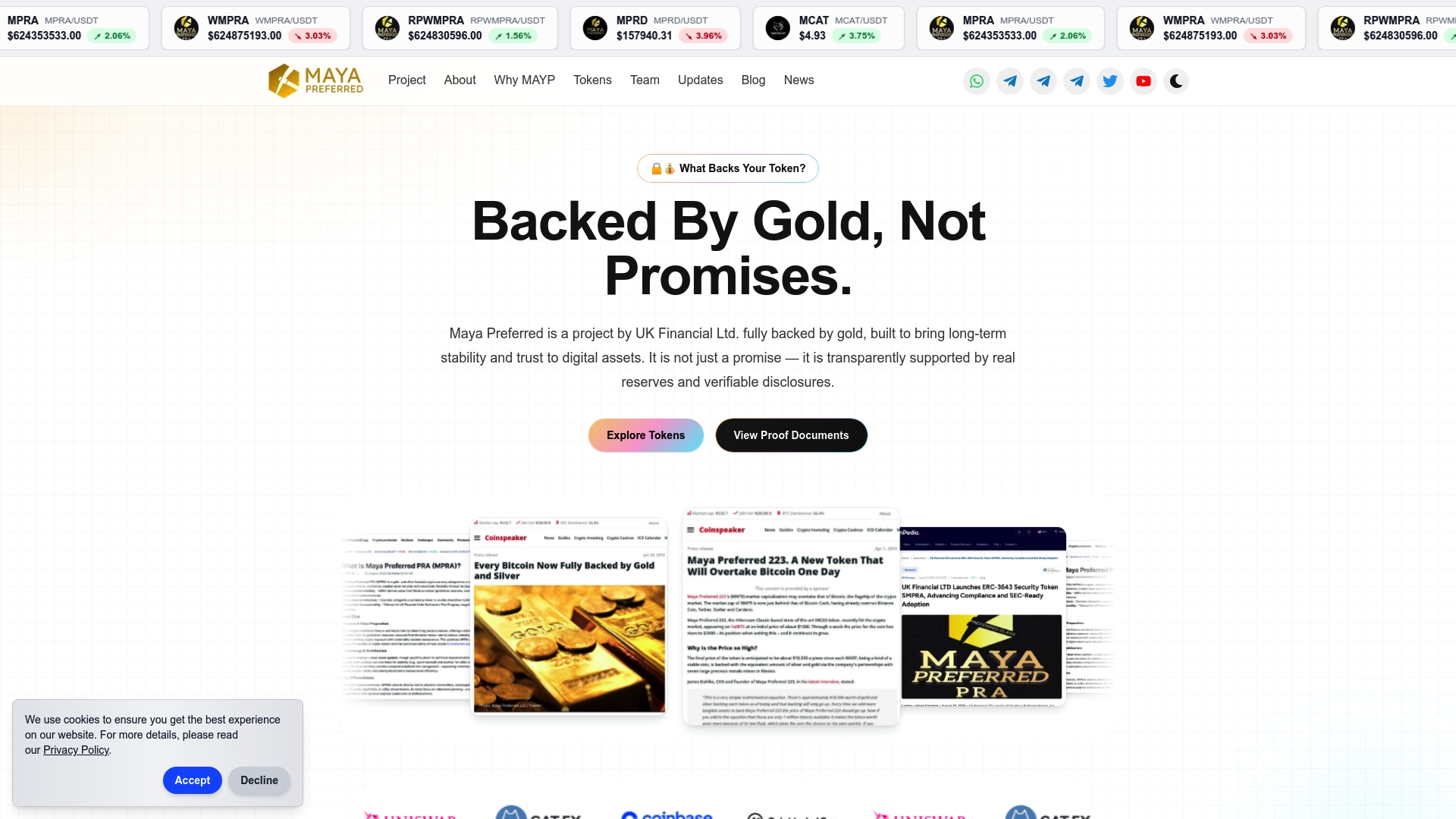
Explore how Maya Preferred bridges traditional precious metal investing with the modern blockchain ecosystem at Maya Preferred. Gain peace of mind knowing your investment aligns with proven custody standards and frequent audits. Take control of your financial future by visiting Maya Preferred and learning about asset-backed tokens like MPRA, MPRD, and MCAT designed for stability and transparency. Secure your stake where trust meets technology today.
Frequently Asked Questions
What are the core pillars of digital asset security?
The core pillars of digital asset security include confidentiality, integrity, and availability. Confidentiality protects your private keys from unauthorized access, integrity ensures your ownership records remain unaltered, and availability guarantees that you can access and transfer your assets when needed.
What distinguishes precious metal tokens from speculative cryptocurrencies?
Precious metal tokens are backed by actual physical gold or silver reserves, providing tangible value and stability. In contrast, speculative cryptocurrencies lack underlying assets, resulting in greater volatility and investment risk.
Why are audits and verifiable reserves crucial for gold-backed tokens?
Audits and verifiable reserves ensure that a platform’s claims about its gold-backed tokens are credible. Independent third-party audits confirm the actual existence and quantity of gold, thereby enhancing investor trust and reducing the risk of fraud.
What common mistakes should investors avoid when investing in digital assets?
Common mistakes include neglecting custody arrangements, trusting unverified platforms without due diligence, ignoring security protocols like two-factor authentication, and concentrating investments in a single platform, which can increase risk exposure.