
Master Due Diligence Workflow for Digital Assets Backed by Gold

Finding digital assets backed by tangible reserves like gold can feel complex for North American investors. The demand for transparent verification and strict regulatory compliance is growing, especially with gold-backed tokens relying on technologies such as blockchain and distributed ledgers. This workflow outlines essential steps to gather verified documentation, analyze token structures, and confirm legal compliance, helping you build confidence in the physical asset backing of your cryptocurrency holdings.
Table of Contents
- Step 1: Gather Asset-Backed Documentation And Disclosures
- Step 2: Analyze Blockchain Token Structure And Reserves
- Step 3: Verify Ownership And Legal Compliance Records
- Step 4: Evaluate Independent Audits And Third-Party Attestations
- Step 5: Confirm Real-Time Reserve Transparency And Market Integration
Quick Summary
| Key Point | Explanation |
|---|---|
| 1. Collect Asset Documentation | Gather all necessary documentation that verifies the backing of digital assets, ensuring transparency and trust for investors. |
| 2. Analyze Token Structure | Examine the underlying technology and reserves of blockchain tokens to confirm their authenticity and financial integrity. |
| 3. Verify Ownership Records | Ensure ownership and regulatory compliance by systematically checking legal documents and their alignment with international standards. |
| 4. Evaluate Independent Audits | Request third-party audit reports to validate accuracy in reserve claims and assess financial integrity of gold-backed digital assets. |
| 5. Confirm Real-Time Transparency | Assess the mechanisms for real-time tracking of gold reserves to ensure accurate market representation and seamless integration. |
Step 1: Gather asset-backed documentation and disclosures
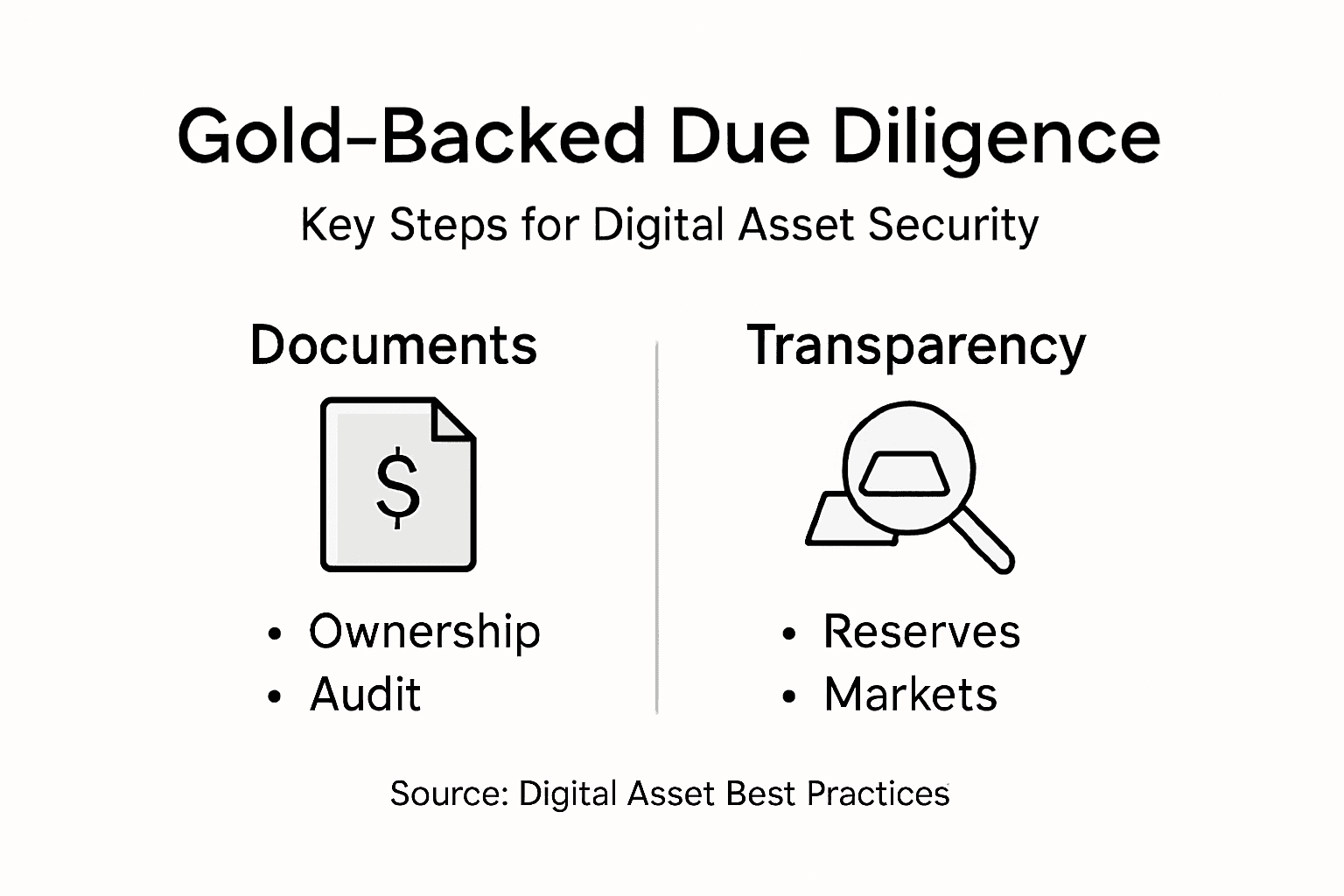
In this crucial phase, you will collect comprehensive documentation that validates the tangible backing of digital assets like gold, ensuring transparency and investor confidence. Your goal is to methodically assemble verifiable proof of asset reserves, legal compliance, and ownership details.
Start by requesting official documentation directly from the digital asset issuer, focusing on gathering critical records like gold bar integrity documents. These should include detailed certificates of ownership, precise bar serial numbers, geolocation information, and complete sourcing trails. Look for comprehensive transaction records that demonstrate the direct connection between physical assets and digital tokens. Prioritize documents from regulated sources that follow SEC disclosure guidelines, which mandate rigorous reporting standards for asset-backed securities.
Organize your collected documentation systematically, creating digital folders that separate records by category such as ownership certificates, valuation reports, audit trails, and regulatory compliance documents. Cross-reference multiple sources to validate the authenticity of each document, paying special attention to timestamps, official letterheads, and verification signatures.
Here’s a summary of key document categories and their verification details:
| Document Type | Verification Focus | Importance for Due Diligence |
|---|---|---|
| Ownership Certificate | Legal owner name, signatures | Confirms rightful asset ownership |
| Valuation Report | Appraiser, date, gold weight | Ensures accurate asset valuation |
| Audit Trail | Sequential record integrity | Tracks asset movement and history |
| Compliance Document | Regulator authenticity | Proves adherence to regulations |
Pro Tip: Request digital copies with blockchain verification to ensure document authenticity and create an immutable record of your due diligence research.
Step 2: Analyze blockchain token structure and reserves
In this critical step, you will systematically dissect the structural components and underlying reserves of blockchain tokens, ensuring a comprehensive understanding of their digital asset representation. Your objective is to develop a rigorous analytical framework that reveals the true financial integrity of tokenized assets.

Begin by examining the digital asset classification framework to understand the fundamental characteristics of the token. Look for detailed documentation that breaks down the token’s technical architecture, including its cryptographic structure, consensus mechanism, and precise representation of physical asset reserves. Pay close attention to the token’s controllable electronic record details, which demonstrate how the digital representation connects to tangible gold reserves.
Utilize the four layer ASAP model to systematically evaluate the token’s infrastructure across Access, Service, Asset, and Platform dimensions. This approach allows you to map out how reserves are maintained, tracked, and verified within the blockchain ecosystem. Scrutinize transaction logs, reserve auditing mechanisms, and the transparency of asset backing to confirm the token’s claimed physical asset representation. Cross reference official documentation with independent verification sources to validate the completeness and accuracy of reserve claims.
Pro Tip: Create a standardized checklist that systematically tracks each verification point to ensure no critical structural detail escapes your comprehensive analysis.
Step 3: Verify ownership and legal compliance records
In this critical phase of due diligence, you will meticulously examine the legal documentation that establishes clear ownership and regulatory compliance for digital assets backed by gold. Your objective is to create an ironclad verification process that confirms the legitimate and transparent nature of the asset ownership structure.
Begin by thoroughly investigating digital assets regulatory frameworks that outline specific compliance requirements across different jurisdictions. Collect and scrutinize documents such as ownership certificates, transfer records, know your customer protocols, and anti money laundering documentation. Pay special attention to international legal standards that validate the asset registration and prevent potential illicit transactions. Carefully cross reference these documents against the official records from government regulatory bodies and independent verification sources.
Dive deep into the legal documentation by examining each record for comprehensive proof of ownership, tracing the complete chain of custody for the underlying physical gold reserves. Verify that all documentation meets the stringent requirements outlined by national financial regulators. Analyze the registration details, transfer mechanisms, and compliance certificates to ensure they align with the most current international financial regulations. Look for clear evidence of legal transferability, compliance with securities laws, and transparent reporting mechanisms that demonstrate the asset’s legitimate status.
Pro Tip: Create a digital folder with encrypted backups of all verified documents to maintain a secure and permanent record of your ownership verification research.
Step 4: Evaluate independent audits and third-party attestations
In this critical step of your due diligence process, you will carefully examine independent audits and third-party attestations to validate the true financial integrity of gold-backed digital assets. Your goal is to uncover comprehensive verification that confirms the accuracy of reserve claims and ensures transparency in asset representation.
Begin by requesting comprehensive stablecoin reporting frameworks from the digital asset issuer. These independent audit reports should provide granular details about the reserve backing, methodologies used for verification, and detailed financial assessments. Look for attestations from certified public accounting firms that specialize in digital asset verification. Pay close attention to the auditors credentials, the scope of their investigation, and their assessment of the asset reserves physical and financial characteristics.
Carefully analyze each audit document, scrutinizing the specific methodologies used to verify the gold reserves. Examine the auditors approach to confirming asset valuations, tracking physical gold holdings, and validating the correlation between digital tokens and underlying reserves. Cross reference multiple independent attestations to identify any discrepancies or potential areas of concern. Verify that the audit reports comply with current financial accounting standards and provide a transparent, comprehensive view of the assets true financial status.
Pro Tip: Request digital copies of audit reports with cryptographic signatures to ensure the documents authenticity and prevent potential manipulation.
Step 5: Confirm real-time reserve transparency and market integration
In this critical phase of your due diligence, you will assess the digital asset’s capacity for real-time transparency and seamless market integration. Your objective is to validate the technology infrastructure that enables immediate, verifiable tracking of gold reserves and ensures accurate market representation.
Begin by examining the digital tracking mechanisms for gold assets that provide comprehensive provenance and ownership verification. Look for blockchain platforms that offer granular, second-by-second updates on reserve status, physical gold locations, and token valuation. Investigate the digital infrastructure that supports instantaneous transparency, focusing on how the platform records and broadcasts reserve information, tracks individual gold bar movements, and maintains an immutable record of asset backing.
Analyze the market integration capabilities by reviewing the platforms real-time fair market value reporting mechanisms. Verify that the digital asset can provide continuous, accurate valuation data that allows for immediate assessment of the tokens underlying value. Examine how the platform enables seamless trading, collateralization, and cross-market transactions while maintaining complete transparency of the physical gold reserves supporting each digital token.
Pro Tip: Develop a standardized checklist of real-time transparency metrics to consistently evaluate different digital asset platforms and their reserve reporting capabilities.
Below is a comparison of the benefits provided by each major due diligence step:
| Step | Main Benefit | Assurance Provided |
|---|---|---|
| Asset Documentation | Validates asset existence | Transparency and trust |
| Token Structure Analysis | Reveals technical soundness | Security and reliability |
| Legal Compliance Verification | Confirms lawful asset status | Risk reduction |
| Independent Audit Evaluation | Verifies reserve accuracy | Financial integrity |
| Real-Time Transparency Assessment | Ensures ongoing market alignment | Immediate reserve visibility |
Strengthen Your Digital Asset Investments with Proven Gold-Backed Transparency
Navigating the complex due diligence workflow for digital assets backed by gold demands rigorous verification of asset documentation, blockchain token structure, legal compliance, independent audits, and real-time reserve transparency. If you are seeking to overcome challenges such as verifying ownership certificates, analyzing token reserve claims, or ensuring ongoing market transparency, you are not alone. The detailed processes outlined in the article underscore the need for reliable, transparent, and secure platforms that prioritize real-world asset backing and investor confidence.
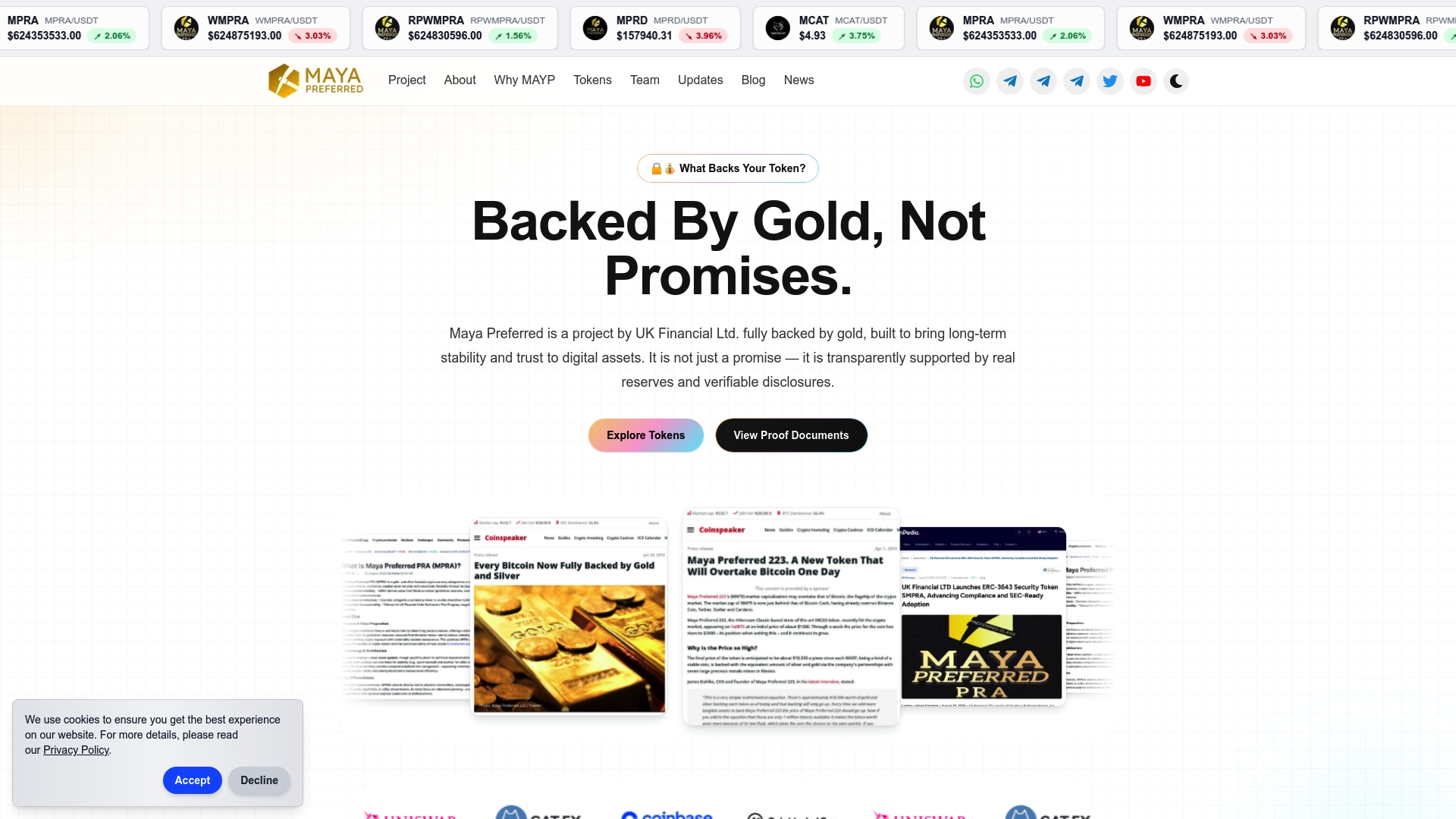
At Maya Preferred, we bring these essential due diligence elements to life. Our blockchain-based ecosystem offers tokens like MPRA, MPRD, and MCAT that are fully supported by tangible gold and silver assets, complemented by extensive proof documents, audits, and compliance disclosures. We emphasize real-time reserve verification, transparent audit reporting, and secure ownership records tailored to empower investors just like you who demand integrity and clarity in alternative asset investments.
Discover how you can invest confidently with a platform designed to meet the highest transparency standards and regulatory compliance. Visit Maya Preferred today to explore our gold and silver-backed digital assets and access detailed documentation that aligns with your due diligence needs. Don’t wait to secure your digital holdings with trusted, verifiable asset backing.
Get started now and bridge the gap between traditional precious metals investing and modern blockchain technology at Maya Preferred.
Frequently Asked Questions
What key documents should I gather for due diligence on gold-backed digital assets?
To perform due diligence, collect ownership certificates, valuation reports, audit trails, and compliance documents. Start by requesting these documents from the digital asset issuer and organizing them into specific folders for easy access.
How do I analyze the token structure of gold-backed digital assets?
Examine the token’s technical architecture, including its cryptographic structure and consensus mechanism. Utilize the four-layer ASAP model to assess how reserves are maintained, tracked, and verified, ensuring a thorough understanding of the asset’s representation.
How can I verify ownership and compliance records for digital assets?
To verify ownership, investigate legal documentation that establishes the chain of custody for the underlying gold reserves. Collect ownership certificates, transfer records, and compliance documents, ensuring they align with regulatory requirements to confirm the asset’s lawful status.
What is the importance of independent audits in the due diligence process?
Independent audits provide verification of the accuracy of reserve claims and financial integrity of the assets. Request comprehensive audit reports that detail methodologies and findings, scrutinizing them for transparency and adherence to financial accounting standards.
How can I ensure real-time transparency for gold-backed digital assets?
Evaluate the digital asset’s tracking mechanisms that offer up-to-date information on gold reserves and market valuation. Focus on blockchain platforms that provide continuous updates and establish a standardized checklist to assess their reporting capabilities effectively.