
How to Evaluate Asset-Backed Tokens for Security and Trust

Most American and European investors know that trust in asset-backed tokens depends on more than a slick whitepaper. The rapid rise of asset-backed projects has introduced both opportunity and risk, with some tokens lacking solid proof behind their real asset reserves. Understanding exactly how to verify security and compliance helps you avoid costly mistakes and evaluate real-world value before investing in MPRA, MPRD, or similar offerings.
Table of Contents
- Step 1: Gather Proof Of Real Asset Backing
- Step 2: Verify Detailed Audit And Reserve Documents
- Step 3: Assess Regulatory Compliance And Legal Filings
- Step 4: Analyze Token Utility And Transparency Measures
- Step 5: Validate Ongoing Disclosure And Community Engagement
Quick Summary
| Key Insight | Explanation |
|---|---|
| 1. Verify Asset Backing | Conduct thorough research on proof of reserves and obtain documentation from issuers to confirm asset backing. |
| 2. Analyze Audit Reports | Examine third-party audit reports for accurate reserve verification and ensure they are credible and detailed. |
| 3. Understand Regulations | Familiarize yourself with regulatory compliance requirements in relevant jurisdictions to ensure legal operation. |
| 4. Assess Token Utility | Evaluate the token’s features like compliance, transfer limitations, and data transparency to determine its value. |
| 5. Monitor Ongoing Disclosures | Regularly check issuer communications and community engagement to maintain confidence in the token’s performance. |
Step 1: Gather proof of real asset backing
Investors seeking trustworthy asset-backed tokens must conduct rigorous research to validate the underlying asset reserves. Understanding the proof of reserve mechanism is crucial for evaluating token security and authenticity.
Start by requesting comprehensive documentation from the token issuer that transparently demonstrates their asset reserves. This documentation should include detailed inventory records, third-party audit reports, and verifiable evidence of physical asset storage. Look for recent certification documents that confirm the quantity, quality, and location of the backing assets such as gold, silver, or other commodities. Professional investors typically request independent verification from recognized auditing firms that can confirm the token’s actual collateralization ratios.
Careful examination of these documents will help you determine whether the token represents a genuine store of value or merely promises without substantial backing. Cross reference the provided documentation with public records, regulatory filings, and independent verification sources to build a comprehensive understanding of the token’s real-world asset foundation.
Pro Tip: Request digital proof of reserve certificates that provide real time verification of asset backing to enhance your investment confidence.
Step 2: Verify detailed audit and reserve documents
When evaluating asset-backed tokens, understanding how to critically analyze audit reports is crucial for investor protection. Cryptographic verification techniques play a critical role in confirming the authenticity of reserve documentation and ensuring transparent asset backing.

Start by carefully examining the attestation report from independent third-party auditors. These documents should provide a comprehensive snapshot of the token issuer’s reserve balances, comparing circulating token supply against actual held assets. Look for detailed breakdowns that show precise asset quantities, storage locations, and verification methodologies. Professional investors pay close attention to the credibility of the auditing firm, the recency of the report, and the depth of financial analysis provided.
Do not simply accept the documents at face value. Cross reference the audit reports with multiple sources, including regulatory filings, public records, and independent financial assessments. Check for inconsistencies, verify the reputation of the auditing firm, and confirm that the report provides a transparent and comprehensive view of the token’s asset backing.
Here’s a summary of core audit and verification requirements for trusted asset-backed tokens:
| Requirement | Why It Matters | Common Verification Methods |
|---|---|---|
| Third-party audits | Ensures independent review | CPA firm attestation, financial audit |
| Updated reserve documentation | Confirms asset value | Inventory records, bank statements |
| Cryptographic proof of reserves | Prevents tampering | Blockchain tracking, digital certificates |
| Regulatory cross-checks | Validates legal compliance | Government filings, compliance submissions |
Pro Tip: Request digital verification reports that include real time blockchain tracking to ensure the most current and accurate reserve documentation.
Step 3: Assess regulatory compliance and legal filings
Investors must thoroughly understand the complex landscape of regulatory requirements for asset-backed tokens across different jurisdictions. Stablecoin regulations by country have become increasingly sophisticated, demanding careful examination of legal frameworks.
Begin by mapping out the specific regulatory requirements in key jurisdictions where the token operates or is marketed. Pay close attention to licensing obligations, reserve backing requirements, and mandatory compliance protocols. Professional investors should focus on documentation that demonstrates the token issuer’s adherence to AML (Anti Money Laundering) and KYC (Know Your Customer) regulations. This includes verifying registration with appropriate financial authorities, checking for any past regulatory violations, and confirming the company’s ability to operate legally across different international markets.
Carefully review all legal filings, including corporate registration documents, compliance certifications, and regulatory submissions. Look for comprehensive evidence of the token issuer’s commitment to transparency and legal compliance. Examine how the company addresses potential regulatory challenges and maintains ongoing compliance with evolving financial regulations across multiple jurisdictions.
Pro Tip: Consult with a legal expert specializing in digital asset regulations to gain deeper insights into the token’s complex regulatory landscape.
Step 4: Analyze token utility and transparency measures
Investors must dig deep into the fundamental characteristics that define a token’s true value and operational transparency. Next generation token standards now embed compliance and control mechanisms directly into the token protocol, providing unprecedented insight into their functional capabilities.
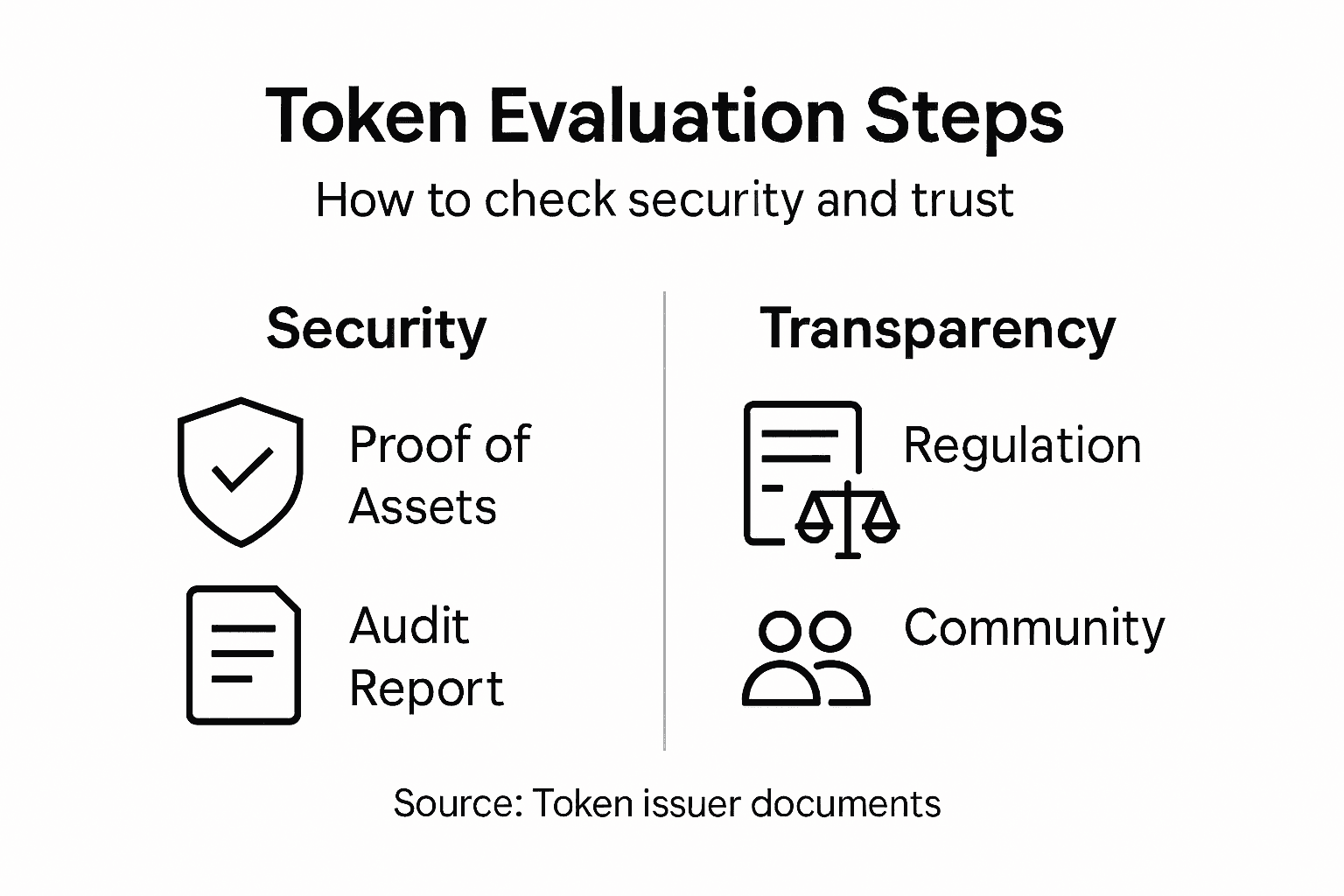
Begin by examining the token’s embedded metadata, transfer restrictions, and built-in compliance features. Look for tokens that offer granular controls such as jurisdiction-specific transfer limitations, freezing capabilities, and detailed reporting mechanisms. Professional investors should assess how these features enhance the token’s utility beyond simple asset representation. Pay particular attention to the token’s ability to provide real-time transparency, tracking mechanisms, and the depth of information available to token holders about the underlying assets and transaction history.
Carefully evaluate the token’s broader ecosystem, including its trading platforms, liquidity potential, and integration with existing financial systems. Consider how the token facilitates fractional ownership, enables 24/7 global trading, and provides verifiable ownership through blockchain technology. The most valuable tokens will demonstrate clear utility that extends beyond simple asset representation, offering meaningful advantages to investors through innovative blockchain capabilities.
Pro Tip: Create a detailed scorecard to systematically evaluate each token’s utility features and transparency measures.
Step 5: Validate ongoing disclosure and community engagement
Successful investors recognize that transparency extends far beyond initial documentation into consistent and meaningful communication. AICPA reporting guidance now provides critical frameworks for evaluating ongoing token issuer disclosures.
Carefully monitor the token issuer’s communication channels, including official websites, social media platforms, and community forums. Look for regular and comprehensive updates that provide detailed insights into the token’s performance, reserve status, and strategic developments. Professional investors should pay close attention to the frequency, depth, and consistency of these disclosures. Assess the quality of information shared, checking for timely reporting of material changes, financial updates, and any shifts in the underlying asset backing or regulatory environment.
Engage directly with the token’s community to gain deeper insights. Attend virtual town halls, participate in official discussion forums, and review independent community analyses. The most transparent token ecosystems will demonstrate a commitment to open dialogue, providing multiple channels for investor feedback and maintaining active communication with token holders. Watch for how effectively the issuer addresses community questions, responds to concerns, and provides clear explanations of the token’s ongoing performance and strategic direction.
These key transparency tools can enhance investor confidence in asset-backed tokens:
| Transparency Tool | Main Benefit | Typical Investor Use |
|---|---|---|
| Real-time asset tracking | Monitor ongoing reserves | Verify true collateralization |
| Community forums | Direct issuer engagement | Ask questions, share feedback |
| Disclosure reports | Track performance and updates | Assess issuer reliability |
| Blockchain explorers | Audit transaction history | Validate ownership transfers |
Pro Tip: Create a tracking system to monitor and score the token issuer’s disclosure quality and responsiveness over time.
Secure Your Investment with Transparent, Gold and Silver-Backed Tokens
Evaluating asset-backed tokens for security and trust can feel complicated and uncertain. You want to avoid tokens that lack real asset backing or fail to provide verified proof of reserves, detailed audits, and ongoing regulatory compliance. The challenge lies in finding digital assets that combine blockchain innovation with tangible value like gold and silver. At Maya Preferred, we address these critical concerns by offering blockchain tokens such as MPRA, MPRD, and MCAT, each backed by visible, audited gold and silver reserves. Our platform ensures transparency with accessible proof documents, regular disclosures, and active community engagement designed to build your trust and confidence.
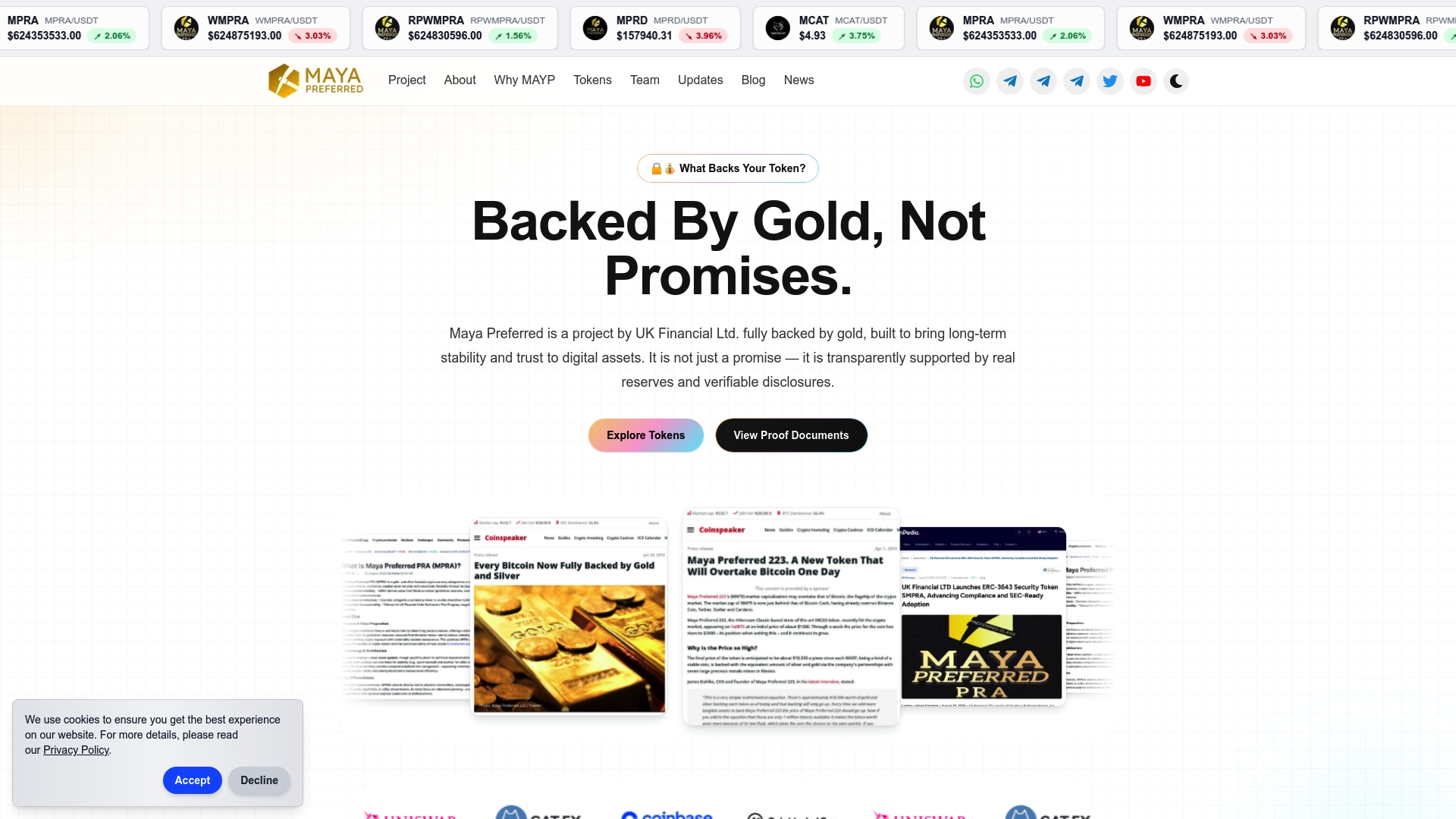
Discover a safer way to invest in asset-backed cryptocurrencies today. Visit Maya Preferred to explore tokens with clear utility, rigorous audit verification, and legal compliance. Take control of your investments now and join a community focused on transparency and stability in digital assets supported by real precious metals.
Frequently Asked Questions
How can I confirm the asset reserves backing an asset-backed token?
To confirm the asset reserves, request comprehensive documentation from the token issuer. Check for third-party audit reports and recent certifications that detail the asset quantity, quality, and storage location.
What should I look for in an audit report for an asset-backed token?
Examine the attestation report from independent auditors, focusing on the reserve balances and how they compare to the circulating token supply. Ensure the audit includes precise breakdowns of asset quantities and verification methods, and cross-reference this information with multiple sources.
How do I assess the regulatory compliance of an asset-backed token?
To assess regulatory compliance, review the token issuer’s documentation to ensure adherence to licensing obligations, Anti Money Laundering (AML), and Know Your Customer (KYC) regulations. Verify the issuer’s registration with financial authorities and check for any past regulatory violations.
What features indicate the utility of an asset-backed token?
Look for tokens that offer embedded compliance features, granular controls, and real-time transparency. Evaluate their functionalities, such as jurisdiction-specific transfer limits and detailed reporting mechanisms that enhance the token’s overall utility.
How can I gauge the ongoing transparency of a token issuer?
Monitor the token issuer’s communication channels for regular updates on performance, reserve status, and strategic developments. Engage with the community through forums and discussions to observe how the issuer addresses questions and concerns from investors.