
Master Investing in Asset-Backed Crypto Workflow Easily

Most American and European investors know that more than $30 billion in gold-backed tokens were traded globally last year. The search for transparent, regulated digital assets drives demand for cryptocurrency tied to real metals like gold and silver. Verifying the reserves and legitimacy of these asset-backed tokens is critical for protecting your investments and spotting real-world value in a crowded crypto market.
Table of Contents
- Step 1: Assess Asset-Backed Token Options And Verify Reserves
- Step 2: Set Up Regulated Digital Wallet And Ensure Compliance
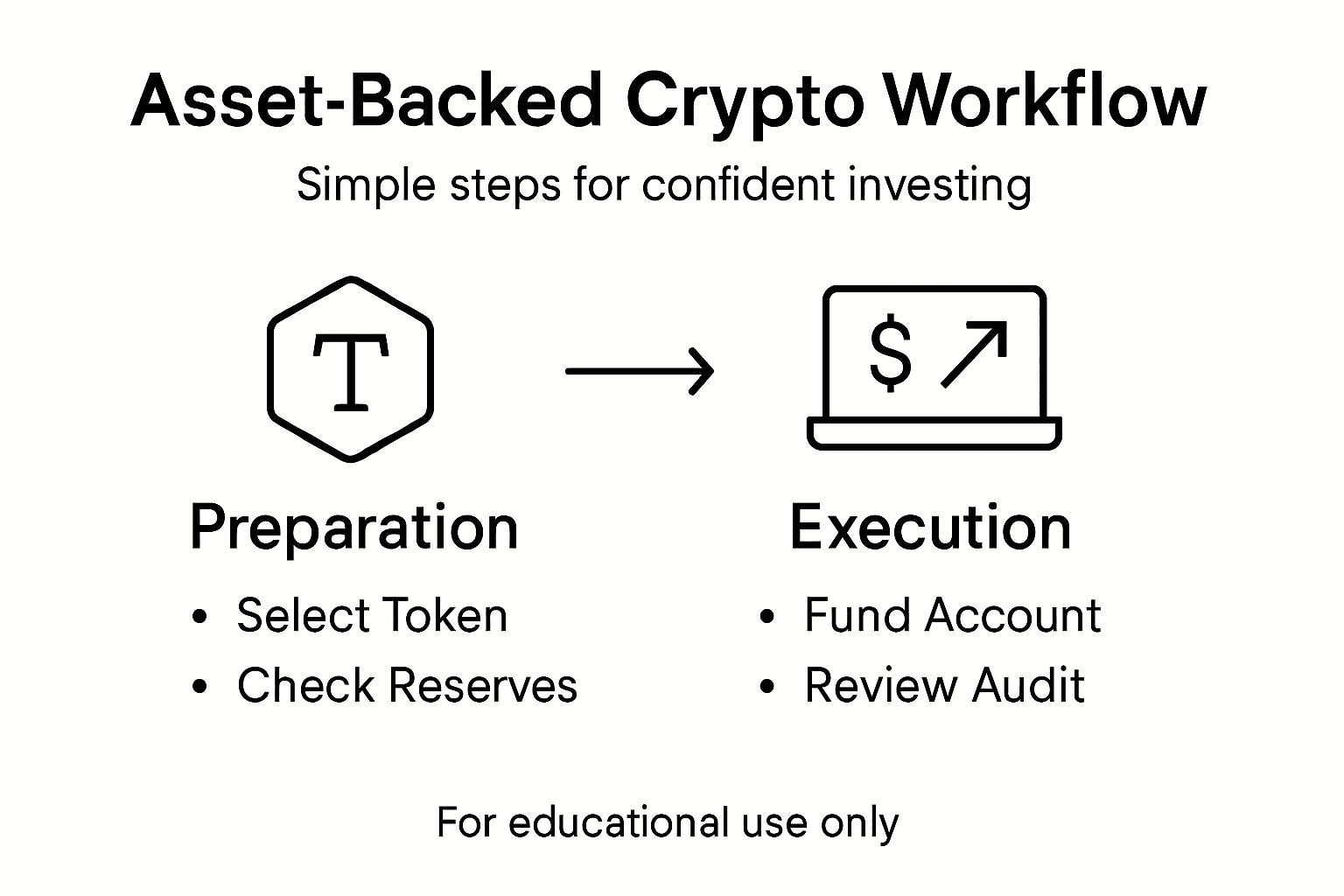
- Step 3: Fund Your Account And Execute Token Purchase
- Step 4: Review Proof Documents And Audit Confirmations
- Step 5: Secure Tokens And Monitor Ongoing Project Transparency
Quick Summary
| Key Insight | Explanation |
|---|---|
| 1. Verify Token Reserves Thoroughly | Review official audits and documentation to confirm asset backing and legitimacy. |
| 2. Choose Compliant Digital Wallets | Select a wallet provider that adheres to local regulations and offers robust security. |
| 3. Ensure Transparent Funding Process | Document the source of funds to comply with legal requirements when purchasing tokens. |
| 4. Scrutinize Audit Documents | Carefully examine audit reports to validate asset ownership and identify valuation methods. |
| 5. Monitor Projects Continuously | Implement a strategy to regularly track token performance and stay informed about regulatory changes. |
Step 1: Assess asset-backed token options and verify reserves
Evaluating asset-backed cryptocurrency tokens requires a systematic approach to understanding their underlying reserves and legitimacy. Investors need comprehensive strategies to verify the authenticity of digital assets that claim real-world backing. Comprehensive tokenization verification involves examining multiple critical components that demonstrate the token’s actual value and stability.
The verification process begins with thoroughly investigating the token’s reserve documentation. You want to review official audit reports, custody arrangements, and precise details about the physical assets supporting the digital token. Look for transparent proof of gold, silver, or other commodity reserves that substantiate the token’s claimed value. Blockchain technology enables unprecedented transparency, allowing you to trace asset backing through cryptographic verification methods. Stablecoin reserve classifications provide frameworks for understanding how different tokens maintain their value through various backing mechanisms.
Key verification steps include requesting independent third-party audits, confirming asset custodian details, and examining the redemption processes for converting digital tokens into physical assets. Cross-reference the token issuer’s claims with public records, regulatory filings, and blockchain transaction histories to ensure complete transparency. Pay special attention to the liquidity and accessibility of the underlying reserves, as these factors directly impact the token’s real-world utility and investment potential.
Pro tip: Always maintain a skeptical approach and request multiple forms of documentation to validate the legitimacy of any asset-backed cryptocurrency investment.
Here’s a summary of typical asset-backed token reserve types and their verification challenges:
| Reserve Type | Example Assets | Verification Difficulty | Common Risks |
|---|---|---|---|
| Precious Metals | Gold, silver bars | Moderate | Market volatility |
| Real Estate | Commercial property | High | Liquidity constraints |
| Commodities | Oil, agricultural | Moderate | Storage and transport |
| Fiat Currencies | US dollars, euros | Low | Regulatory compliance |
Step 2: Set up regulated digital wallet and ensure compliance
Establishing a compliant digital wallet requires strategic planning and understanding of regulatory frameworks for cryptocurrency investments. Your goal is to create a secure digital storage solution that meets legal requirements and protects your asset holdings. Regulated digital identity management provides a critical foundation for navigating the complex landscape of digital asset protection.
The wallet setup process involves several key compliance considerations. You will need to select a wallet platform that supports robust security protocols and adheres to local regulatory standards. This means verifying the platform’s know your customer (KYC) procedures, anti-money laundering (AML) compliance, and data protection mechanisms. Legal compliance frameworks emphasize the importance of embedding regulatory requirements into the initial design of your digital wallet infrastructure.
Begin by gathering the necessary identification documents and preparing for comprehensive verification processes. Research wallet providers that offer transparent compliance mechanisms, multi factor authentication, and clear audit trails. Pay special attention to the jurisdictional requirements that might impact your specific investment strategy, as regulatory environments can vary significantly across different regions. Ensure your chosen platform provides comprehensive reporting capabilities and supports seamless integration with your asset-backed token investments.
Pro tip: Choose a digital wallet provider that offers regular compliance updates and maintains proactive regulatory adaptation strategies to protect your digital assets.
Use the table below to compare common digital wallet security features and their business impact:
| Security Feature | Description | Business Impact |
|---|---|---|
| Multi-factor authentication | Requires multiple credentials | Reduces risk of unauthorized access |
| Cold storage | Offline asset storage | Protects against online hacking |
| Audit trails | Records all wallet activity | Enhances transparency and compliance |
| Encryption | Secures transaction data | Preserves confidentiality and integrity |
Step 3: Fund your account and execute token purchase
Successfully funding your account and purchasing asset-backed tokens requires careful navigation of financial regulations and strategic investment practices. Your objective is to complete a compliant and secure transaction that transforms your investment strategy. Crypto market regulatory compliance plays a critical role in ensuring a smooth and legally sound investment process.

The funding process involves selecting an approved payment method that aligns with your digital wallet’s compliance requirements. You will need to prepare documentation demonstrating the source of your funds, which typically includes bank statements, proof of income, or other financial records. Prudential risk management strategies recommend carefully reviewing transaction limits, understanding fee structures, and verifying the platform’s security protocols before initiating any financial transfer.
Proceed by linking your verified payment method to your digital wallet and initiating a transfer that matches the minimum investment requirements for your chosen asset-backed token. Pay close attention to real-time exchange rates, transaction fees, and any potential tax implications associated with your purchase. Carefully review all transaction details before confirming, ensuring that the token purchase exactly matches your investment strategy and risk tolerance.
Pro tip: Always maintain a detailed record of your transactions and verify each step of the funding and purchase process to protect your financial interests.
Step 4: Review proof documents and audit confirmations
Validating the authenticity of your asset-backed crypto investment requires a meticulous approach to reviewing proof documents and audit confirmations. Your primary objective is to thoroughly examine the supporting evidence that substantiates the token’s underlying asset value and legitimacy. Cryptoasset auditing techniques provide critical guidance for conducting comprehensive document verification.
Begin by carefully reviewing the official audit reports, paying close attention to the verification of asset ownership, valuation methods, and the custody chain of the underlying physical assets. Look for detailed documentation that demonstrates the precise relationship between the digital token and its real-world asset backing. Stablecoin reporting standards recommend examining comprehensive disclosure reports that provide transparent insights into the token’s reserve composition, asset quality, and financial integrity.
Carefully cross-reference the provided documentation with independent verification sources, checking for any discrepancies or potential red flags. Scrutinize the audit trail, looking for comprehensive third-party confirmations, detailed asset inventories, and precise valuation methodologies. Verify the credentials of the auditing entities, ensuring they are recognized and reputable professionals with expertise in cryptoasset verification. Your goal is to develop a comprehensive understanding of the token’s underlying asset structure and financial soundness.
Pro tip: Request multiple forms of documentation and cross-verify critical details to ensure the highest level of investment confidence.
Step 5: Secure tokens and monitor ongoing project transparency
Safeguarding your asset-backed tokens requires a proactive approach to security and continuous project monitoring. Your goal is to establish robust protection mechanisms while maintaining visibility into the project’s ongoing performance and regulatory compliance. Real-time token supervision provides critical insights into maintaining your investment’s integrity.
Implement a comprehensive monitoring strategy by setting up alerts and regularly reviewing official project updates, financial reports, and regulatory disclosures. Utilize secure digital wallet features that offer advanced security protocols, including multi-factor authentication, cold storage options, and encryption technologies. Global crypto asset monitoring emphasizes the importance of staying informed about project developments, regulatory changes, and potential market shifts that could impact your asset-backed token investment.
Establish a systematic review process that includes periodic checks of the token’s reserve documentation, asset backing verification, and performance metrics. Create a dedicated folder to track all project communications, audit reports, and transaction histories. Pay close attention to any changes in the project’s governance, asset composition, or regulatory status that might affect your investment’s value and security.
Pro tip: Create a digital dashboard that consolidates all critical project information and set up automated notifications to stay ahead of any significant changes or potential risks.
Unlock Confidence in Asset-Backed Crypto Investments with Maya Preferred
Navigating the complexities of asset-backed token verification and maintaining compliance can feel overwhelming. The challenges of verifying real-world reserves and securing regulated digital wallets demand trust, transparency, and expert support. Maya Preferred bridges that gap by offering gold and silver-backed digital assets such as MPRA, MPRD, and MCAT — each fully backed by tangible reserves and supported by detailed audits and proof documents. This ensures you invest with clarity and confidence, avoiding typical risks like reserve liquidity issues or unclear asset custody.
Take control of your investment journey with:
- Transparent proof of gold and silver reserves verified by independent audits
- Secure, compliant blockchain tokens bridging traditional assets and modern crypto
- Real-time updates on project developments and regulatory compliance
Experience the power of secure, asset-backed cryptocurrencies that align perfectly with the step-by-step workflow outlined in “Master Investing in Asset-Backed Crypto Workflow Easily.” Don’t let uncertainty slow your investments. Learn more about our backed tokens and explore how Maya Preferred can elevate your portfolio by visiting Maya Preferred.
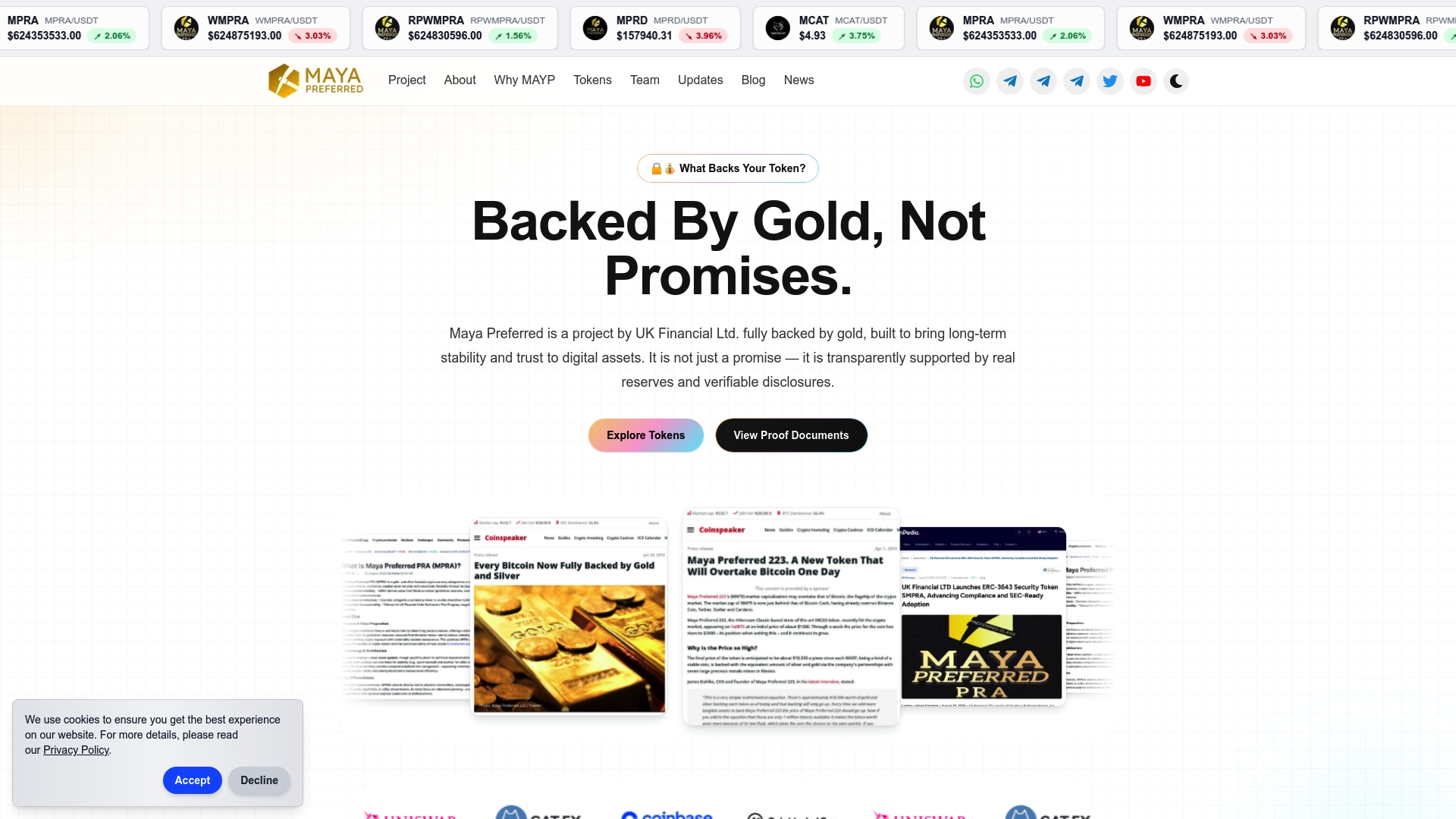
Ready to secure your future with trusted precious metals-backed digital assets Discover the strength of transparency and regulatory compliance today at Maya Preferred. Start investing smarter and safer now.
Frequently Asked Questions
How can I assess the legitimacy of an asset-backed cryptocurrency token?
To assess the legitimacy of an asset-backed cryptocurrency token, thoroughly investigate its reserve documentation. Request independent third-party audits and examine the token’s custody arrangements to verify the authenticity of the physical assets backing the token.
What steps should I take to set up a compliant digital wallet for crypto investments?
To set up a compliant digital wallet, choose a wallet platform that adheres to local regulations and supports KYC and AML procedures. Prepare your identification documents for verification and ensure the platform offers robust security features like multi-factor authentication.
What documentation is required to fund my account for purchasing asset-backed tokens?
When funding your account, you will need to provide documentation that demonstrates the source of your funds, such as bank statements or proof of income. Ensure that your selected payment method is compliant with your digital wallet’s requirements before initiating a transfer.
How do I ensure the ongoing transparency and security of my asset-backed tokens?
To ensure ongoing transparency and security, regularly review project updates, financial reports, and the token’s reserve documentation. Set up alerts for significant changes and establish a review process for continuous monitoring of your investments.
What should I look for in audit confirmations for my asset-backed crypto investments?
In audit confirmations, look for detailed reports that verify asset ownership and valuation methods. Pay attention to the credentials of the auditing entities and ensure that the documentation provides a clear connection between the digital token and its physical assets.