
Physical Assets in Crypto: Building Trust and Stability

Volatility and regulatory uncertainty in traditional cryptocurrencies often leave institutional investors searching for safer ways to diversify holdings. As physical asset tokenization gains traction, North American portfolio managers are paying close attention to regulated gold and silver-backed digital assets that promise both transparency and reduced risk. This overview highlights how blockchain is reshaping access to precious metals, offering a direct connection to real-world value through enhanced security, reliable custody, and clear regulatory frameworks.
Table of Contents
- Defining Physical Assets In Crypto Projects
- Distinguishing Types Of Asset-Backed Tokens
- How Tokenization Of Gold And Silver Works
- Regulatory And Compliance Requirements
- Risks, Transparency, And Investor Protections
Key Takeaways
| Point | Details |
|---|---|
| Physical Asset Tokenization | Bridging traditional investments with blockchain, tokenization enhances transparency and liquidity of assets like gold, real estate, and collectibles. |
| Types of Asset-Backed Tokens | Understanding the distinct categories, including security tokens and stablecoins, is vital for informed investment decisions. |
| Regulatory Compliance | Investors must navigate complex regulations, emphasizing the importance of consulting legal expertise in cryptocurrency laws. |
| Investor Protections | Robust transparency measures, such as independent audits and real-time asset tracking, are crucial for building trust in asset-backed tokens. |
Defining Physical Assets in Crypto Projects
Cryptocurrency projects have evolved beyond purely digital assets, introducing a revolutionary concept of physical asset tokenization. This approach bridges traditional investment models with blockchain technology by representing real-world assets like gold, silver, or real estate through digital tokens. Comprehensive analysis of cryptoasset property rights reveals the complex legal and technological framework underlying these innovative financial instruments.
Physical assets in crypto projects can be categorized into several key types:
- Commodity-backed tokens: Representing physical commodities like precious metals
- Real estate tokens: Digital representations of property ownership
- Collectible asset tokens: Representing unique physical items with verifiable ownership
- Natural resource tokens: Representing ownership in mining or extraction projects
The primary goal of physical asset tokenization is to provide investors with increased transparency, liquidity, and security. By linking digital tokens to tangible assets, these projects create a robust framework that mitigates many risks associated with purely speculative cryptocurrencies. European blockchain asset overview757580_EN.pdf) highlights how blockchain technology enables fractional ownership and enhanced traceability of physical assets.
Key advantages of physical asset-backed crypto projects include reduced volatility, improved investor confidence, and a direct connection to real-world value. These tokens essentially transform traditional asset classes by making them more accessible, divisible, and tradable through blockchain infrastructure.
Pro tip: Always verify the actual physical asset backing and audit documentation before investing in any asset-backed cryptocurrency token.
Distinguishing Types of Asset-Backed Tokens
Cryptocurrency has dramatically expanded beyond simple digital currencies, introducing sophisticated asset-backed token structures that bridge traditional financial instruments with blockchain technology. Detailed cryptoasset classification framework reveals the complex landscape of token types and their unique characteristics.
Asset-backed tokens can be categorized into several fundamental types:
- Security tokens: Representing traditional financial securities like stocks or bonds
- Commodity tokens: Backed by physical commodities such as gold, silver, or oil
- Real estate tokens: Representing fractional ownership in physical properties
- Stablecoins: Pegged to stable assets like fiat currencies or commodities
- Utility tokens: Providing specific access or functionality within a blockchain ecosystem
The nuanced world of asset tokenization methodologies demonstrates how blockchain technology enables unprecedented granularity in asset representation. Each token type serves a distinct purpose, offering investors unique advantages in terms of liquidity, accessibility, and transparency. Security tokens, for instance, provide regulated investment opportunities, while commodity tokens offer direct exposure to physical asset markets.
Understanding the specific characteristics of each token type is crucial for making informed investment decisions. Investors must carefully evaluate the underlying asset, regulatory compliance, and tokenization mechanism before committing capital to these innovative financial instruments.
Here’s a summary of how various asset-backed token types differ by main purpose and investor considerations:
| Token Type | Core Purpose | Common Underlying Asset | Key Investor Consideration |
|---|---|---|---|
| Security Token | Regulated investment access | Stocks or bonds | Compliance with securities laws |
| Commodity Token | Exposure to raw materials | Gold, silver, or oil | Storage and audit transparency |
| Real Estate Token | Property fractionalization | Commercial or residential | Title validity and valuation |
| Stablecoin | Store of stable value | U.S. Dollar, Euro, etc. | Reserve adequacy and transparency |
| Utility Token | Ecosystem service access | No physical backing | Platform adoption risk |
Pro tip: Conduct thorough due diligence on the specific asset backing, regulatory status, and verified documentation before investing in any asset-backed token.
How Tokenization of Gold and Silver Works
Tokenization transforms traditional precious metal investments by converting physical gold and silver into digital assets with unprecedented accessibility and transparency. Advanced tokenization methodologies enable investors to own fractional shares of precious metals through blockchain technology, breaking down traditional barriers to entry.
The tokenization process involves several critical steps:
- Physical asset verification: Confirming the quantity and quality of gold or silver reserves
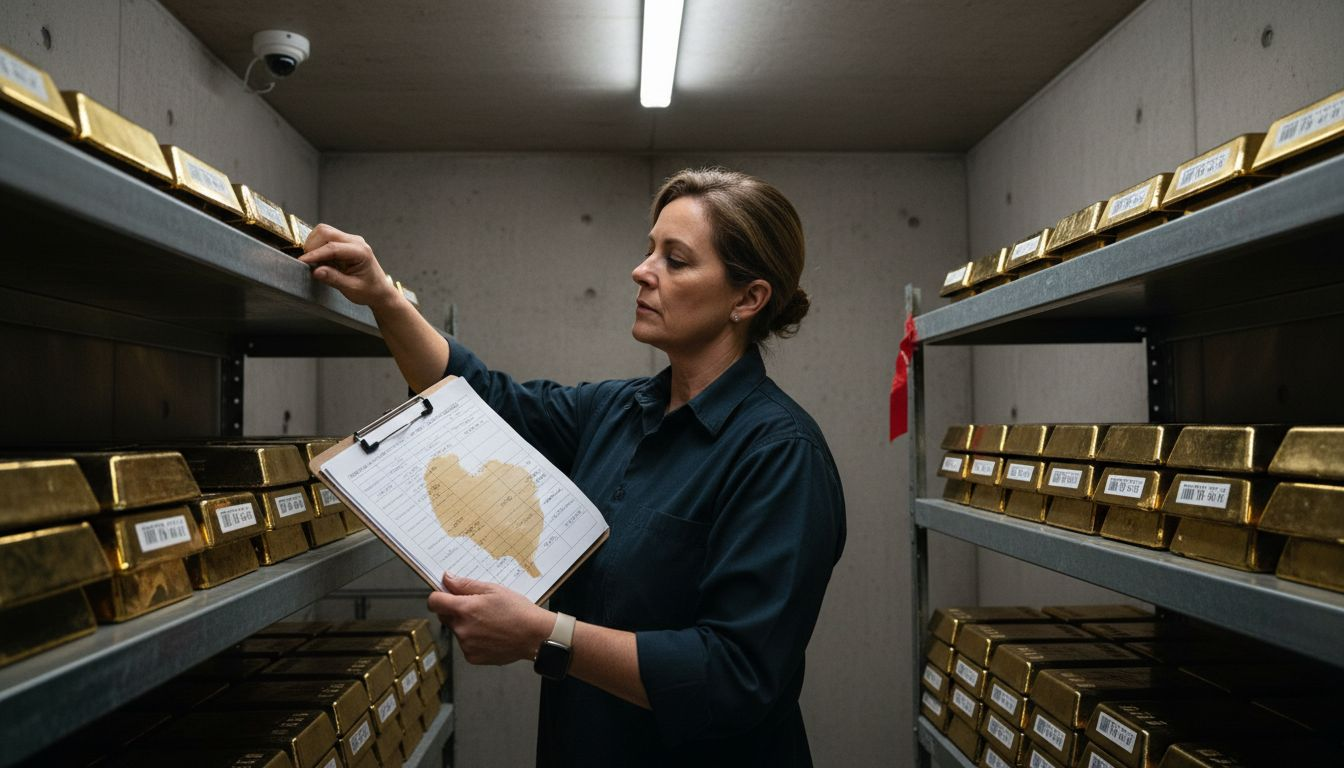
- Asset custody: Securing physical metals in audited, insured vaults
- Digital token creation: Generating blockchain-based tokens representing specific metal quantities
- Ongoing auditing: Maintaining transparent records of asset backing and reserves
- Trading mechanisms: Enabling seamless digital trading of metal-backed tokens
Global regulatory framework for tokenized assets757580_EN.pdf) provides essential oversight to ensure these digital representations maintain genuine value and investor protection. Each token represents a precise weight of physical metal, with smart contract technologies guaranteeing direct linkage between digital token and underlying physical asset.
The innovative approach of metal tokenization offers investors multiple advantages, including increased liquidity, lower transaction costs, and the ability to trade fractional metal ownership without physical storage challenges. Blockchain technology ensures complete transparency, allowing token holders to verify asset backing in real-time and track the precise quantity of metals supporting their investment.
Pro tip: Always verify the specific redemption mechanisms and custodial arrangements before investing in any gold or silver-backed token.
Regulatory and Compliance Requirements
Navigating the complex landscape of regulatory compliance for asset-backed tokens requires a sophisticated understanding of global financial regulations. Comprehensive digital asset regulatory framework reveals the intricate legal challenges facing blockchain-based physical asset representations.
Key regulatory compliance requirements include:
- Licensing: Obtaining necessary financial services permits
- Anti-money laundering (AML): Implementing robust verification protocols
- Know Your Customer (KYC): Conducting thorough investor background checks
- Securities registration: Complying with local and international securities laws
- Reporting standards: Maintaining transparent financial documentation
Adaptive regulatory models for digital assets demonstrate the dynamic nature of compliance in the blockchain ecosystem. Different jurisdictions impose varying requirements, creating a complex landscape for asset-backed token projects to navigate. Institutional investors must carefully evaluate the regulatory standing of any tokenized asset, considering factors such as securities classification, cross-border transferability, and investor protection mechanisms.
The most successful asset-backed token projects prioritize proactive compliance, establishing robust governance frameworks that exceed minimum regulatory requirements. This approach not only mitigates legal risks but also builds critical investor confidence in the emerging digital asset marketplace.
Pro tip: Consult with specialized legal counsel experienced in both cryptocurrency regulations and securities law before launching or investing in any asset-backed token project.
Risks, Transparency, and Investor Protections
The world of asset-backed tokens presents a complex landscape of potential risks and critical investor protections. Legal complexities in cryptoasset property rights reveal the intricate challenges investors must navigate when engaging with digital asset representations.
Primary risks in asset-backed token investments include:
- Custody risks: Potential vulnerabilities in asset storage and management
- Valuation uncertainties: Challenges in accurately pricing tokenized assets
- Regulatory compliance: Evolving legal frameworks and potential regulatory shifts
- Technological vulnerabilities: Smart contract and blockchain infrastructure risks
- Market liquidity: Potential challenges in trading and converting tokens
Comprehensive cryptoasset accounting standards emphasize the critical importance of transparency in mitigating investor risks. Successful asset-backed token projects must implement rigorous disclosure mechanisms, including regular independent audits, real-time asset tracking, and comprehensive reporting that provides investors with complete visibility into the underlying physical assets.
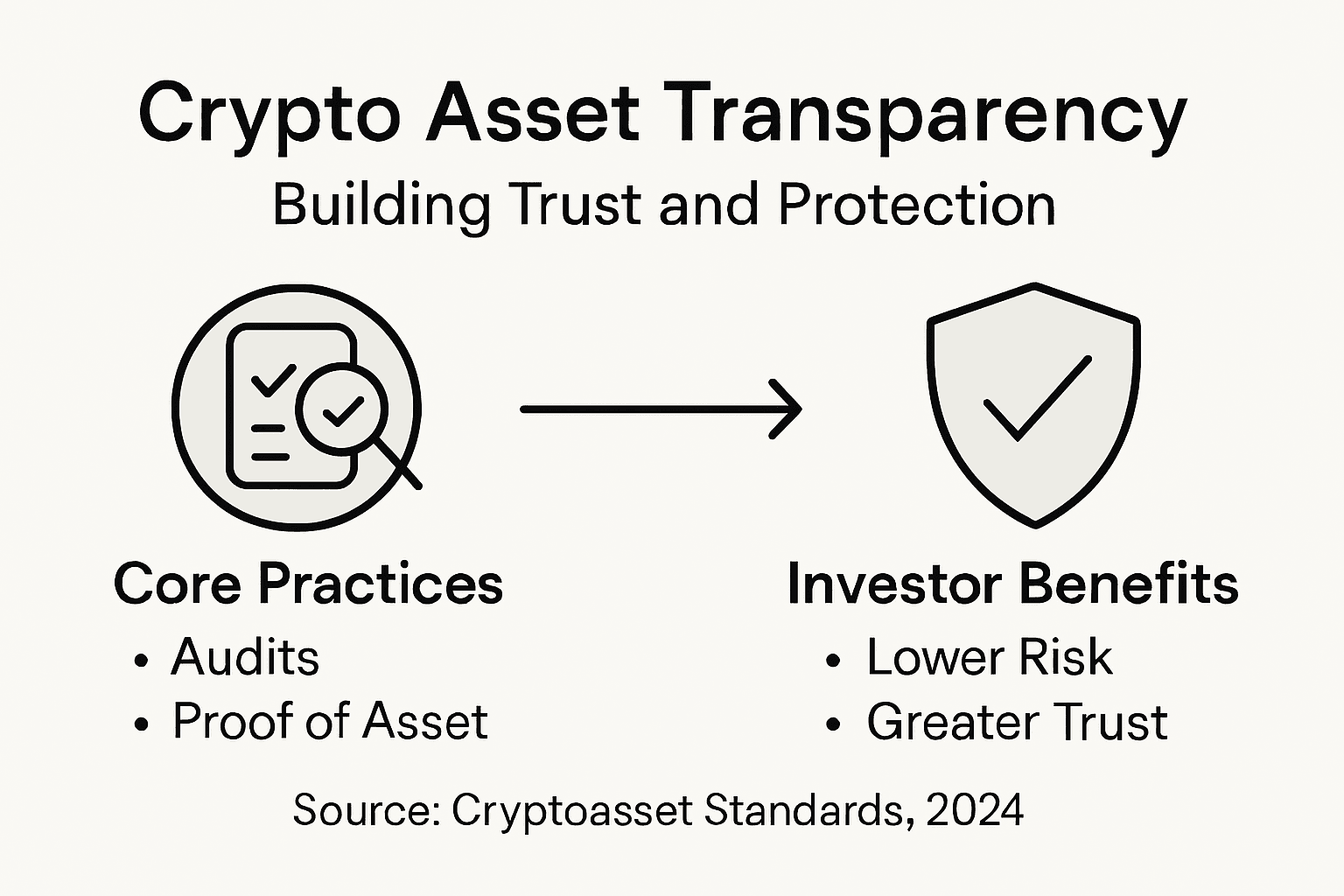
Investor protections are paramount in building trust within the emerging digital asset ecosystem. This requires a multilayered approach that combines technological safeguards, legal frameworks, and robust governance mechanisms. Institutional investors should prioritize projects that demonstrate exceptional transparency, maintain verifiable asset reserves, and provide clear redemption pathways for token holders.
Below is a comparison of key transparency and risk mitigation practices for asset-backed crypto projects:
| Practice | Investor Benefit | Typical Implementation |
|---|---|---|
| Independent Audit | Confidence in asset reserves | Third-party audit reports |
| Real-Time Asset Tracking | Ongoing transparency | Blockchain-based monitoring |
| Redemption Mechanism | Secure exit options | Redemption for physical asset |
| Regulatory Reporting | Enhanced trust and oversight | Regular disclosures |
| Robust Custody Arrangements | Minimized storage risk | Insured, secure vaults |
Pro tip: Conduct thorough due diligence by requesting and independently verifying comprehensive asset documentation, including custody arrangements, valuation methodologies, and third-party audit reports.
Build Lasting Trust with Physical Asset-Backed Crypto
The article highlights the critical challenge of establishing transparency and security in asset-backed tokens by linking them directly to real-world physical assets like gold and silver. If you are seeking stability and confidence beyond speculative cryptocurrencies, the key lies in trustworthy verification and ongoing audit transparency. Our solutions at Maya Preferred directly address these concerns by backing tokens such as MPRA, MPRD, and MCAT with verified gold and silver reserves, mined assets, and comprehensive legal disclosures. This approach transforms precious metals investments into liquid, digital assets while minimizing custody risks and valuation uncertainties.
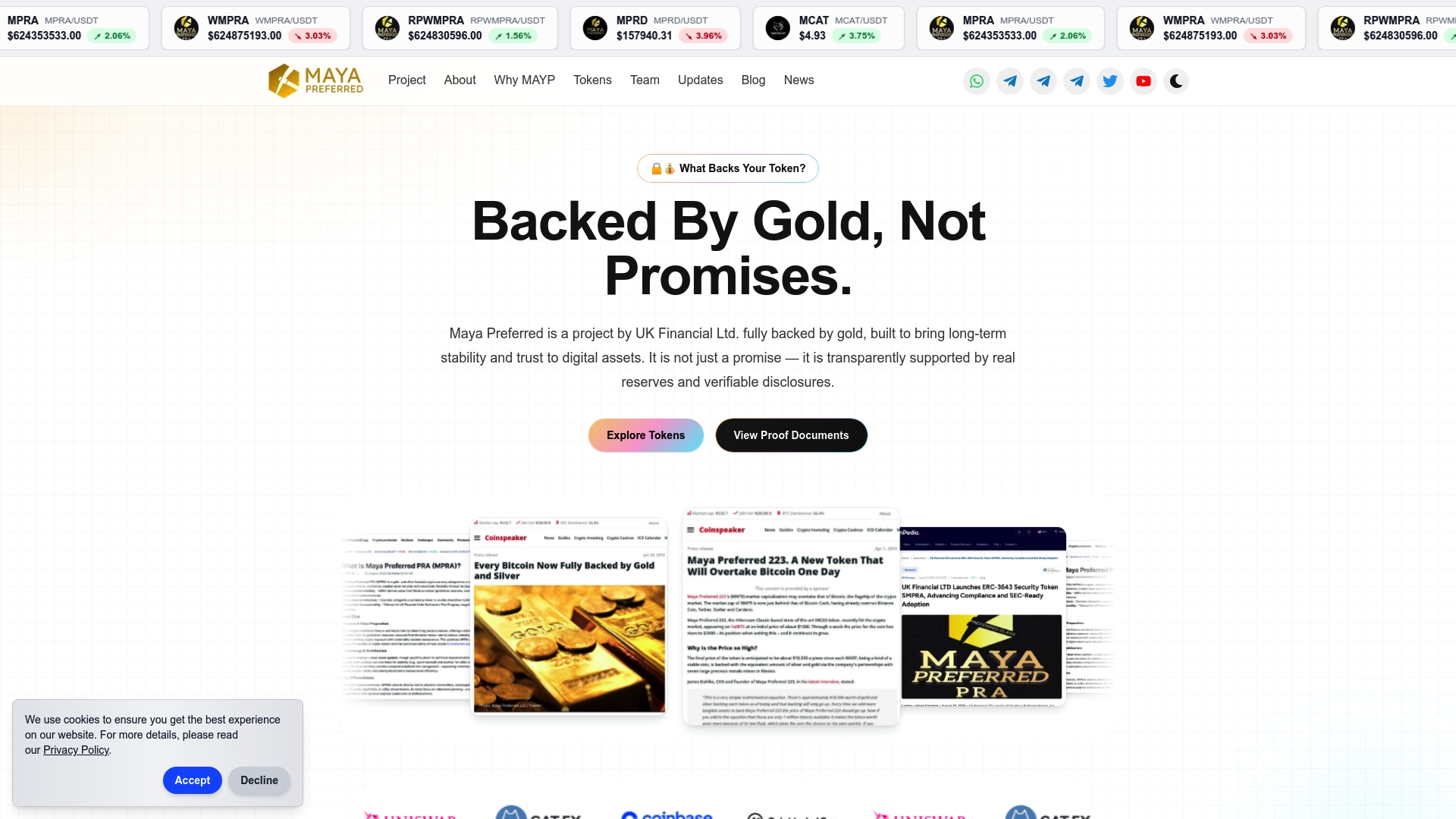
Experience the future of secure investing by exploring how Maya Preferred bridges traditional precious metals with blockchain innovation. Visit Maya Preferred to review detailed proof of reserves, audit documentation, and regulatory compliance updates that are designed to build your investor confidence. Take action now to join a community focused on transparency, stability, and long-term value in the evolving world of physical asset tokenization.
Frequently Asked Questions
What are physical assets in cryptocurrency projects?
Physical assets in cryptocurrency projects refer to tangible items like gold, silver, real estate, or collectibles that are represented through digital tokens on a blockchain. This tokenization enables increased transparency, liquidity, and security compared to traditional investment models.
How does tokenization of gold and silver work?
Tokenization of gold and silver involves verifying the physical asset, securing it in audited vaults, creating digital tokens that represent specific quantities, and ensuring transparency through ongoing audits and real-time tracking on the blockchain.
What are the key advantages of investing in asset-backed tokens?
The main advantages of investing in asset-backed tokens include reduced volatility, improved investor confidence due to direct connections to tangible assets, enhanced liquidity, and lower transaction costs compared to traditional asset investments.
What are the main risks associated with asset-backed tokens?
Key risks of investing in asset-backed tokens include custody risks related to asset management, valuation uncertainties, potential regulatory shifts, technological vulnerabilities in blockchain infrastructure, and market liquidity challenges.