
Why Real-World Assets on Blockchain Matter Now

Bold predictions suggest that the global market for tokenized real-world assets could surpass $10 trillion within the next decade, and American investors are quickly taking notice. With traditional investments facing new uncertainties, many are looking toward blockchain to democratize access to assets like real estate or commodities. This practical guide reveals how asset tokenization is changing what it means to invest, making global opportunities more accessible for everyone.
Table of Contents
- Defining Real-World Asset Tokenization
- How Blockchain Connects to Physical Assets
- Types of Asset-Backed Tokens Explained
- Legal Protections and Regulatory Compliance
- Investor Risks, Benefits, and Common Pitfalls
Key Takeaways
| Point | Details |
|---|---|
| Real-World Asset Tokenization | Transforming physical assets into blockchain-based tokens enhances liquidity and reduces investment barriers. |
| Blockchain’s Role | Blockchain technology offers secure, transparent connections between digital tokens and physical assets, enabling precise asset tracking. |
| Types of Tokens | Asset-backed tokens consist of fungible and non-fungible categories, each serving unique investment purposes and requiring diversified portfolios. |
| Regulatory Compliance | Evolving regulatory frameworks necessitate thorough due diligence and compliance for investors in tokenized assets. |
Defining Real-World Asset Tokenization
Real-World Assets (RWAs) represent a groundbreaking approach to transforming traditional physical and financial assets into digital tokens on blockchain networks. Real-world asset tokenization fundamentally describes the process of converting tangible and intangible assets like real estate, commodities, bonds, and intellectual property into blockchain-based digital representations.
The tokenization process involves creating digital tokens that precisely mirror the value, ownership rights, and characteristics of underlying physical assets. These blockchain-based tokens enable fractional ownership, meaning investors can purchase smaller portions of high-value assets that were previously inaccessible. By breaking down complex assets into tradable digital units, tokenization dramatically increases liquidity and reduces traditional investment barriers.
Blockchain technology provides critical infrastructure for RWA tokenization by offering transparent, immutable, and secure transaction records. Digital tokens representing real-world assets can be traded globally, enabling investors to access markets that were traditionally restricted by geographical, regulatory, or financial limitations. The decentralized nature of blockchain ensures that ownership transfers, transaction histories, and asset provenance can be tracked with unprecedented accuracy and trust.
Pro Investment Strategy: Research platforms offering regulated and legally compliant RWA tokenization to minimize risks and maximize potential returns in this emerging digital investment landscape.
How Blockchain Connects to Physical Assets
Blockchain technology creates a revolutionary bridge between digital representation and physical asset management by establishing transparent, verifiable connections that transform traditional supply chain and financial interactions. Blockchain-enabled digital asset tokenization fundamentally reimagines how physical assets can be tracked, verified, and traded with unprecedented levels of security and precision.
The core mechanism of blockchain connection involves creating immutable digital records that correspond directly to physical asset characteristics. This process allows for real-time tracking of asset provenance, ownership transfers, and transaction histories across complex global networks. Crypto assets integrated with supply chain flows enable businesses to condition payments based on precise product movement, creating a more granular and transparent economic ecosystem.
Technically, blockchain achieves physical asset connection through smart contracts and tokenization protocols that establish verifiable links between digital tokens and their underlying physical counterparts. These digital representations capture critical metadata including ownership rights, transaction history, legal documentation, and real-world performance metrics. By creating these comprehensive digital signatures, blockchain transforms how physical assets are understood, traded, and managed across international boundaries.

Pro Investment Strategy: Prioritize blockchain platforms with robust verification mechanisms that can demonstrate direct, auditable connections between digital tokens and their physical asset representations.
Types of Asset-Backed Tokens Explained
Asset-backed tokens represent a sophisticated approach to digital asset representation, encompassing multiple innovative token structures that transform traditional investment paradigms. Two-tier tokenization architecture introduces a groundbreaking method of creating digital asset representations through Element Tokens and Everything Tokens, which enable investors to engage with assets at both fractional and comprehensive levels.
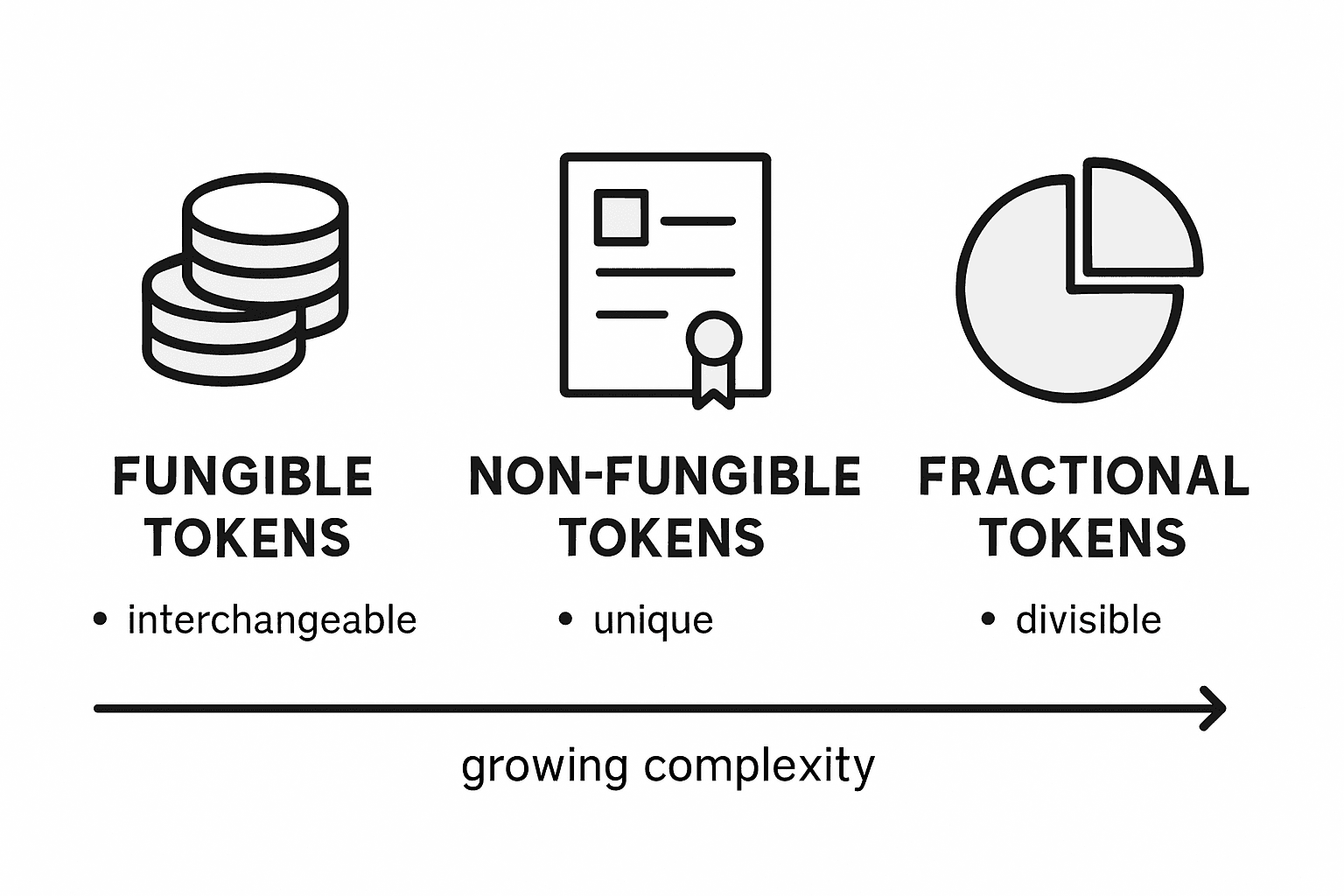
The primary categories of asset-backed tokens include fungible and non-fungible tokens, each serving distinct investment purposes. Non-fungible tokens (NFTs) provide unique digital certificates of ownership for specific assets like artwork, real estate, or collectibles, ensuring each token represents a distinct, non-interchangeable asset. Fungible tokens, by contrast, represent interchangeable assets where each token holds equivalent value, such as commodities or standardized financial instruments.
Here’s a concise comparison of fungible and non-fungible asset-backed tokens:
| Token Type | Key Characteristics | Typical Use Cases |
|---|---|---|
| Fungible Token | Interchangeable, identical value | Commodities, bonds, funds |
| Non-Fungible Token (NFT) | Unique, distinct asset representation | Art, real estate, collectibles |
Advanced tokenization models now incorporate sophisticated mechanisms like fractional ownership, programmable rights, and dynamic asset representation. These tokens can embed complex ownership rules, automatic dividend distributions, and real-time performance tracking, transforming how investors interact with physical and financial assets. The blockchain infrastructure ensures transparent, immutable records of ownership, transaction history, and asset characteristics, creating unprecedented levels of trust and accessibility in global investment markets.
Pro Investment Strategy: Diversify your token portfolio across different asset-backed token types, focusing on platforms offering comprehensive asset verification and transparent ownership documentation.
Legal Protections and Regulatory Compliance
Regulatory frameworks for real-world asset tokenization are rapidly evolving to address the complex intersection of digital technologies and traditional financial systems. Tokenized real-world assets fall under specific legal jurisdictions depending on the underlying asset’s characteristics, with securities-based tokens facing stringent oversight from regulatory bodies like the U.S. Securities and Exchange Commission.
Governmental authorities worldwide are developing comprehensive legal structures to manage digital asset ecosystems. Emerging regulatory initiatives such as the European Union’s Markets in Crypto-assets Regulation (MiCA) and the U.S. GENIUS Act demonstrate a proactive approach to integrating digital assets into established financial regulatory frameworks. These regulations aim to protect investors, prevent financial misconduct, and create standardized guidelines for tokenized asset management.
The legal landscape for asset-backed tokens involves multiple layers of compliance, including securities law, anti-money laundering regulations, know-your-customer requirements, and cross-border financial transaction rules. Investors must navigate these complex regulatory environments by conducting thorough due diligence, understanding the specific legal classifications of their digital assets, and working with platforms that demonstrate robust compliance mechanisms and transparent reporting standards.
Pro Investment Strategy: Prioritize investment platforms with clear, documented regulatory compliance and comprehensive legal documentation for their tokenized asset offerings.
Investor Risks, Benefits, and Common Pitfalls
Real-world asset tokenization presents a complex investment landscape with significant potential and inherent challenges. Emerging tokenization strategies reveal substantial liquidity constraints that investors must carefully navigate, including low trading volumes and limited market participation driven by structural barriers like regulatory restrictions and centralized custody mechanisms.
Comprehensive tokenization analysis highlights both transformative benefits and critical risks. The primary advantages include enhanced asset liquidity, reduced transaction costs, improved accessibility, and accelerated transaction speeds. However, investors must remain vigilant about potential pitfalls such as price volatility, evolving regulatory environments, and inherent security vulnerabilities that can significantly impact investment outcomes.
Below is a summary of major investor risks and benefits in real-world asset tokenization:
| Category | Main Risks | Primary Benefits |
|---|---|---|
| Liquidity | Low trading volume, restricted access | Enhanced liquidity for assets |
| Regulation | Changing compliance, legal uncertainty | Standardized global frameworks |
| Security | Vulnerability to digital attacks | Immutable and transparent records |
| Accessibility | Complex onboarding, knowledge barriers | Fractional and global ownership |
Successful navigation of real-world asset tokenization requires a multifaceted approach encompassing thorough due diligence, diversification strategies, and continuous market education. Investors should prioritize platforms with transparent governance, robust compliance mechanisms, and demonstrable track records of asset verification. Understanding the nuanced interplay between blockchain technology, regulatory frameworks, and traditional financial systems is crucial for mitigating risks and maximizing potential returns in this emerging asset class.
Pro Investment Strategy: Develop a risk-management framework that includes systematic research, portfolio diversification, and consistent monitoring of regulatory and technological developments in the asset tokenization ecosystem.
Unlock True Transparency and Security with Gold and Silver-Backed Digital Assets
The article highlights the challenges investors face with real-world asset tokenization such as liquidity constraints, regulatory uncertainties, and the need for clear asset verification. At Maya Preferred, we address these pain points by offering blockchain-based tokens backed by tangible gold and silver reserves. Each token, including MPRA, MPRD, and MCAT, is supported by detailed proof documents, audits, and transparent disclosures to ensure you benefit from verified ownership and robust legal protections.
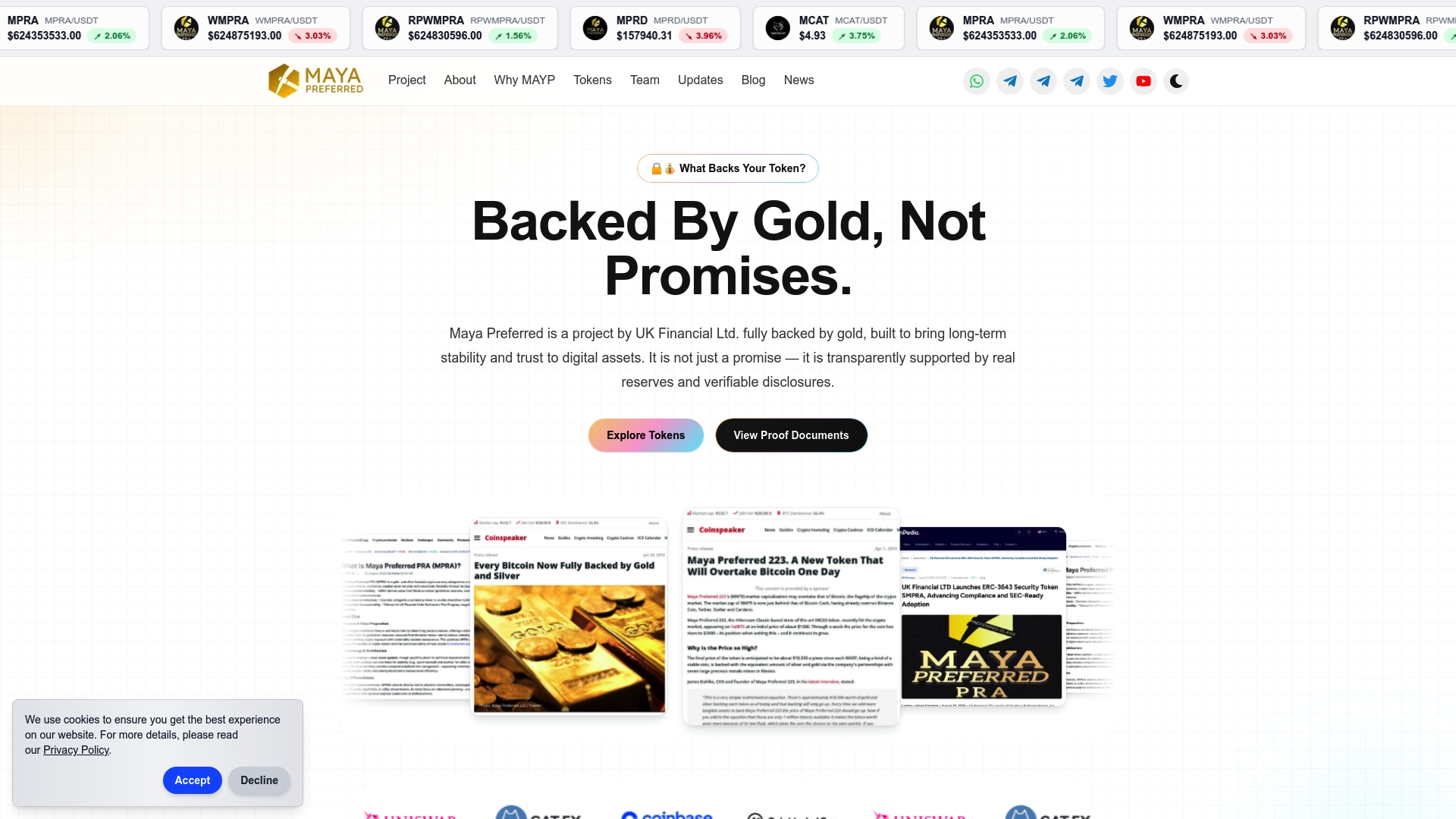
Start building your portfolio with confidence today by exploring our comprehensive asset-backed tokens and regulatory compliance updates. Take advantage of the synergy between precious metals and blockchain technology now. Visit Maya Preferred to gain access to transparent digital assets and join a trusted community that brings real-world value into the digital age. Discover the future of secure investment at Maya Preferred and unlock the power of true asset tokenization with proof and trust.
Frequently Asked Questions
What is real-world asset tokenization?
Real-world asset tokenization is the process of converting physical and financial assets, such as real estate and commodities, into digital tokens on blockchain networks, allowing for fractional ownership and increased liquidity.
How does blockchain technology benefit real-world asset management?
Blockchain technology creates transparent and secure digital records, enabling real-time tracking of asset ownership, provenance, and transaction histories, which enhances trust and efficiency in the management of physical assets.
What are the different types of asset-backed tokens?
Asset-backed tokens can be categorized into fungible tokens, which are interchangeable and represent assets like commodities, and non-fungible tokens (NFTs), which are unique digital representations of distinct assets like art or property.
What regulatory considerations should investors be aware of when dealing with tokenized assets?
Investors must navigate complex regulatory frameworks, including securities laws and compliance requirements, which vary based on the nature of the tokenized asset. It’s crucial to choose investment platforms with strong legal documentation and compliance protocols.