
Stablecoin Backing: Ensuring Digital Asset Trust

Most American cryptocurrency investors know that true stability is rare in the digital asset space, especially when it comes to gold and silver-backed tokens. With over 80 percent of failed stablecoin projects linked to transparency or reserve issues, choosing the right asset-backed digital asset becomes crucial for those who prioritize trust and regulatory compliance. This article unpacks the real mechanisms behind different stablecoin models, helping you identify the gold and silver-backed tokens that meet your high standards for verification and security.
Table of Contents
- Stablecoin Backing Defined And Debunked
- Types Of Stablecoin Collateral Assets Explained
- Verification, Proof, And Transparency Standards
- Risks And Challenges To Asset-Backed Coins
- Gold And Silver-Backed Tokens: Unique Advantages
Key Takeaways
| Point | Details |
|---|---|
| Stablecoin Backing Mechanisms | Stablecoins use three primary backing strategies: fiat-collateralized, crypto-collateralized, and algorithmic models, each with distinct strengths and vulnerabilities. |
| Importance of Transparency | Transparency builds investor trust, necessitating independent audits and real-time reporting to verify reserves and asset compositions. |
| Systemic Risks | Asset-backed cryptocurrencies face significant risks, including reserve management issues, regulatory uncertainty, and technological vulnerabilities that can threaten stability. |
| Advantages of Precious Metal-Backed Tokens | Gold and silver-backed tokens offer unique stability by combining tangible asset value with the flexibility of digital trading, enhancing investor confidence. |
Stablecoin Backing Defined and Debunked
Stablecoins represent a critical innovation in cryptocurrency markets, designed to provide price stability through various backing mechanisms. Unlike traditional cryptocurrencies with volatile valuations, these digital assets aim to maintain a consistent value by anchoring themselves to external reference points such as fiat currencies, commodities, or algorithmic protocols.
In exploring stablecoin models, researchers have identified multiple approaches to achieving price stability. Comprehensive academic reviews reveal that stablecoins fundamentally operate through three primary backing strategies: fiat-collateralized, crypto-collateralized, and algorithmic models. Fiat-collateralized stablecoins maintain reserves of traditional currency like US Dollars, providing direct backing and theoretical price consistency. Crypto-collateralized variants use cryptocurrency reserves, while algorithmic models dynamically adjust token supply to stabilize pricing through complex mathematical mechanisms.
Market Vulnerabilities emerge when these backing strategies fail to deliver promised stability. Detailed scholarly analysis demonstrates that many stablecoin projects struggle with maintaining consistent value propositions. Common challenges include insufficient reserve transparency, potential bank run scenarios, and algorithmic design limitations that can precipitate rapid value collapses. Investors must critically evaluate the underlying mechanisms and reserve documentation before committing capital to any stablecoin project.
Pro Investor Tip: Always conduct thorough due diligence by examining a stablecoin’s reserve documentation, auditing processes, and historical price performance before making any investment decisions.
Types of Stablecoin Collateral Assets Explained
Stablecoin collateral represents the foundational mechanism that enables digital assets to maintain consistent market value. Rigorous academic classifications identify four primary categories of stablecoin backing: fiat-backed, commodity-backed, crypto-backed, and algorithmic models, each with distinct operational characteristics and risk profiles.

Fiat-backed stablecoins utilize traditional currency reserves as their primary stabilization mechanism. These tokens maintain a direct 1:1 peg with underlying currencies like US Dollars, providing investors with a sense of predictability. Commodity-backed variants derive value from physical assets such as gold or silver, offering an additional layer of tangible asset protection. Comprehensive comparative research demonstrates that these exogenous models offer more transparent valuation frameworks compared to purely digital alternatives.
Crypto-Collateralized Models represent a more complex approach, using cryptocurrency reserves to back token value. These systems often require overcollateralization to mitigate volatility risks, meaning more cryptocurrency is held in reserve than the stablecoin’s total market value. Algorithmic stablecoins diverge significantly, employing sophisticated mathematical protocols to dynamically adjust token supply, aiming to maintain price stability through computational mechanisms rather than direct asset backing.
Pro Investment Strategy: Thoroughly assess a stablecoin’s collateral composition, examining reserve ratios, asset quality, and independent audit documentation before considering any investment allocation.
Here’s a concise comparison of major stablecoin backing models and their market implications:
| Model Type | Backing Asset | Key Strength | Main Vulnerability |
|---|---|---|---|
| Fiat-Collateralized | US Dollars or Euros | Predictable 1:1 price peg | Banking and audit risk |
| Crypto-Collateralized | Cryptocurrencies | Decentralization, transparency | Overcollateralization needed |
| Commodity-Backed | Gold or Silver | Tangible value preservation | Storage and verification risk |
| Algorithmic | No direct reserves | Scalability and programmability | Peg stability during shocks |
Verification, Proof, and Transparency Standards
Transparency represents the cornerstone of trust in stablecoin ecosystems, establishing critical mechanisms for investor confidence and regulatory compliance. Industry-leading analysis from professional services firms highlights the evolving landscape of verification standards, emphasizing the need for robust, independent attestation processes that provide real-time insights into reserve compositions and asset backing.
The verification framework for stablecoins encompasses multiple critical components. Independent financial audits now require comprehensive documentation demonstrating exact reserve holdings, liquidity ratios, and real-time asset valuations. These audits must go beyond traditional accounting approaches, incorporating blockchain verification techniques that allow for immediate, transparent tracking of reserve assets. Cryptographic proof mechanisms enable investors to independently verify token backing, creating a new paradigm of financial transparency that challenges traditional centralized financial reporting models.
International regulatory research underscores the emerging global consensus around transparency standards. Key verification requirements now include periodic third-party audits, real-time reserve reporting, and detailed disclosures about asset composition, geographical distribution, and risk management protocols. Stablecoin issuers must demonstrate not just the existence of reserves, but also their quality, liquidity, and potential systemic risks. This multifaceted approach aims to protect investors and prevent potential market destabilization through comprehensive, proactive disclosure mechanisms.
Pro Verification Strategy: Request and thoroughly review the most recent independent audit reports, focusing on reserve composition, third-party verification methods, and detailed asset allocation disclosures before making any investment decisions.
The following table summarizes leading transparency and verification practices required for trustworthy stablecoins:
| Verification Component | Practical Example | Impact on Investors |
|---|---|---|
| Independent Third-Party Audit | Quarterly financial review | Builds trust and confidence |
| Real-Time Reserve Tracking | Blockchain-based reporting | Enables immediate asset checks |
| Detailed Asset Disclosure | Public reserve breakdowns | Clarifies risk and backing |
| Liquidity Ratio Reporting | Daily published metrics | Signals issuer stability |
Risks and Challenges to Asset-Backed Coins
Systemic Risks represent the most significant threat to asset-backed cryptocurrencies, challenging their fundamental promise of stability and reliability. Comprehensive international research reveals multiple intricate vulnerability pathways that can potentially destabilize these digital financial instruments, ranging from operational failures to complex economic contagion mechanisms.
The primary risks facing asset-backed coins emerge from three critical domains. First, reserve management presents substantial challenges, with potential mismatches between claimed asset values and actual liquid holdings. Sudden market movements can trigger liquidity crises, where stablecoin issuers struggle to maintain promised redemption values. Second, regulatory uncertainty creates significant operational risks, as global financial authorities continue to develop and refine frameworks for digital asset oversight. Stablecoin projects must navigate an increasingly complex landscape of international compliance requirements, with potential sudden regulatory changes threatening entire ecosystems.
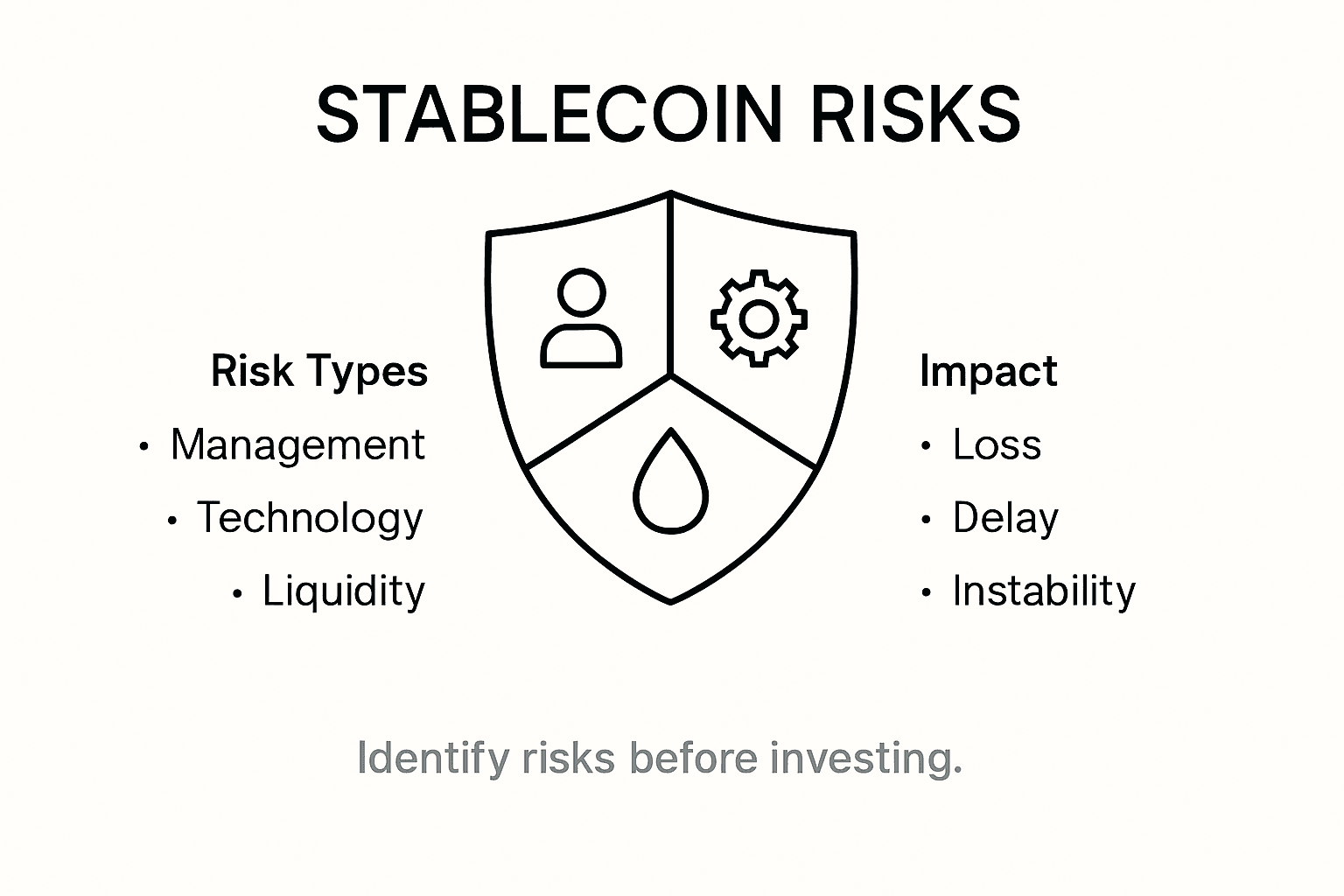
Third, technological vulnerabilities pose substantial risks to asset-backed coins. Blockchain infrastructure, smart contract design, and cryptographic security mechanisms can contain hidden weaknesses that malicious actors might exploit. Potential attack vectors include oracle manipulation, smart contract vulnerabilities, and sophisticated economic attack strategies that could compromise the entire token’s backing mechanism. These technological risks require continuous, proactive security assessments and robust mitigation strategies to maintain investor confidence and systemic stability.
Pro Risk Management Strategy: Conduct comprehensive due diligence by examining an asset-backed coin’s reserve documentation, technological infrastructure, regulatory compliance history, and independent security audits before making any investment commitments.
Gold and Silver-Backed Tokens: Unique Advantages
Precious metal-backed tokens represent a sophisticated approach to digital asset stability, offering investors a unique combination of technological innovation and traditional value preservation. Empirical research on precious metal collateralization demonstrates that gold and silver-backed tokens provide remarkable risk mitigation capabilities superior to purely algorithmic or fiat-based digital assets.
The fundamental advantage of gold and silver-backed tokens lies in their intrinsic value proposition. Unlike volatile cryptocurrencies or algorithmic stablecoins, these tokens derive stability from tangible, historically reliable assets with centuries of established economic significance. Gold and silver have consistently demonstrated resilience during market disruptions, offering a hedge against economic uncertainty. Maya Preferred’s transformation approach to real-world assets underscores the potential for bridging traditional precious metal investments with modern digital financial instruments.
Technologically, gold and silver-backed tokens introduce several unique advantages. The cryptographic verification of actual physical reserves provides unprecedented transparency, allowing investors to validate underlying asset holdings with greater confidence than traditional financial instruments. Multiple layers of security, including blockchain tracking and independent auditing, create a robust framework that addresses many systemic risks associated with digital assets. These tokens effectively combine the security of physical asset ownership with the flexibility and accessibility of digital trading platforms.
Pro Investment Strategy: Prioritize tokens with verifiable, fully audited precious metal reserves and transparent redemption mechanisms, ensuring your digital assets maintain direct, provable connection to physical gold and silver holdings.
Build Trust in Digital Assets Backed by Real Gold and Silver
Understanding the challenges of stablecoin backing means recognizing the critical need for transparency, verifiable reserves, and protection against market vulnerabilities. This article highlights common risks such as insufficient reserve documentation, transparency gaps, and the fragility of algorithmic price stabilization. If you are seeking digital assets that combine the benefits of blockchain with the security of tangible precious metals, Maya Preferred offers a uniquely trustworthy solution.
Our blockchain-based tokens, like MPRA, MPRD, and MCAT, are backed by verified gold and silver reserves. We provide comprehensive proof documents, independent audits, and clear disclosures that ensure you can verify exactly what underpins your investment. This commitment builds the lasting investor confidence that many stablecoins lack. Discover how the fusion of traditional precious metal value and cutting-edge digital technology can protect and stabilize your portfolio with full transparency.
Invest with confidence by visiting Maya Preferred to explore our asset-backed token ecosystem. Take the first step toward safer, transparent digital wealth today.
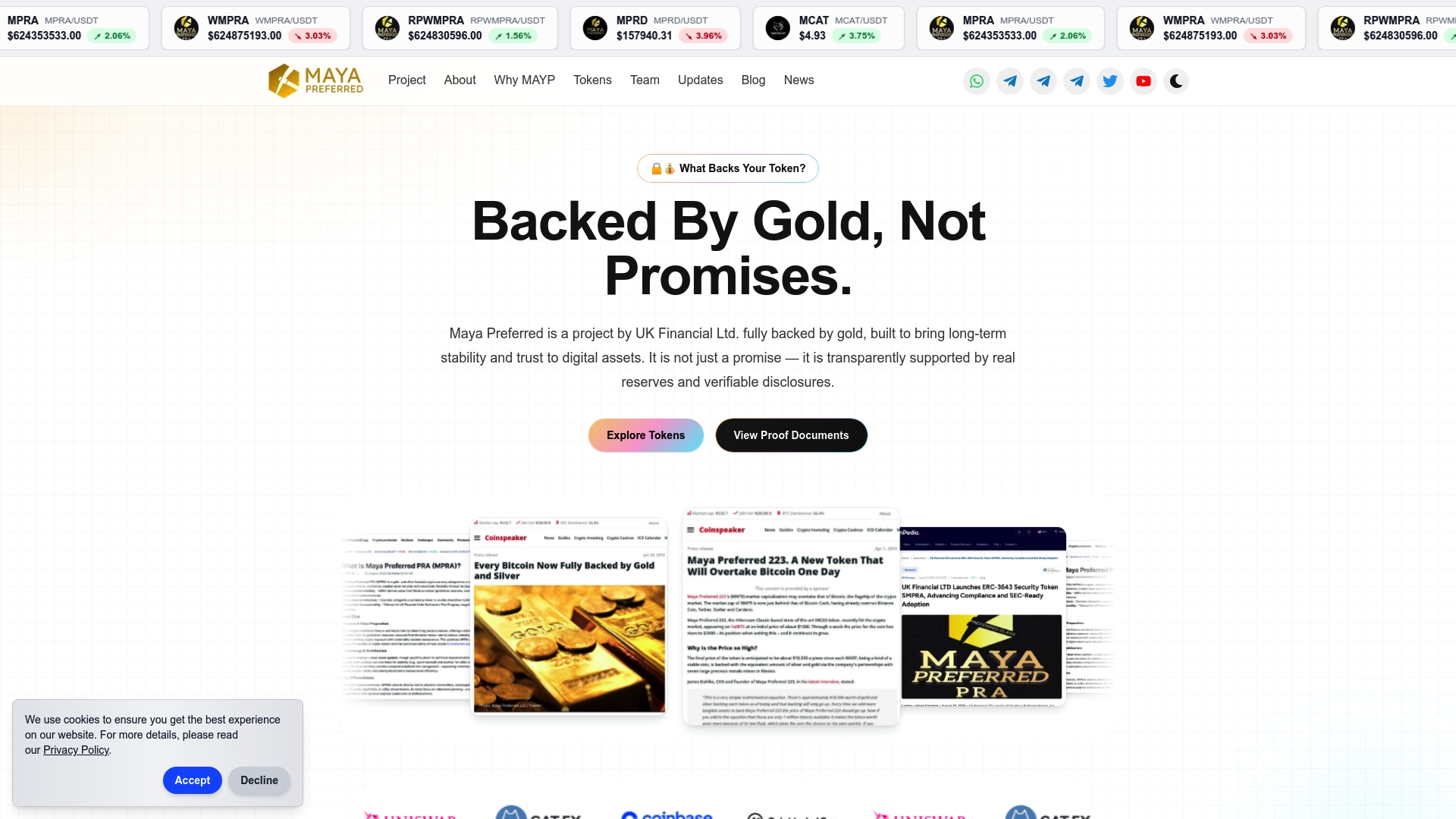
Don’t settle for unproven claims of backing. Explore how real-world assets create digital trust and stability only at Maya Preferred. Learn more about our innovative approach to gold and silver-backed tokens and secure your position in the future of asset-backed cryptocurrency now.
Frequently Asked Questions
What are stablecoins and how do they work?
Stablecoins are digital assets designed to maintain a stable value by being backed by external assets such as fiat currencies, commodities, or algorithmic mechanisms. They aim to provide a consistent price point unlike traditional cryptocurrencies.
What are the different types of stablecoin backing?
There are three primary types of stablecoin backing: fiat-collateralized, crypto-collateralized, and algorithmic models. Fiat-collateralized stablecoins are backed by traditional currencies, crypto-collateralized stablecoins use cryptocurrency reserves, and algorithmic stablecoins rely on mathematical protocols to regulate supply and demand.
How can I ensure the trustworthiness of a stablecoin?
To ensure trustworthiness, examine a stablecoin’s reserve documentation, verify independent audits, and investigate historical price performance. Look for transparency in reserve tracking and clear disclosures about asset composition and risk management.
What risks are associated with asset-backed stablecoins?
Asset-backed stablecoins face systemic risks including reserve management challenges, regulatory uncertainties, and technological vulnerabilities. These factors can impact their ability to maintain stable valuations during market fluctuations.