
Stablecoins in 2025: What Investors Need to Know

Most american crypto investors agree that price swings in digital assets can be stressful, especially when considering long-term wealth protection. With stablecoins now making up over 14 percent of the global crypto market, many are searching for tokens tied to physical assets like gold that offer genuine stability and transparent compliance. This article cuts through common myths about stablecoins, providing direct insights on asset-backed structures and clear guidance for choosing secure, regulated options in 2025.
Table of Contents
- Defining Stablecoins And Common Misconceptions
- Types Of Stablecoins: Asset-Backed Vs. Algorithmic
- How Stablecoins Maintain Value And Stability
- Regulatory Landscape And Compliance Trends
- Risks, Transparency, And What To Avoid
Key Takeaways
| Point | Details |
|---|---|
| Stablecoin Types | Understand the difference between asset-backed and algorithmic stablecoins, as each has unique risk profiles. |
| Regulatory Trends | Stay informed about evolving regulations, as compliance can significantly impact the stability and viability of stablecoin investments. |
| Risk Management | Prioritize stablecoins with transparent reserve management and independent audits to mitigate investment risks. |
| Investment Approach | Thoroughly research the collateralization method and historical performance of any stablecoin before investing. |
Defining Stablecoins and Common Misconceptions
Stablecoins represent a critical innovation in digital finance, designed to offer price stability in the volatile cryptocurrency ecosystem. According to recent IMF research, these digital assets aim to maintain consistent value by being denominated in traditional currencies or linked to specific asset baskets, creating a bridge between traditional financial systems and blockchain technology.
Contrary to popular belief, stablecoins are not inherently risk-free. While they are engineered to minimize price fluctuations, different underlying mechanisms create varying levels of reliability. Academic surveys reveal that stablecoins employ multiple stabilization strategies:
- Fiat-Collateralized: Backed by reserve currencies like US Dollars
- Crypto-Collateralized: Backed by other cryptocurrency reserves
- Algorithmic: Managed through complex mathematical supply control mechanisms
Each approach carries distinct advantages and potential vulnerabilities. Fiat-collateralized stablecoins offer direct currency backing but require robust financial management. Crypto-collateralized tokens provide decentralized alternatives but can be more volatile. Algorithmic stablecoins represent the most experimental model, dynamically adjusting supply to maintain price stability.
Pro Tip: Before investing in any stablecoin, carefully examine its specific collateralization method and track record of maintaining consistent value across different market conditions.
Types of Stablecoins: Asset-Backed vs. Algorithmic
Comprehensive research on stablecoin classifications reveals a nuanced landscape of digital assets designed to maintain price stability through distinct mechanisms. The primary categories include asset-backed and algorithmic stablecoins, each representing fundamentally different approaches to maintaining consistent market value.
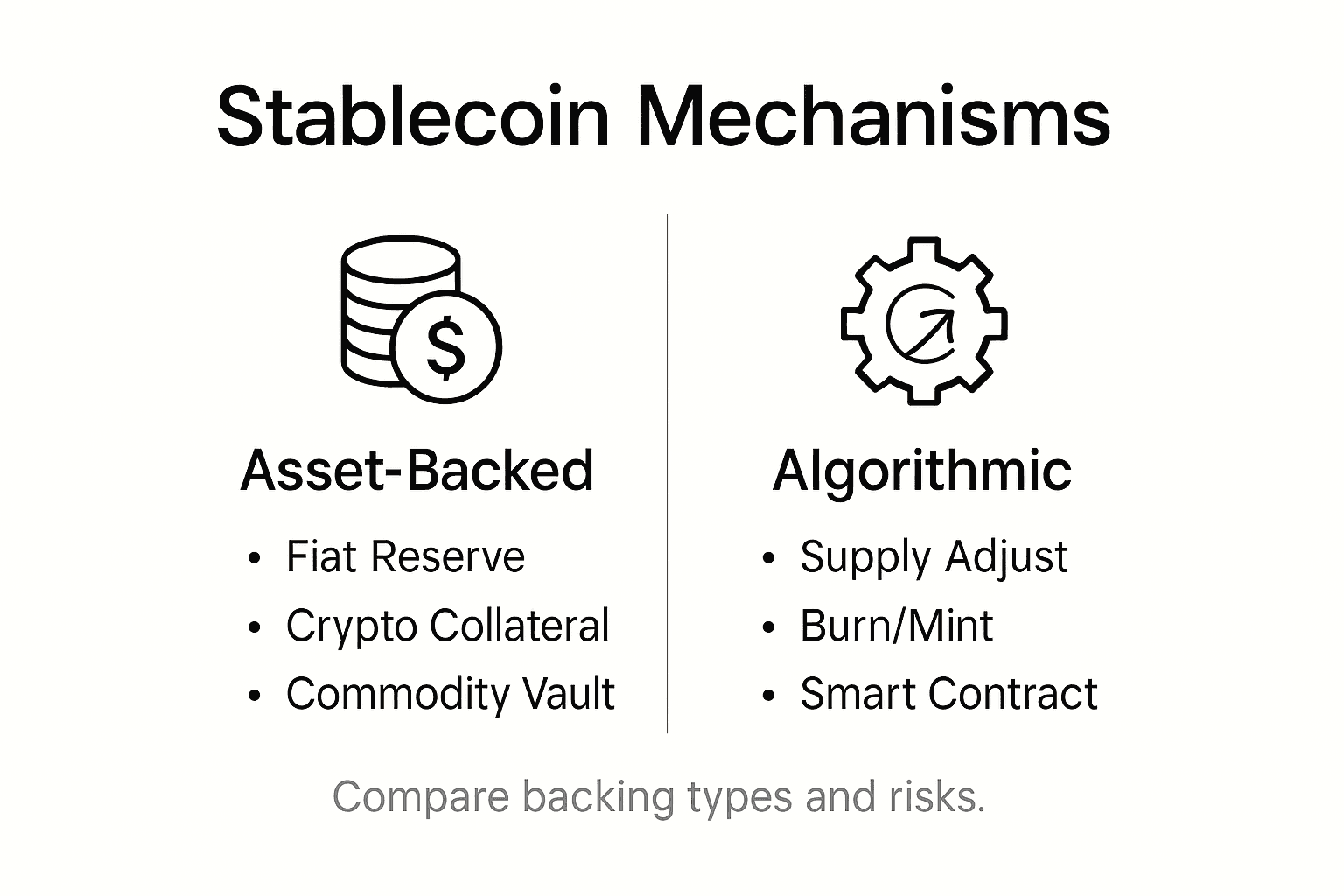
Asset-Backed Stablecoins provide direct value protection through tangible reserve holdings. These can be further subdivided into three primary types:
- Fiat-Collateralized: Directly backed by traditional currency reserves
- Commodity-Backed: Linked to physical assets like gold or silver
- Crypto-Collateralized: Secured by cryptocurrency reserves
In contrast, Algorithmic Stablecoins operate through complex mathematical models that dynamically adjust token supply to maintain price equilibrium. According to BIS research, these tokens lack direct asset backing, instead relying on sophisticated smart contract mechanisms to stabilize value.
The fundamental difference between asset-backed and algorithmic stablecoins lies in their stabilization approach. Asset-backed tokens maintain value through direct reserve holdings, offering more predictable price maintenance. Algorithmic stablecoins represent a more experimental model, using supply manipulation algorithms that can be inherently more volatile and complex.

Here’s a summary highlighting key differences between major stablecoin types:
| Stablecoin Type | Reserve Structure | Volatility Risk | Common Use Case |
|---|---|---|---|
| Fiat-Collateralized | Backed by cash reserves | Low | Payments, remittances |
| Commodity-Backed | Backed by gold or commodities | Low to moderate | Hedging, asset exposure |
| Crypto-Collateralized | Backed by crypto assets | Moderate | DeFi, collateral lending |
| Algorithmic | No direct reserves; algorithmic | High | Experimental stable value |
Pro Tip: When evaluating stablecoins, prioritize understanding the specific mechanism behind price stability and carefully assess the transparency of reserve holdings or algorithmic control systems.
How Stablecoins Maintain Value and Stability
Advanced research on stablecoin mechanisms reveals complex strategies for maintaining consistent digital asset value. The primary objective of these innovative financial instruments is to provide price stability through sophisticated techniques that counteract market volatility and maintain a predictable value proposition.
Stablecoins employ several core mechanisms to achieve value consistency:
- Collateralization: Backing tokens with tangible assets
- Reserve Management: Maintaining precise asset reserves
- Supply Manipulation: Dynamically adjusting token circulation
- Redemption Protocols: Enabling predictable token conversion
Full Collateralization represents the most straightforward approach, where each token is directly backed by an equivalent value of traditional assets. This method provides the most transparent and reliable stability mechanism, ensuring investors can always convert tokens at a consistent rate. Systematic literature reviews highlight that full collateralization significantly reduces price fluctuation risks compared to partial or algorithmic models.
Algorithmic stablecoins utilize more complex strategies, using smart contract mechanisms to dynamically adjust token supply based on real-time market demand. These advanced systems attempt to maintain value through mathematical models that expand or contract token circulation, creating a self-regulating economic mechanism. However, these approaches remain more experimental and potentially more vulnerable to market disruptions.
Pro Tip: Always verify the specific stabilization mechanism of any stablecoin, paying close attention to the transparency and reliability of its underlying asset management strategy.
Regulatory Landscape and Compliance Trends
Global stablecoin regulatory research reveals a rapidly evolving compliance environment that is reshaping digital asset governance worldwide. The regulatory landscape for stablecoins has transitioned from experimental oversight to structured, comprehensive frameworks designed to protect investor interests and maintain financial system integrity.
Key regulatory trends emerging across major global jurisdictions include:
- Full Reserve Requirements: Mandating complete asset backing
- Redemption Rights: Ensuring investors can convert tokens predictably
- Anti-Money Laundering (AML) Standards: Implementing rigorous verification protocols
- Know Your Customer (KYC) Compliance: Establishing strict user identification processes
- Transparency Reporting: Requiring detailed disclosure of asset reserves
Different regions have developed nuanced approaches to stablecoin regulation. The United States has adopted a cautious, comprehensive framework emphasizing investor protection and systemic risk mitigation. European Union regulators have focused on creating standardized compliance mechanisms that balance innovation with financial stability. Asian markets like Singapore have positioned themselves as more flexible regulatory environments, seeking to attract blockchain and digital asset innovations.
The emerging global regulatory consensus suggests a trend toward standardized compliance requirements. Stablecoin issuers must now navigate increasingly complex legal landscapes, demonstrating robust risk management, transparent asset backing, and comprehensive user verification processes. These evolving standards aim to transform stablecoins from experimental financial instruments into reliable, regulated digital assets.
The following table compares how regulators approach stablecoins across leading regions:
| Region | Regulatory Focus | Compliance Burden |
|---|---|---|
| United States | Investor protection, transparency | High |
| European Union | Standardized compliance, stability | Moderate to high |
| Singapore | Innovation-friendly, AML/KYC | Moderate |
Pro Tip: Continuously monitor regulatory developments in your primary investment jurisdictions, as compliance requirements for stablecoins are rapidly changing and can significantly impact investment strategies.
Risks, Transparency, and What to Avoid
Global stablecoin risk research reveals complex vulnerabilities that investors must carefully navigate in the evolving digital asset landscape. While stablecoins promise financial innovation, they are not immune to significant technical, operational, and systemic risks that can compromise investor value and market stability.
Key risks investors should be aware of include:
- Reserve Management Failures: Inadequate or misrepresented asset backing
- Liquidity Constraints: Potential inability to convert tokens quickly
- Operational Vulnerabilities: Technical infrastructure weaknesses
- Regulatory Compliance Gaps: Potential legal and regulatory exposures
- Market Manipulation Risks: Potential for coordinated trading activities
European Central Bank analysis emphasizes the critical importance of rigorous transparency measures. Investors should demand comprehensive, independently audited reserve documentation, clear redemption processes, and verifiable asset allocation strategies. Tokens without demonstrable, real-time reserve reporting represent significant investment risks.
Algorithmic stablecoins present particularly complex challenges, often lacking tangible asset foundations. These tokens rely on mathematical models that can fail under market stress, potentially leading to sudden value collapses. Prudent investors should prioritize fully collateralized stablecoins with transparent reserve management, regular third-party audits, and clear regulatory compliance frameworks.
Pro Tip: Always conduct thorough due diligence, requesting detailed reserve documentation and independent audit reports before committing capital to any stablecoin investment.
Secure Your Investments with Truly Asset-Backed Stablecoins
The article highlights the critical challenges investors face with stablecoins, especially the risks linked to algorithmic models and inadequate transparency. If you are looking for digital assets that combine stability with real-world value, understanding the importance of full collateralization, transparent reserves, and regulated compliance is key. Maya Preferred addresses these pain points by offering blockchain-based tokens backed directly by physical gold and silver reserves, which means your investment is tied to tangible assets rather than volatile algorithms or obscure reserves.
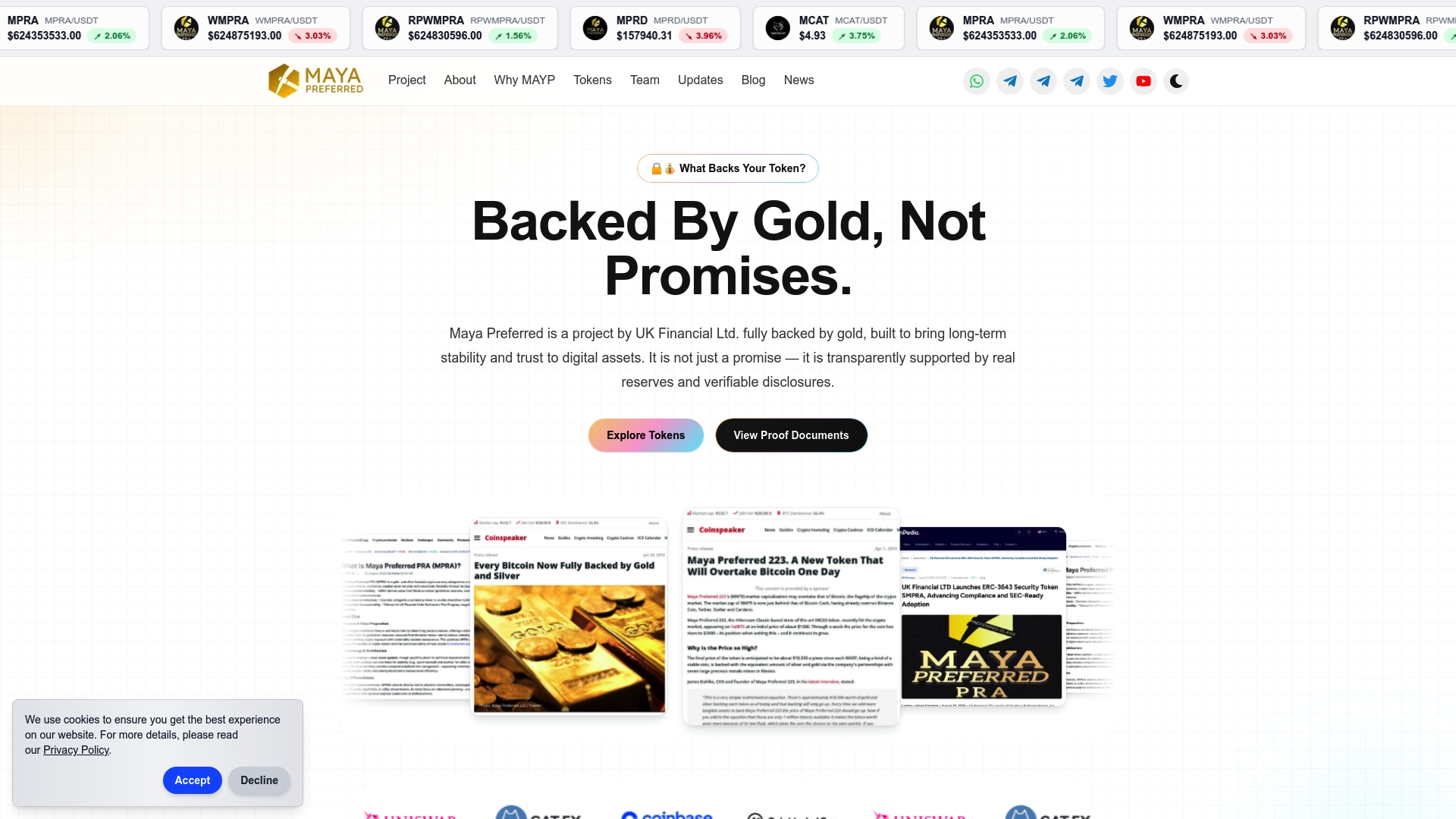
Discover how Maya Preferred’s MPRA, MPRD, and MCAT tokens provide clear proof of asset backing through detailed audits and legal filings. This approach offers investors peace of mind in a fast-evolving regulatory landscape while bridging traditional precious metals investment with modern digital currency security. Take control of your stablecoin portfolio today by exploring more about our unique gold and silver-backed digital assets. Visit Maya Preferred now to start investing with confidence and transparency.
Frequently Asked Questions
What are stablecoins and how do they work?
Stablecoins are digital assets designed to maintain price stability by being pegged to traditional currencies, commodities, or through algorithmic mechanisms. They aim to provide a bridge between the volatility of cryptocurrencies and the stability of fiat currencies.
What types of stablecoins exist?
There are primarily two categories of stablecoins: asset-backed and algorithmic. Asset-backed stablecoins are backed by tangible reserves like fiat or commodities, while algorithmic stablecoins use smart contracts to manage supply without direct asset backing.
What are the risks associated with investing in stablecoins?
Investors face several risks including reserve management failures, liquidity constraints, operational vulnerabilities, regulatory compliance gaps, and market manipulation risks. It is crucial to perform due diligence and understand these risks before investing.
How do regulatory trends impact stablecoins?
Regulatory frameworks for stablecoins are evolving, focusing on investor protection, asset backing transparency, and compliance with anti-money laundering and customer verification standards. Adhering to these regulations can influence the stability and reliability of stablecoin investments.