
Tokenization of Precious Metals: Why Trust Matters

For many investors in the United States, Canada, and across Europe, adding gold or silver to a portfolio has always meant working through dealers or paying high storage fees. Today, the rise of blockchain-based technology offers a direct path to fractional ownership of physical metals with full transparency and flexibility. Now, digital tokens backed by real assets give both seasoned and new investors an efficient way to join global precious metals markets while maintaining verifiable links to actual vault holdings.
Table of Contents
- Tokenization of Precious Metals Defined Clearly
- Gold, Silver, and Other Metal Token Types
- How Precious Metals Tokens Are Created and Managed
- Legal and Regulatory Foundations for Metal Tokens
- Key Risks, Costs, and Investor Protections
- Tokenized Metals vs Traditional Investments Compared
Key Takeaways
| Point | Details |
|---|---|
| Tokenization of Metals | Tokenization digitizes physical precious metals into tradable digital tokens, enabling fractional ownership and increased liquidity. |
| Investment Diversification | A variety of metal tokens, including gold, silver, and rare earth metals, offer unique investment opportunities and different risk profiles. |
| Legal and Regulatory Framework | The legal landscape for metal tokens is complex and varies by jurisdiction, necessitating a careful approach to compliance and investor protection. |
| Risk Management Strategies | Investors should implement thorough due diligence and risk mitigation techniques to navigate technological, regulatory, and counterparty risks effectively. |
Tokenization of Precious Metals Defined Clearly
Tokenization represents a groundbreaking method of digitizing physical precious metal assets through blockchain technology. By converting ownership rights into tradable digital tokens, investors can now access fractional ownership of gold and silver with unprecedented transparency and flexibility. Digitizing real-world commodity assets enables global investors to participate in precious metal markets with reduced barriers.
At its core, metal tokenization transforms traditional asset ownership by representing physical metals stored in secure vaults as blockchain-based digital certificates. Each token corresponds to a specific quantity of gold or silver, allowing investors to own and trade smaller fractions of precious metals that were previously challenging to subdivide. These digital tokens provide enhanced liquidity, enabling 24/7 trading and global accessibility that traditional metal investments cannot match.
The tokenization process involves several critical components: secure physical metal storage, precise digital representation, regulatory compliance, and transparent custody arrangements. Investors receive digital tokens that directly link to verified metal reserves, creating a direct ownership mechanism that bridges traditional financial systems with emerging decentralized finance platforms. Secure ownership claims in physical metals ensure that each token maintains intrinsic value and legal legitimacy.
Pro Tip: Always verify the specific metal backing, storage location, and independent audit processes before investing in any metal-backed digital token.
Gold, Silver, and Other Metal Token Types
Digital tokenization extends beyond traditional gold and silver, encompassing a diverse range of precious and industrial metals that offer unique investment opportunities. Two-tiered investment strategies enable investors to explore multiple metal token types with varying risk profiles and potential returns.
Gold and silver remain the most prominent metal tokens, representing approximately 80% of the current precious metal tokenization market. However, emerging metal tokens now include platinum, palladium, rhodium, and even rare earth metals like neodymium and scandium. These specialized tokens appeal to investors seeking portfolio diversification beyond traditional precious metal investments, with each metal offering distinct technological and industrial applications that drive potential value appreciation.
The complexity of metal tokenization varies significantly across different metal types. Industrial metals like copper and aluminum feature more volatile pricing mechanisms, while rare metals such as iridium and ruthenium represent more niche investment opportunities. Investors must carefully evaluate the underlying physical reserves, market demand, and technological applications when considering metal-backed digital tokens across this expanding asset class.
This table outlines major metal token types and their unique investment features:
| Metal Token Type | Typical Use Cases | Market Volatility | Diversification Potential |
|---|---|---|---|
| Gold | Wealth preservation, hedging | Low | Core holding |
| Silver | Industrial, investment | Moderate | Portfolio expansion |
| Platinum | Automotive, jewelry | High | Advanced diversification |
| Palladium | Manufacturing, electronics | Very high | Specialist strategy |
| Rare Earth Metals | High-tech industries | Variable | Niche opportunities |
Pro Tip: Research the specific industrial and technological demand for each metal token before investing, as underlying market dynamics can significantly impact long-term token value.
How Precious Metals Tokens Are Created and Managed
The creation of precious metals tokens involves a complex, multi-stage process that transforms physical assets into digital investment instruments. Precise tokenization mechanisms require meticulous legal structuring, secure custody arrangements, and blockchain infrastructure to ensure investor confidence and asset authenticity.
Tokenization begins with securing physical metal reserves in licensed, audited vaults that maintain strict inventory controls. Professional custodians verify the exact quantity and quality of metals, creating a foundational record that will underpin the digital token’s value. Blockchain platforms then generate digital tokens representing specific weights of gold, silver, or other precious metals, with each token tied directly to a verifiable physical asset. Smart contract technologies enable automatic tracking of ownership transfers, redemption rights, and compliance protocols.

The management of precious metal tokens involves continuous oversight and transparency. Regular independent audits confirm the ongoing presence and condition of underlying metal reserves, while blockchain’s immutable ledger provides real-time tracking of token movements. Sophisticated compliance mechanisms, including Know Your Customer (KYC) and Anti-Money Laundering (AML) protocols, ensure that token transactions meet rigorous regulatory standards. Investors can typically convert tokens back to physical metals or trade them on specialized digital platforms, providing unprecedented flexibility in precious metal investment.
Pro Tip: Always request and review the most recent independent audit documentation before investing in any metal-backed digital token.
Legal and Regulatory Foundations for Metal Tokens
The legal landscape for metal tokens represents a complex and evolving regulatory framework that varies significantly across different global jurisdictions. Regulatory frameworks for precious metals demand sophisticated approaches to defining ownership rights, ensuring investor protection, and maintaining financial system integrity.
Key regulatory considerations center on classifying metal tokens within existing legal structures. Different regions approach tokenization through varied lenses – some categorize these digital assets as securities, others as commodities, with each classification carrying distinct compliance requirements. The United States, European Union, United Arab Emirates, Singapore, Switzerland, and Australia have emerged as pioneering jurisdictions developing nuanced regulatory approaches that balance innovation with investor safeguards. Critically, these frameworks mandate rigorous anti-money laundering (AML) protocols, know-your-customer (KYC) verification, and transparent reporting mechanisms to mitigate potential financial risks.
The implementation of metal token regulations requires comprehensive oversight mechanisms. Custodian institutions must demonstrate robust asset verification processes, maintain detailed transaction records, and comply with complex international financial regulations. Smart contract technologies and blockchain transparency offer unprecedented opportunities for real-time regulatory monitoring, enabling authorities to track token movements and verify underlying asset reserves with greater precision than traditional financial instruments.
Pro Tip: Consult legal experts specializing in digital asset regulations before making significant investments in metal-backed tokens.
Key Risks, Costs, and Investor Protections
Precious metal token investments require sophisticated risk management strategies that go beyond traditional investment approaches. Rigorous investor protection mechanisms are critical for navigating the complex digital asset landscape, addressing potential technological, regulatory, and financial vulnerabilities.
Investors face multiple layers of risk in metal token investments. Technological risks include potential blockchain infrastructure vulnerabilities, smart contract coding errors, and cybersecurity threats that could compromise token value and ownership integrity. Counterparty risks emerge from the reliance on custodian institutions and token issuers, necessitating thorough due diligence on the underlying asset management processes. Regulatory risks represent another significant concern, as evolving legal frameworks could unexpectedly alter token trading conditions, tax implications, or overall market accessibility.
Effective investor protection strategies demand comprehensive risk mitigation techniques. This includes selecting tokens with transparent third-party asset audits, verifiable physical metal reserves, and clear redemption mechanisms. Investors should prioritize platforms offering standardized smart contract code reviews, robust cybersecurity protocols, and comprehensive insurance coverage. Diversification across different metal types and token issuers can further reduce concentration risks, providing a more resilient investment approach in the dynamic digital asset ecosystem.
Pro Tip: Request and independently verify the most recent security audit and asset verification documentation before committing to any metal token investment.
Tokenized Metals vs Traditional Investments Compared
Tokenized metal investments represent a transformative approach to precious metal ownership, challenging traditional investment paradigms with unprecedented digital accessibility. Enhanced investment liquidity strategies enable investors to navigate complex financial landscapes with greater flexibility and efficiency.
Traditional precious metal investments typically involve physical bullion purchases, exchange-traded funds (ETFs), or mining company stocks, each with inherent limitations. Tokenized metals offer significant advantages, including fractional ownership, 24/7 global trading capabilities, and reduced transaction costs. Investors can now purchase small metal token quantities impossible with traditional physical bullion investments, dramatically lowering entry barriers and enabling more diverse portfolio strategies. Unlike conventional methods requiring substantial upfront capital, digital tokens allow precise investment amounts with enhanced transparency and immediate transferability.
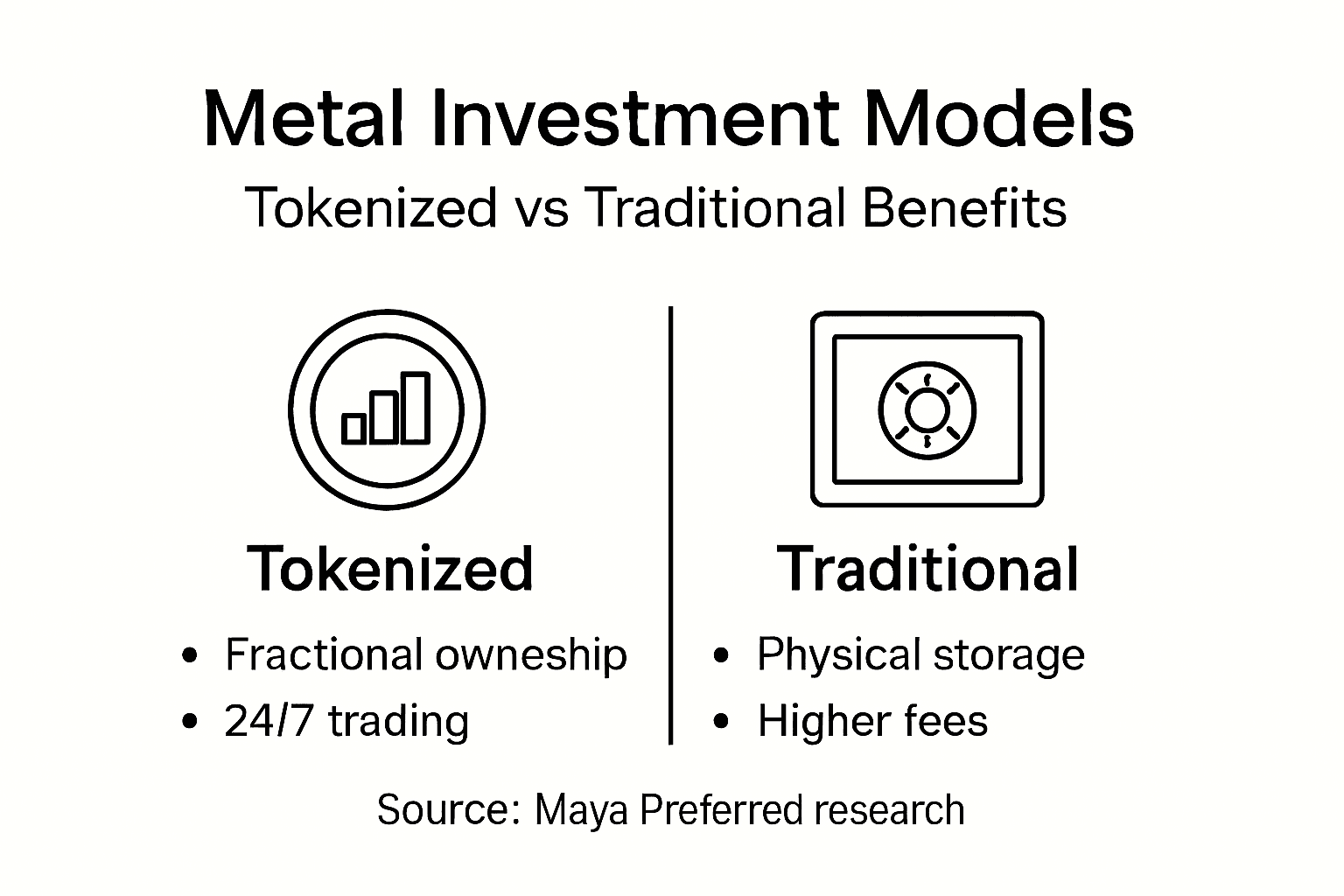
Here’s a summary of key differences between tokenized metals and traditional precious metal investments:
| Attribute | Tokenized Metals | Traditional Investments |
|---|---|---|
| Ownership Structure | Fractional digital tokens | Full physical units/share |
| Trading Hours | 24/7 global digital platforms | Limited exchange hours |
| Minimum Investment | Very low, fractions allowed | Typically higher thresholds |
| Liquidity | High, instant digital transfers | Lower, physical delivery or sell order |
| Typical Costs | Blockchain fees, minor storage fees | Dealer premiums, storage, shipping |
| Regulatory Oversight | Evolving, tech-driven frameworks | Well-established regulations |
However, the tokenization model is not without challenges. While offering remarkable technological benefits, digital metal tokens must still establish the same level of trust and legal protection inherent in traditional investment mechanisms. Regulatory frameworks, custodial security, and investor confidence remain critical considerations. Sophisticated investors must carefully evaluate technological infrastructure, blockchain security protocols, and the credibility of token issuers when comparing tokenized investments against established financial instruments.
Pro Tip: Always compare the total cost of ownership, including transaction fees and storage costs, when evaluating tokenized versus traditional metal investment options.
Build Trust in Precious Metal Tokenization with Maya Preferred
The article highlights a critical challenge faced by investors today trustworthy ownership and transparency when investing in tokenized precious metals. Concerns around physical asset backing, real-time audits, and clear regulatory compliance can leave many feeling uncertain about digital metal tokens. If you seek detailed proof documents, verified gold and silver reserves, and a transparent link to mining projects your goals align perfectly with Maya Preferred’s commitment to bridging traditional metals investment with blockchain innovation.
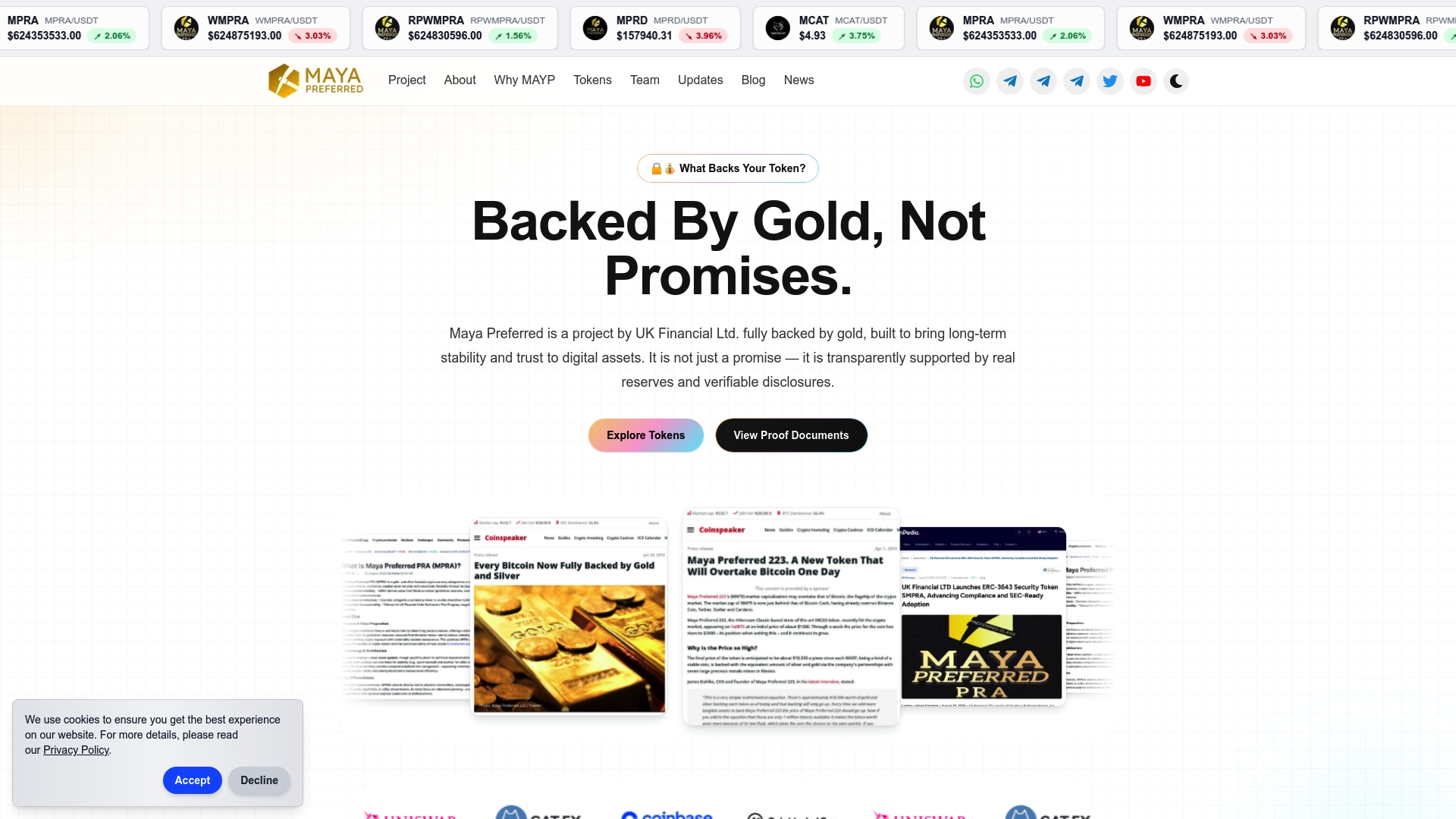
Discover how Maya Preferred offers a transparent and secure pathway for investing in gold and silver-backed digital assets like MPRA, MPRD, and MCAT tokens. We provide fully disclosed reserves, ongoing audit reports, and regulatory updates to ensure you have clear ownership confidence. Act now to explore our comprehensive documentation and join a community that values trust and real-world asset integrity. Start your secure investment journey today at Maya Preferred and see why transparency matters more than ever.
Learn more about our unique token offerings and how we maintain asset-backed credibility at Maya Preferred Token Overview. For updates and insights on regulatory compliance and project developments visit Maya Preferred News and Updates.
Frequently Asked Questions
What is tokenization of precious metals?
Tokenization of precious metals involves converting ownership rights of physical assets like gold and silver into digital tokens using blockchain technology. This allows for fractional ownership, increased liquidity, and easier trading.
How does tokenization enhance the accessibility of precious metal investments?
Tokenization provides 24/7 global trading capabilities, enabling investors to buy and sell fractional amounts of precious metals with lower entry barriers compared to traditional investments, which often require substantial capital upfront.
What are the key benefits of investing in tokenized metals compared to traditional investments?
Tokenized metals offer fractional ownership, higher liquidity, lower transaction costs, and greater transparency. Unlike traditional investments, tokenized metals allow precise investment amounts and immediate transferability.
What risks should investors consider when investing in precious metal tokens?
Investors should be aware of technological risks (such as blockchain vulnerabilities), counterparty risks from custodians, and regulatory risks due to evolving legal frameworks. Thorough due diligence and risk mitigation strategies are essential for successful investments.