
Top Asset Backed Tokens for Business – Expert Comparison 2026

People everywhere are searching for ways to protect their money and grow it at the same time. Some look for value in digital currencies while others turn to old favorites like gold and silver. Today, even traditional assets have a digital twist with tokens and coins that promise real-world backing and easy access. New technology is changing how investors and businesses hold and use these assets. With so many choices and unique features, it is not always clear which option stands out or fits best. Every product brings something different to the table. Curiosity about safety, flexibility, and real asset support keeps people coming back for another look.
Table of Contents
Maya Preferred
At a Glance
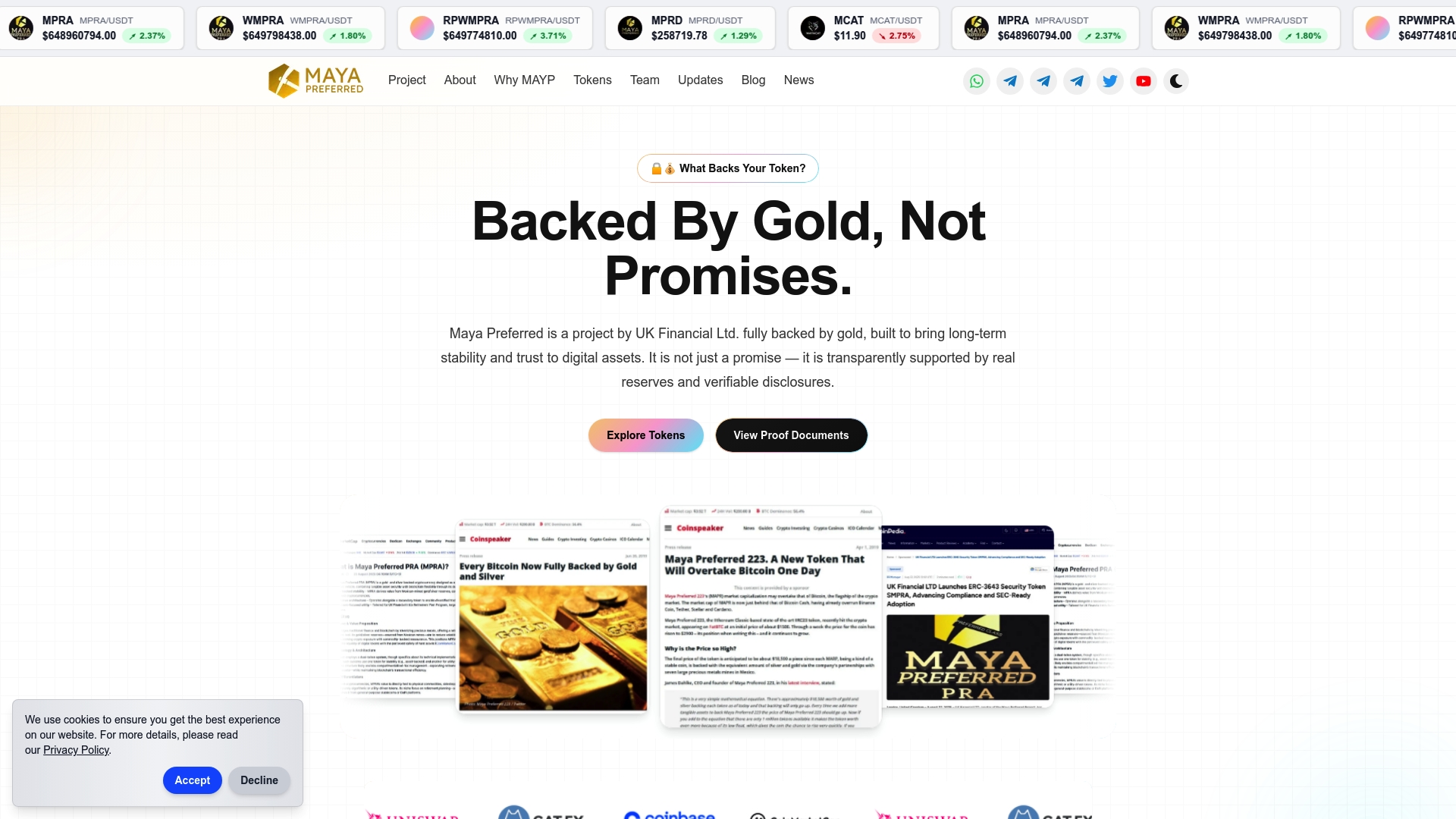
Maya Preferred is a blockchain project from UK Financial Ltd. that brings tangible gold and silver collateral into the digital-asset world through a transparent, verifiable approach. Its dual-class token architecture (MPRA and MPRD) combined with SEC security token planning (SMPRA) targets investors who want utility plus asset-backed stability. If you value documented reserves, third-party audits, and mining-backed credibility, Maya Preferred deserves a spot on your watchlist.
Core Features
Maya Preferred combines real gold and silver reserves with a dual-class token system: MPRA and MPRD for distinct utility roles, and SMPRA for SEC security token compliance pathways. The project publishes verifiable proof documents and third-party audits, and ties reserve backing to real mining assets and geological surveys, notably the Santiago Apóstol project in Mexico. That end-to-end documentation is central to the platform’s design: the blockchain tokens are explicitly linked to physical collateral and ongoing disclosures.
Pros
- Asset-backed stability and trustworthiness: Tokens are backed by documented gold and silver reserves, which helps anchor value expectations for cautious investors.
- High transparency with published proofs and audits: Maya Preferred publishes verifiable documents and independent audits, allowing you to validate reserves and legal disclosures.
- Innovative dual-class token structure for different utility roles: The MPRA/MPRD split lets the project assign specific functions and risk profiles to each token class.
- Supports real-world mining assets to back tokens: Reserve support is tied to mining projects and geological surveys like Santiago Apóstol in Mexico, not just paper claims.
- Plans for SEC compliance and regulatory adherence: The SMPRA security token pathway shows proactive regulatory planning rather than retroactive fixes.
Who It’s For
Maya Preferred is built for investors and business owners who prioritize asset-backed cryptocurrencies and regulatory clarity. If you manage treasury allocations, seek a store of value beyond fiat and traditional crypto, or want exposure to gold and silver without managing physical bullion logistics, this project fits. It’s also suited to those exploring security-token ecosystems where compliance and documented collateral matter.
Unique Value Proposition
Maya Preferred’s strength is its marriage of physical precious metals and blockchain utility—backing digital tokens with audited gold and silver reserves and linking those reserves to tangible mining assets. That combination reduces counterparty and issuance risk relative to many fiat- or algorithm-backed tokens. The dual-class token design offers nuance: one token can emphasize utility and liquidity while the other encapsulates reserve-backed claims and compliance pathways. Add to that verifiable proof documents, third-party audits, and explicit geological ties like Santiago Apóstol, and you get a project engineered for institutional-grade confidence. In short: Maya Preferred doesn’t ask you to take statements on faith. It provides documents, audits, and traceable links between on-chain tokens and off-chain metal—an operational model that elevates it above generic stablecoins and purely speculative tokens. Investors benefit from clearer audit trails, structured token roles, and an explicit roadmap toward SEC security-token compliance.
Real World Use Case
A corporate treasurer reallocates a portion of cash reserves into gold- and silver-backed tokens to reduce currency exposure while retaining on-chain liquidity for crypto-native payments and settlements. Using MPRA and MPRD, the organization separates operational utility from backing claims—maintaining liquidity while preserving a documented, audit-backed store of value.
Pricing
Loading price data…
Website: https://mayapreferred.io
Pax Gold (PAXG)
At a Glance
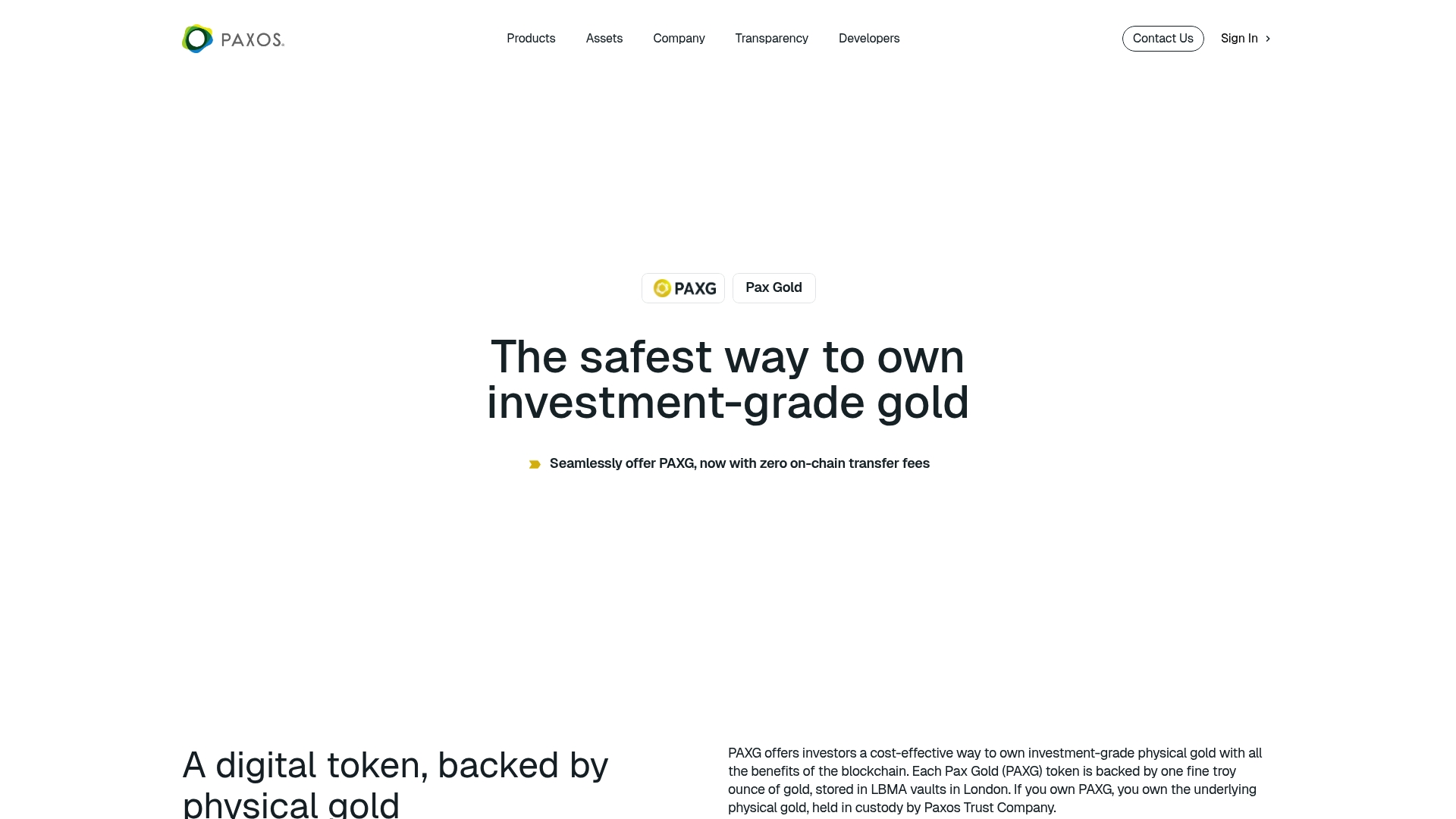
Pax Gold (PAXG) is a regulated, asset-backed token that represents one fine troy ounce of physical gold held in LBMA vaults in London under custody by Paxos Trust Company. It combines on-chain liquidity and instant settlement for blockchain transactions with the tangible value of allocated gold—making it a cost-effective path to digital gold ownership. For investors who want physical backing, regulated custody, and flexible redemption options, PAXG is a straightforward, institutional-grade choice.
Core Features
PAXG tokens are each equal to one fine troy ounce of gold stored in LBMA vaults and backed by allocated physical bullion. The token supports fractional ownership and blockchain settlement, offering near-instant transfers on-chain while aligning with the traditional gold market’s T+2 settlement for conventional ETF and LBMA bar transactions. Paxos provides regulated custody and monthly audits, and holders can redeem tokens for physical gold or cash depending on platform availability.
Pros
- Genuine asset backing: Each PAXG token corresponds to allocated physical gold in LBMA vaults, which anchors token value to a tangible asset.
- Reduced settlement risk on-chain: Blockchain settlement is instantaneous for token transfers, significantly lowering counterparty and settlement timing exposures.
- Regulated custody and audits: Custody by Paxos Trust Company and monthly audits increase transparency and help meet compliance expectations for institutional portfolios.
- Fractional and cost-effective access: With the ability to hold fractions of an ounce, investors gain gold exposure without the logistics and storage costs of full bars.
- Redemption flexibility: Owners have options to redeem for physical gold or cash, which supports both trading and real-world asset conversion strategies.
Cons
- Requires blockchain setup: Using PAXG demands familiarity with wallets and blockchain transactions, which adds onboarding steps for traditional investors.
- Market price exposure: Token value fluctuates with gold markets, meaning PAXG carries the same price volatility as physical gold.
- Platform-dependent liquidity: Liquidity and trading convenience can vary by exchange or platform, potentially creating constraints during stressed markets.
Who It’s For
PAXG is designed for individual and institutional investors who want direct, regulated exposure to physical gold but prefer the trading speed and divisibility of tokens. It suits portfolio managers seeking a hedging instrument against currency risk and investors who want a liquid, auditable alternative to holding physical bars.
Unique Value Proposition
PAXG uniquely blends allocated physical gold custody with blockchain-native settlement and fractional ownership. That combination offers the reassurance of tangible reserves plus the operational efficiency of token transfers—streamlining gold exposure for modern investment strategies.
Real World Use Case
An institutional investor adds PAXG to a diversified treasury to hedge currency and inflation risk; they trade tokens on-chain for quick rebalancing and redeem portions for physical gold when regulatory or portfolio needs require physical delivery.
Pricing
Pricing depends on live gold market prices and platform spreads; the minimum purchase is 0.01 troy oz (approximately $20, depending on market conditions).
Website: https://paxos.com/pax-gold
Tether Gold
At a Glance
Tether Gold (XAU₮) offers a straightforward digital bridge to physical gold, with each token representing ownership of one troy ounce of gold held in custody. It combines the price stability of physical gold with blockchain convenience across multiple networks. For investors and businesses seeking transparent, transferable gold exposure, it delivers a practical, liquid alternative to moving physical bullion. There are trade-offs: custody and storage introduce costs and some operational constraints.
Core Features
Tether Gold is built to provide a digital representation of physical gold with clear backing and transferability. Key capabilities include tokens pegged to physical gold (one XAU₮ equals one troy ounce in custody), support across multiple blockchains such as Ethereum and Tron to enhance accessibility, and an emphasis on transparency through regular disclosures and audit reports. The product focuses on secure, compliant storage of the underlying gold in reputable vaults, enabling users to transact, transfer, and store digital gold across blockchain networks while relying on documented reserves.
Pros
- Digital access to physical gold simplifies trading: Tokenization removes the logistical friction of moving bullion, letting you trade or transfer gold-like value across blockchains quickly.
- Full backing by physical gold provides stability: Each XAU₮ is backed by a troy ounce of gold, which helps preserve value compared with many fiat-pegged or purely speculative tokens.
- Multi-chain support increases accessibility: Availability on networks such as Ethereum and Tron means you can choose the blockchain that best fits your cost and integration needs.
- High liquidity on exchanges supports active trading: Widespread exchange support helps you enter and exit positions without lengthy delays.
- Transparency reports and audits build trust: Regular disclosures about reserves and audit information help verify that tokens are genuinely backed.
Cons
- Less flexibility than native digital assets because of physical custody considerations: The need to account for real-world storage and settlement can slow certain operations compared with fully digital cryptocurrencies.
- Custody and storage create additional fees or costs: Holding and securing the underlying gold introduces expenses that may not exist for non-asset-backed tokens.
- Niche appeal limits user base to gold-focused investors and institutions: If you do not want gold exposure, Tether Gold offers limited direct benefit compared to other token types.
Who It’s For
Tether Gold suits investors, traders, and institutions that want to hold gold exposure on-chain without handling physical bullion. If you prioritize price stability, verifiable reserves, and cross-border transferability of gold value, this token aligns with those objectives. It is especially relevant for businesses seeking a blockchain-native hedge or treasury allocation in precious metals.
Unique Value Proposition
Tether Gold uniquely packages one-to-one physical gold backing with blockchain mobility and regular reserve disclosures. That blend of tangible assets, auditability, and multi-chain distribution positions it as a pragmatic option for stakeholders who want gold’s stability combined with on-chain utility.
Real World Use Case
An investor diversifies a portfolio by acquiring XAU₮ to hedge against currency devaluation and to move value across borders without shipping bullion. The token sits in custody-backed form while remaining tradable on exchanges and transferable between wallets.
Pricing
Pricing tracks the current market value of gold and varies accordingly; you can check live prices on the website or relevant trading platforms.
Website: https://tether.to/en/gold
Paxos
At a Glance
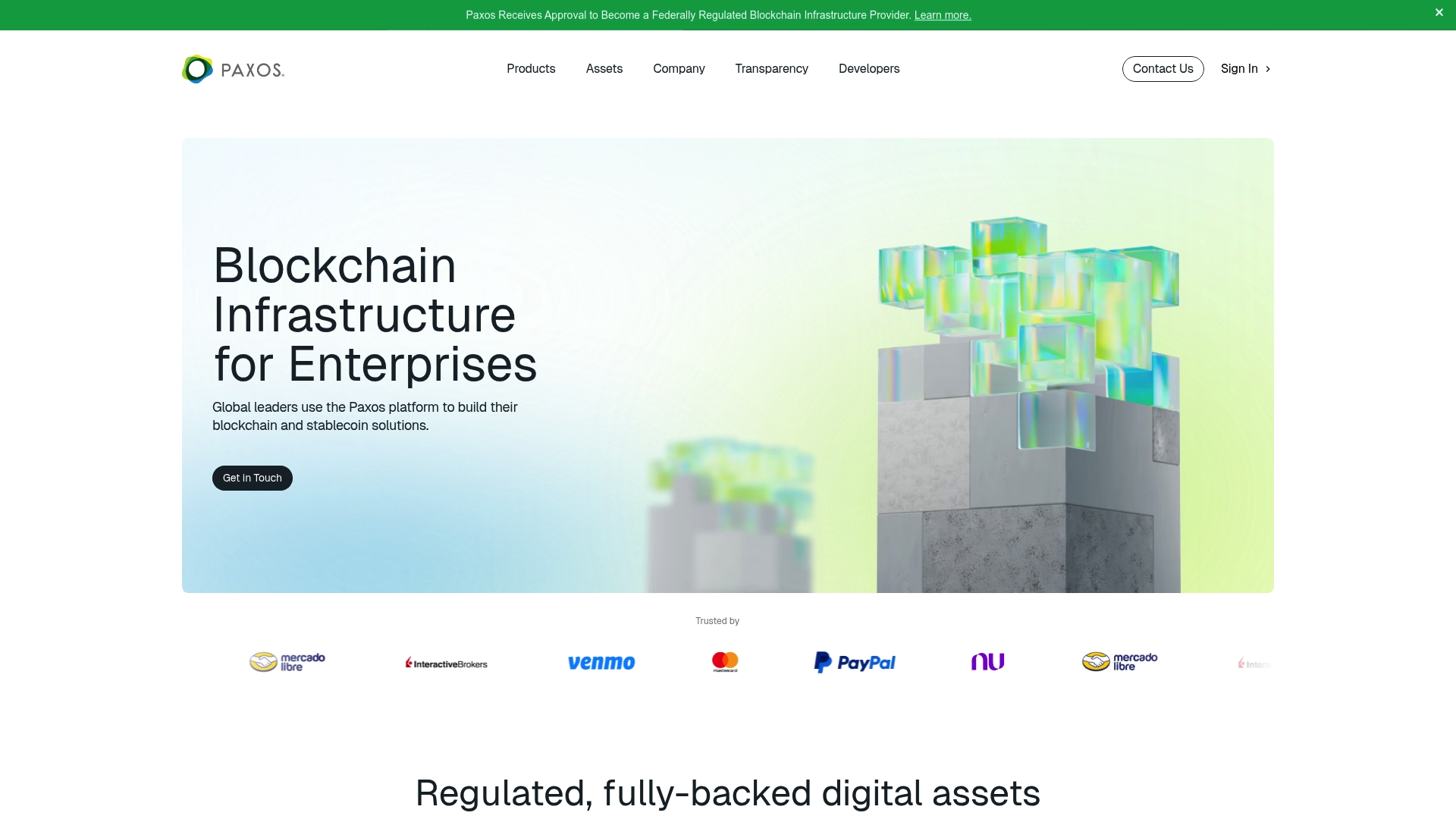
Paxos delivers regulated blockchain infrastructure tailored for enterprises that need trusted, asset-backed digital products. It focuses on issuing fully backed stablecoins and tokenized gold while operating under regulatory oversight in multiple jurisdictions. If you value compliance, transparent reserves, and institutional-grade partners, Paxos is a credible option; if you need simple consumer apps, expect fewer direct offerings.
Core Features
Paxos provides regulated blockchain infrastructure for enterprises, enabling issuance of fully backed digital assets including stablecoins and gold tokens. Its Global Dollar Network supports scalable stablecoin rails for payments and payouts, and Paxos highlights collaboration with PayPal to extend crypto functionality to mainstream channels. The platform emphasizes transparency and compliance, citing regulatory oversight from bodies such as NYDFS, MAS, and OCC to reassure institutional users.
Pros
- Regulatory oversight and trustworthiness: Paxos operates under multiple regulatory regimes, which strengthens legal compliance and reduces counterparty uncertainty for corporate users.
- Wide range of digital asset products: The platform supports issuance of stablecoins and gold-backed tokens, giving enterprises options to match treasury or payment use cases.
- Partnerships with major institutions like PayPal: Collaborations with well-known financial players extend distribution and practical utility for Paxos-issued assets.
- Strong compliance and transparency commitments: Paxos prioritizes audits and regulatory disclosures to help businesses meet internal and external compliance requirements.
- Global and scalable infrastructure: The Global Dollar Network and enterprise-focused rails enable cross-border payment flows at scale for organizations with international operations.
Cons
- Complex regulatory environment may pose restrictions for some users: Operating across jurisdictions can mean stricter onboarding or limitations that slow deployment for certain corporate structures.
- Requires understanding of blockchain and digital assets for effective use: Enterprises without internal crypto expertise will need to invest in training or third-party integration support to realize full value.
- Limited consumer-facing products, focusing on enterprise solutions: If your goal is a retail-facing token or consumer app, Paxos is primarily built for institutional issuance rather than everyday consumer features.
Who It’s For
Paxos is designed for enterprises and financial institutions that prioritize regulated, auditable digital asset issuance and settlement. You should consider Paxos if your business needs stablecoin rails for payments, wants tokenized asset issuance, or requires partners with strong compliance pedigrees. If your priorities are regulatory certainty and institutional partnerships, Paxos fits.
Unique Value Proposition
Paxos’s core differentiator is bringing institutional-grade regulation and transparency to blockchain asset issuance. By combining licensed operations, asset-backed token issuance, and partnerships with established financial platforms, Paxos reduces friction for organizations that must meet compliance and audit standards while adopting digital asset strategies.
Real World Use Case
A global enterprise uses Paxos to issue a regulated USD-backed stablecoin to streamline cross-border payouts. The stablecoin runs on Paxos rails, enabling faster settlement, consistent reserve disclosures, and compliance with relevant regulators—helping treasury teams reduce FX friction and settlement time.
Pricing
Pricing is not specified on the webpage and is typically custom or enterprise-based, reflecting tailored service, regulatory responsibilities, and scale of deployment.
Website: https://paxos.com
Tether
At a Glance
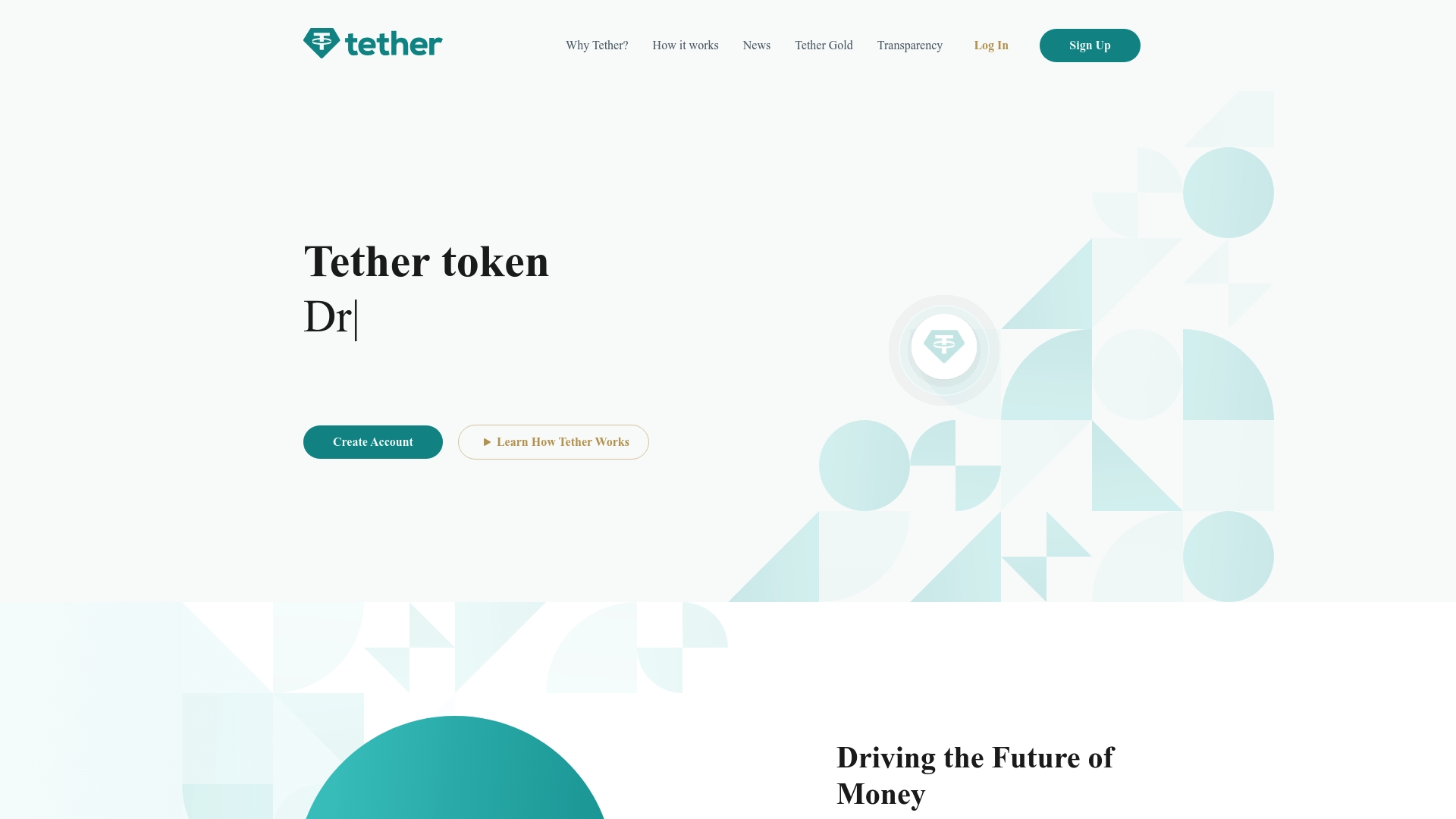
Tether is a USD-pegged stablecoin designed to provide a reliable digital currency for trading and transactions across blockchain platforms. It aims to keep a stable 1:1 value with the US dollar and is widely used as a liquidity and settlement layer in the crypto ecosystem. For businesses and investors seeking low-volatility digital cash rails, Tether delivers predictable short-term value, though its reliability depends on reserve management and market trust.
Core Features
Tether’s core capabilities center on maintaining a stable peg to the US dollar, enabling fast transfers and broad usability across multiple blockchain networks. The product emphasizes secure and transparent operations and supports easy movement of funds between wallets and exchanges. Those core characteristics make it practical for trading, remittances, and as a temporary store of value within digital-asset workflows.
Pros
- Stable value for transactions: Tether’s USD peg reduces volatility risk, letting you execute trades or move funds without crypto price swings interfering.
- Widely integrated in the crypto ecosystem: Numerous exchanges and platforms accept Tether, which simplifies liquidity access and on-ramp/off-ramp operations for businesses.
- Supports multiple blockchain networks: Multi-chain support increases flexibility, letting you choose blockchains based on cost, speed, and infrastructure needs.
- Transparent reserves backing the stablecoin: The platform presents reserve information and positions transparency as a core operational principle, which helps institutional users evaluate backing and risk.
Cons
- Dependence on the backing reserves and regulatory scrutiny: The stability and credibility of Tether depend on reserve adequacy and regulatory developments, which can affect confidence and use.
- Price stability is maintained by the backing, but still subject to market trust: Even with reserves, the peg relies on market perception and trust; sudden confidence shocks can temporarily stress the 1:1 relationship.
Who It’s For
Tether is best suited for cryptocurrency traders, blockchain developers, digital asset investors, and financial institutions exploring digital currency solutions. If your business needs a low-volatility digital medium to move liquidity quickly between exchanges, settle positions, or offer dollar-linked payment rails, Tether fits that specific operational need.
Unique Value Proposition
Tether’s value proposition is straightforward: provide a digitally native representation of US dollar value that can move quickly across blockchains with minimal price volatility. For businesses, that translates into a practical bridge between fiat-like stability and crypto-native speed and composability.
Real World Use Case
A cryptocurrency trader uses Tether to hedge against market volatility by shifting holdings into a USD-pegged token during turbulent sessions. This allows rapid redeployment of capital between exchanges and wallets while maintaining purchasing power in the short term.
Pricing
Tether does not publicly disclose specific pricing models; its value is generally pegged to the US dollar at a 1:1 ratio with minimal deviation. As a stablecoin, the expected cost factor for users is transaction or network fees rather than a subscription or spread charged by Tether itself.
Website: https://tether.to
Goldcoin

At a Glance
Goldcoin is not an active asset-backed token platform today; the domain appears parked by GoDaddy and offers no commercial token, custody, or trading services. What the page does provide is a concise informational discussion about Central Bank Digital Currencies (CBDCs) and the wider implications of digital money, which can serve as a high-level primer for professionals exploring policy-level topics. Bottom line: Goldcoin is useful as reading material on CBDCs but does not function as an investable or operational product.
Core Features
Because the site is parked, Goldcoin lists no product features, integrations, or technical specifications for investors or businesses. The primary content focuses on educational material: explanations of CBDC concepts, potential benefits such as improved payments and financial inclusion, and discussion of privacy and policy trade-offs. In short, the site’s capability is informational outreach rather than token issuance, asset backing, or transactional infrastructure.
Pros
- Provides clear educational content on CBDCs: The site summarizes central ideas and trade-offs around Central Bank Digital Currencies in a way that is accessible to nontechnical readers.
- Highlights potential benefits of digital money: It notes realistic use cases like improved cross-border payments and automated government processes, which can spark strategic thinking for corporates and policymakers.
- Raises important privacy and policy concerns: The content does not shy away from trade-offs, helping readers weigh regulatory and civil-liberty implications of CBDCs.
- Useful for preliminary research and briefing: For researchers, students, or financial professionals seeking a quick orientation, the material offers a focused starting point.
Cons
- No active product or service is offered: The domain is parked and does not provide any commercial offerings, token listings, or operational details for investors who want to transact.
- Lacks user-oriented functionality: There are no wallets, custody options, dashboards, or verification documents that would be necessary for assessing an asset-backed token.
- No pricing, roadmap, or team information: Investors cannot evaluate governance, reserve audits, or legal frameworks because those disclosures are absent.
- Limited depth for advanced technical audiences: Policy summaries are high-level and do not replace technical whitepapers, audit reports, or market-ready documentation.
Who It’s For
Goldcoin is best suited to individuals, researchers, policymakers, and financial professionals who need a concise, noncommercial overview of CBDCs and the macro implications of digital currencies. If you want to evaluate an investable gold- or silver-backed token for business use, this site will not meet that need.
Unique Value Proposition
Goldcoin’s unique value lies in its role as a high-level educational touchpoint on CBDCs rather than a market offering. It can prompt strategic conversations among decision makers about how digital currency frameworks might affect payments, inclusion, and policy.
Real World Use Case
A central bank analyst or corporate strategy lead could use the site as a quick reference to frame internal briefings on CBDC risks and benefits before commissioning deeper technical analysis.
Pricing
Not applicable; the site is parked and does not list products, services, or pricing.
Website: https://goldcoin.org
PMGT.io
At a Glance
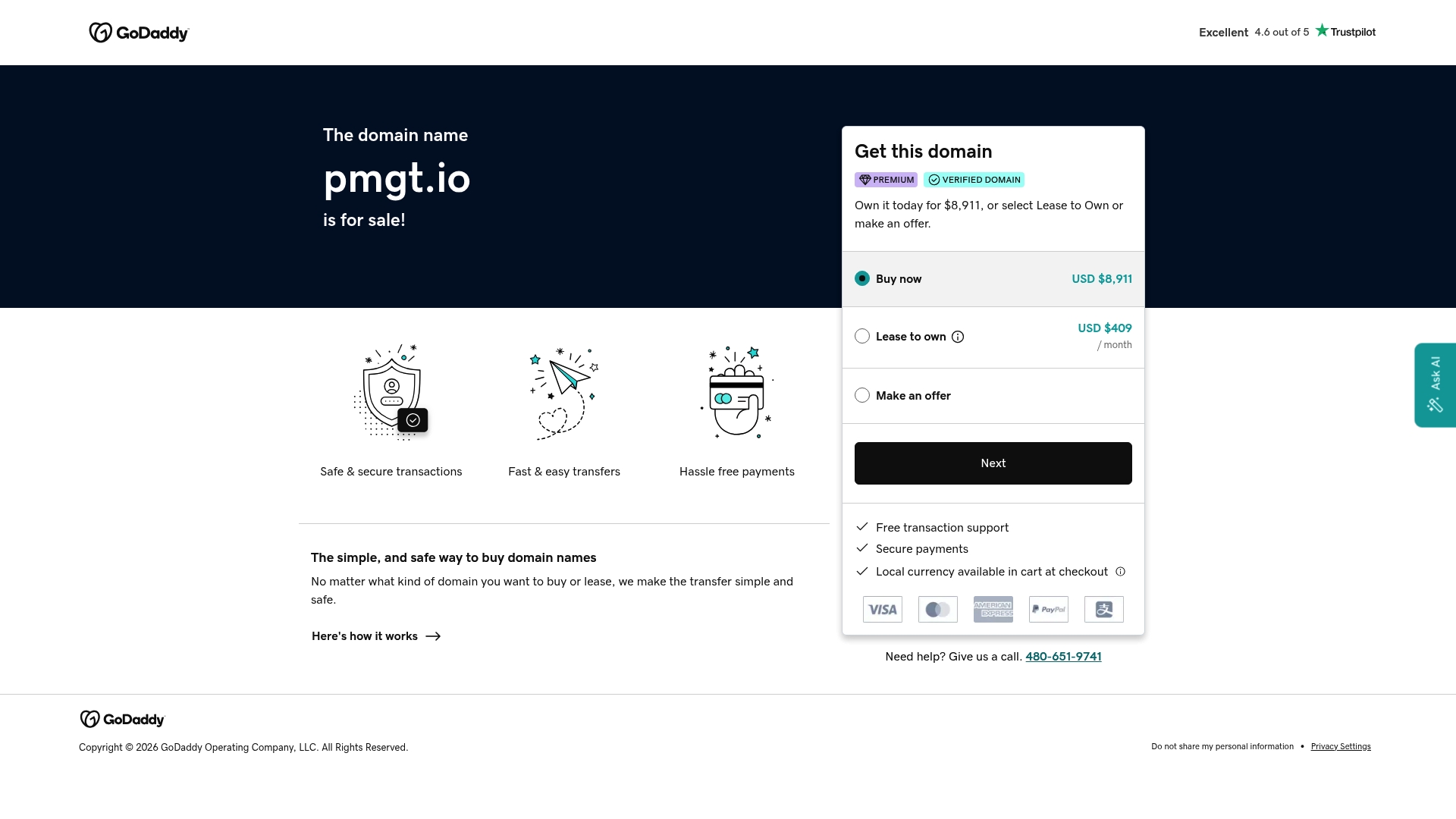
PMGT.io is a focused domain marketplace that lists the premium domain pmgt.io for sale, lease, or negotiation. It emphasizes secure transactions, a straightforward transfer process, and multiple payment options, earning a solid user rating of 4.6 out of 5. For businesses and investors seeking a concise, brandable domain, PMGT.io offers clear purchasing paths and responsive support. It’s simple, direct, and engineered to reduce friction in premium domain deals.
Core Features
PMGT.io’s core capabilities center on three transaction routes: outright purchase, monthly lease, and negotiated offers. The listing specifies a buy price of US$8,911 and a lease option at US$409 per month, and it supports offers so you can negotiate price. The platform highlights secure payment options, fast and easy transfer processes, and multi-currency support, and it advertises customer support to assist throughout the purchase or leasing workflow.
Pros
- Secure transactions are prioritized: The platform emphasizes secure payment methods to protect both buyers and sellers during high-value transfers.
- Flexible purchasing options: You can buy, lease, or make an offer, giving companies multiple entry points depending on budget and timing.
- User-friendly transfer process: PMGT.io advertises a fast, hassle-free transfer experience designed to minimize administrative delays.
- Multiple currency support: The marketplace accommodates different currencies, which simplifies cross-border purchases for international teams.
- Good customer support: The listing indicates active support to guide buyers and lessees through payment and transfer steps.
Cons
- Price may be prohibitive for some buyers: The buy price of US$8,911 and lease rate of US$409 per month could exceed the budget of early-stage startups or small businesses.
- Limited scope of services beyond transactions: The listing provides little detail about value-added services like appraisal reports, escrow partners, or branding consultancy.
- No detailed value analysis of the domain: PMGT.io does not include a deeper explanation of the domain’s potential uses, search value, or historical performance in the listing.
Who It’s For
PMGT.io is aimed at businesses, startups, and investors that want a ready-made, concise domain and value secure, streamlined transactions. If you represent a token project, fintech startup, or corporate initiative that needs a short, memorable web address and you have a defined budget, PMGT.io is appropriate. It’s less suited to early-stage teams with limited budgets or those seeking bundled branding services.
Unique Value Proposition
PMGT.io’s unique value lies in combining a clear, single-listing marketplace with robust transactional safeguards and multiple payment pathways. You get transparent pricing options, a leasing alternative to reduce upfront cost, and an emphasis on quick transfers—features that reduce time-to-launch for business-critical web properties.
Real World Use Case
A startup aiming to launch a token-related product purchases pmgt.io to anchor its website and marketing. The team chooses the lease option for the first year to preserve capital, uses the platform’s support to complete secure payment and transfer, and then builds a compact landing page to begin customer acquisition.
Pricing
Buy now for US$8,911; Lease for US$409 per month; Make an offer to negotiate price.
Website: https://pmgt.io
Kinesis.Money
At a Glance
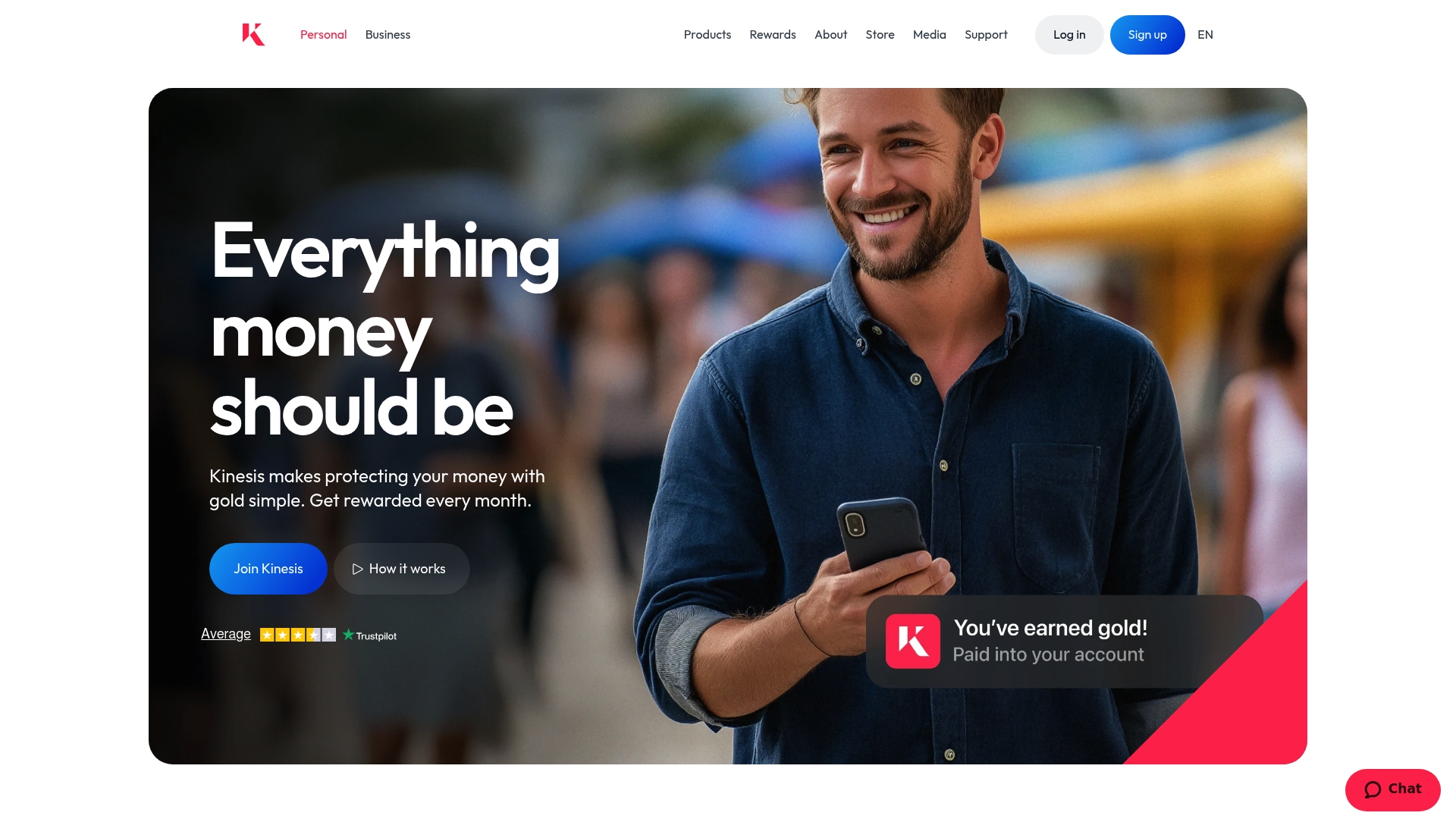
Kinesis.Money offers a hybrid approach to precious metals investing by pairing physical gold and silver with digital currencies backed by real bullion. The platform combines secure vaulting, audited storage, and a fee-sharing model that pays monthly yields in metal, alongside trading and minting services. It also supports a virtual card that returns cashback in gold or silver, creating everyday utility for precious metals. For investors seeking tangible backing and low trading costs, Kinesis.Money presents a compelling, if somewhat complex, option.
Core Features
Kinesis.Money issues digital currencies tied to physical Gold and Silver bullion while providing secure vaulting and audited storage. The platform includes the Kinesis Velocity Token (KVT) to facilitate earning yields and trading, plus minting services to create new metal-backed currencies. Users can buy, sell, and store metals with low transaction fees (notably a 0.22% fee on gold trades), access an advanced trading interface for metals and crypto, and use a virtual card that delivers cashback in gold or silver. The fee-sharing model distributes transaction revenue as monthly yields, and rewards programs such as Metalback add shopping incentives paid in metal.
Pros
- Physical ownership with digital convenience: Users retain ownership of actual gold and silver and can request withdrawal or delivery at any time, combining tangible assets with digital access.
- Very low trading fees on gold: The platform advertises a 0.22% fee for gold buy/sell transactions, which is attractive for frequent traders and businesses managing treasury metals.
- No ongoing storage fees for vaulted metal: The fee-sharing model offsets storage costs, effectively eliminating traditional vaulting fees for users.
- Monthly yields paid in metal: Transaction fee revenue is redistributed to users as monthly metal yields, providing a direct income mechanism tied to platform activity.
- Audited, insured vaults and secure storage: Independent audits and insurance coverage support custody claims and help build investor confidence.
- Practical spending rewards: The virtual card and Metalback rewards let everyday purchases contribute to metal holdings, blending spending and saving habits.
Cons
- Limited risk disclosure on bullion-backed digital currencies: The platform summary provides little detail on specific financial or operational risks tied to digital representations of metal.
- Steep learning curve for new users: Multiple tokens, yield mechanics, minting, and fee-sharing structures may overwhelm investors unfamiliar with tokenized assets.
- Platform and custody dependence: Users rely on Kinesis.Money’s security practices and third-party vaulting partners, which concentrates operational and counterparty risk.
Who It’s For
Kinesis.Money suits investors and business owners who want direct exposure to gold and silver with the liquidity and features of digital assets. If you value audited custody, low trading fees, and income via revenue sharing—and you are comfortable navigating token mechanics—this platform aligns with treasury diversification and metal-backed payment strategies.
Unique Value Proposition
Kinesis.Money uniquely merges physical bullion ownership with digital utility: minting, trading, a yield-distributing fee model, and a metal-cashback card. It transforms precious metals from static holdings into income-generating, spendable assets.
Real World Use Case
A business buys gold on the platform, stores it in audited vaults, uses the virtual card for routine expenses to earn Metalback cashback, and receives monthly metal yields from transaction fee revenue—converting ordinary cash flow into incremental metal ownership.
Pricing
Account creation is free. Gold buy/sell trades carry a 0.22% fee, and the fee-sharing model eliminates storage fees for vaulted metals; additional transaction and withdrawal fees may apply.
Website: https://kinesis.money
Blockchain Asset-Backed Gold and Stablecoin Comparison
Below is a detailed comparison of various blockchain-based asset-backed solutions, specifically focusing on gold-backed and stablecoin implementations across their features, pros, cons, and suitability.
| Product Name | Features | Pros | Cons | Suitable For |
|---|---|---|---|---|
| Maya Preferred | Real gold and silver reserves with dual token types, SEC compliance plans. | High asset-backed stability, transparency, innovative design. | Requires understanding of dual-token mechanics, global adoption in progress. | Investors seeking precious metal-backed cryptocurrencies with regulatory clarity. |
| Pax Gold | Tokens equate to one troy ounce of gold stored in LBMA vaults. | Asset-backed stability, regulated framework, liquidity. | Blockchain familiarity required, susceptible to gold price fluctuations. | Investors desiring gold exposure with blockchain integration. |
| Tether Gold | Tokens are backed by physical gold held in vaults, offering multi-chain support. | Easy gold ownership, efficient transfers, high liquidity. | Custody costs, limited appeal if gold exposure is unnecessary. | Traders, businesses needing gold investments with blockchain advantages. |
| Paxos | Offers stablecoins and gold-backed tokens with compliance assurance. | Strong regulatory oversight, enterprise-oriented, partnership with major financial institutions. | Complexity inherent in compliance adherence, not consumer-focused. | Enterprises requiring regulated digital assets. |
| Goldcoin | Provides information on Central Bank Digital Currencies (CBDCs). | Educational resource on CBDCs. | Not a functioning platform, no investable assets. | Individuals researching digital currencies and policy implications. |
| Kinesis.Money | Physical precious metals paired with digital assets, cashback and low fees. | Audited security, monthly yields in metals, low trading fees. | Advanced structure may overwhelm new users, platform reliance risk. | Businesses transitioning to tokenized precious metals holdings. |
Secure Your Business Future with Transparent Asset-Backed Tokens
Navigating the complex world of asset-backed digital tokens can be challenging for businesses aiming to protect value while gaining blockchain utility. The article highlights the critical need for transparency, real-world backing, and regulatory compliance to reduce counterparty risk and provide clarity in treasury management. If you want to overcome uncertainty around token collateral, auditability, and utility roles, Maya Preferred offers a solution engineered for institutional confidence with its dual-class tokens backed by verified gold and silver reserves.
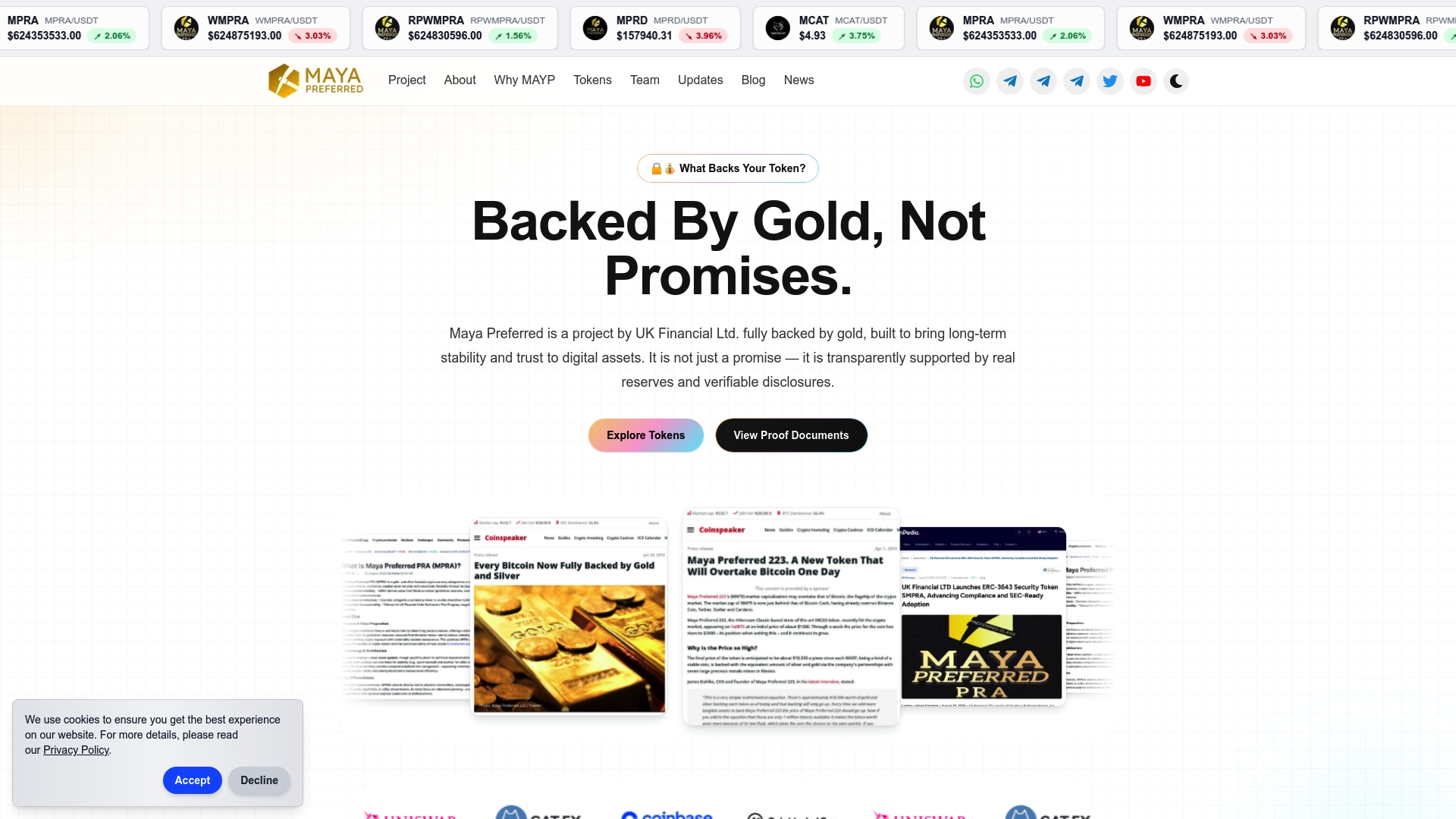
Explore how Maya Preferred’s documented reserves and detailed audits create a trusted bridge between traditional precious metals investment and modern blockchain assets. Take control of your treasury allocation strategy by visiting Maya Preferred Landing Page and learn more about our token offerings like MPRA and MPRD that deliver both utility and asset-backed stability. Don’t wait for market volatility to force your hand—discover proven transparency and compliance pathways now at Maya Preferred.
Frequently Asked Questions
What are asset-backed tokens?
Asset-backed tokens are digital assets that are tied to the value of physical assets such as gold, silver, or real estate. They provide a way for businesses and investors to secure their investments with tangible collateral. To explore how these tokens can enhance your asset management strategy, assess the specific benefits they offer in terms of stability and liquidity.
How do I evaluate different asset-backed tokens for my business?
To evaluate asset-backed tokens, consider factors such as the types of assets they are backed by, their liquidity, and regulatory compliance. Review each token’s documentation and audit reports to understand their value and risks. Start by creating a comparison chart to summarize key features and qualities of each option you’re considering.
What benefits do asset-backed tokens provide for businesses?
Asset-backed tokens offer businesses stability, transparency, and reduced volatility since their value is tied to physical assets. They facilitate easier transactions and provide liquidity, making asset management more efficient. To maximize these benefits, integrate asset-backed tokens into your treasury management strategy to bolster your financial resilience.
Are there specific risks associated with asset-backed tokens?
Yes, risks may include regulatory changes, reliance on the underlying asset’s value, and the potential lack of liquidity in some markets. Understanding these risks is vital for effective risk management. Assess your risk tolerance and develop a strategy to mitigate potential impacts on your investment portfolio.
How can asset-backed tokens simplify cross-border transactions for my business?
Asset-backed tokens streamline cross-border transactions by providing a stable currency that can result in faster settlements and reduced transaction costs. They also eliminate traditional banking delays associated with foreign exchange and clearance times. To take advantage of these benefits, consider adopting asset-backed tokens in your international transactions for improved efficiency.
What steps should I take to integrate asset-backed tokens into my financial strategy?
To integrate asset-backed tokens, start by conducting thorough research on different tokens and their underlying assets. Develop a clear plan that includes determining how much of your portfolio you want allocated to these tokens and the methods for acquiring them. Set realistic timelines for integration and regularly review the performance of these investments to ensure they meet your financial goals.