
Why Invest in Asset-Backed Coins for Stability

When market swings leave even seasoned American investors searching for stability, asset-backed coins are rewriting the crypto playbook. More than $120 billion in stablecoins are now circulating worldwide, yet confusion still surrounds what truly backs these assets. This article uncovers the facts and dismantles common misconceptions so precious metals experts and cryptocurrency investors alike can navigate the growing world of asset-backed digital tokens with clarity.
Table of Contents
- Asset-Backed Coins Defined And Misconceptions
- Gold, Silver, And Real-World Asset Backing
- How Asset-Backed Tokens Maintain Stability
- Regulatory Compliance And Transparency Standards
- Risks, Investor Obligations, And Diversification Value
Key Takeaways
| Point | Details |
|---|---|
| Understanding Asset-Backed Coins | These coins represent ownership of real-world assets, providing stability and intrinsic value compared to traditional cryptocurrencies. |
| Stability Mechanisms | Asset-backed tokens employ various strategies, such as redemption and supply adjustment, to maintain price stability and reduce volatility. |
| Regulatory Compliance | Investors should ensure that asset-backed tokens comply with regulations and possess transparent reserve reporting to mitigate risks. |
| Risk Management and Diversification | Thorough due diligence and portfolio diversification across different asset-backed tokens are critical for effective risk management in cryptocurrency investments. |
Asset-Backed Coins Defined and Misconceptions
Cryptocurrency investors seeking stability are increasingly turning to asset-backed coins, a sophisticated digital investment instrument that bridges traditional asset ownership with blockchain technology. Asset-backed tokens are digital claims on physical assets that represent ownership rights over real-world commodities like gold, real estate, or equity. Unlike traditional cryptocurrencies that derive value purely from market speculation, these tokens have an intrinsic value directly linked to tangible underlying assets.
The fundamental mechanism of asset-backed coins involves creating a digital representation of a physical asset, where each token corresponds to a specific fraction of that asset’s value. These cryptocurrencies can be backed by various traded assets, including fiat currencies, precious metals, stocks, and even other cryptocurrencies. This diversity allows investors multiple entry points and risk management strategies within the digital asset ecosystem. The key distinction is that these tokens provide more predictability and reduced volatility compared to traditional crypto investments.
However, several persistent misconceptions surround asset-backed coins that investors should understand. Many people incorrectly assume that all stablecoins are simply fiat-backed, when in reality, the market includes metal-backed, crypto-backed, and algorithmically stabilized tokens. Another common misunderstanding is that these coins offer guaranteed returns – while they provide more stability, they still carry investment risks. Regulatory considerations are also crucial, as asset-backed tokens often fall under securities regulations due to their investment instrument nature.
Here is a comparison of common asset types backing digital coins, highlighting their unique features:
| Underlying Asset | Intrinsic Value Driver | Typical Use Case | Key Investor Concern |
|---|---|---|---|
| Fiat Currency | Government-issued value | Transactional stability | Inflation or depeg risk |
| Gold or Silver | Scarcity and market price | Store of value, hedging | Physical storage, audit needs |
| Real Estate | Real-world property rights | Passive income, exposure | Market illiquidity |
| Equities (Stocks) | Company performance | Dividend access, growth | Regulatory and reporting risks |
| Other Cryptocurrencies | Market and protocol design | Leverage, collateral | Crypto volatility, transparency |
Pro tip: Before investing in any asset-backed coin, always verify the specific backing assets, conduct thorough due diligence on the token’s transparency, and understand the precise legal framework governing the investment.
Gold, Silver, and Real-World Asset Backing
Real-world asset backing represents a revolutionary approach to digital investment, with precious metals like gold and silver emerging as particularly compelling options for cryptocurrency investors. Tokenized gold and silver represent ownership of physical precious metals converted into digital tokens on blockchain networks, offering investors an innovative way to own and trade tangible assets with unprecedented flexibility. Each digital token corresponds to a specific quantity of metal securely stored in professional vaults, providing fractional ownership that was previously impossible in traditional precious metals markets.
The mechanism of asset-backed tokens for gold and silver goes beyond simple ownership. These stablecoins aim to address volatility challenges prevalent in standard cryptocurrencies by linking their value directly to physical commodities. This approach creates a more stable investment vehicle that bridges traditional finance with digital economies. Investors gain several advantages: reduced storage risks, instant global trading capabilities, enhanced transparency through blockchain tracking, and the ability to use these tokens as collateral in decentralized finance (DeFi) applications.
Understanding the nuances of real-world asset backing is crucial for modern investors. Gold and silver tokens differ from traditional cryptocurrencies by providing intrinsic value tied to physical assets. Regular audits, transparent reporting, and blockchain-based transactions ensure investors can verify the existence and quantity of underlying metals. This level of accountability addresses many concerns surrounding digital asset investments, offering a more trustworthy alternative to purely speculative cryptocurrency models.
Pro tip: When evaluating gold or silver-backed tokens, always request and review the most recent third-party audit documentation to confirm the actual physical asset reserves supporting the digital tokens.
How Asset-Backed Tokens Maintain Stability
Stability mechanisms are the cornerstone of asset-backed tokens, providing investors with a reliable alternative to volatile cryptocurrency markets. Asset-backed stablecoins maintain their stability by leveraging sophisticated blockchain technologies and tangible asset reserves, creating a transparent and auditable financial instrument. These tokens are designed with intricate systems that enforce strict compliance and provide continuous price protection through direct correlation with underlying physical or digital assets.
Stablecoins maintain their peg through multiple sophisticated mechanisms, including asset redeemability, intelligent token issuance and burning protocols, and maintaining rigorous minimum collateral requirements. The most robust asset-backed tokens implement a combination of strategies: holding reserves that precisely match token circulation, enabling direct redemption of tokens for underlying assets, and using smart contracts to dynamically adjust token supply in response to market conditions. These mechanisms work in concert to create a self-regulating system that can absorb market fluctuations while maintaining consistent value.
The technical infrastructure supporting asset-backed tokens involves complex governance models that prioritize investor protection. Emergency measures like pausing redemptions, implementing collateral rebalancing, and conducting regular third-party audits provide additional layers of security. Institutional investors are increasingly drawn to these tokens because they offer a compliant, stable financial instrument that bridges traditional asset ownership with cutting-edge blockchain technology. The transparency provided by blockchain tracking and smart contract enforcement gives investors unprecedented visibility into the token’s underlying asset composition and management.

The table below summarizes main stability strategies used by asset-backed tokens:
| Stability Strategy | How It Works | Typical Benefit |
|---|---|---|
| Redemption Mechanism | Allows exchange for real asset | Maintains trust and peg |
| Supply Adjustment | Issues/burns tokens based on demand | Controls volatility |
| Minimum Collateral Ratio | Reserves always exceed token value | Loss prevention |
| Regular Third-Party Audit | Independent verification of backing | Increases transparency |
Pro tip: Evaluate asset-backed tokens by examining their reserve documentation, audit frequency, and the specific mechanisms they use to maintain price stability, rather than relying solely on marketing claims.
Regulatory Compliance and Transparency Standards
Regulatory frameworks are transforming the landscape of asset-backed tokens, establishing critical standards for transparency and investor protection. Stablecoins now require thorough regulatory compliance and transparent reserve reporting to build trust among investors and users, marking a significant shift from previous unregulated cryptocurrency practices. Traditional reporting methods have been systematically replaced with more rigorous, standardized approaches that provide comprehensive insights into token reserves and financial controls.
The European Union’s Markets in Crypto-Assets Regulation (MiCA) represents a pioneering global approach to crypto asset regulation, establishing comprehensive guidelines for asset-backed tokens. This regulatory framework addresses critical aspects like transparency, consumer protection, and systemic risk mitigation. Key provisions require detailed disclosure of reserve backing, robust compliance mechanisms, and regular third-party audits. By enforcing strict operational standards, MiCA aims to create a more accountable and trustworthy digital asset ecosystem that protects investors while promoting financial innovation.
Regulatory compliance extends beyond documentation, encompassing sophisticated governance models that prioritize investor security. Emerging standards developed by organizations like the American Institute of CPAs (AICPA) provide consistent criteria for reserve and control reporting. These frameworks ensure token issuers maintain sufficient assets to back their tokens at promised rates, addressing historical concerns about transparency and accountability. Different jurisdictions are developing unique approaches, with states like New York implementing particularly rigorous requirements that serve as models for future regulatory development.
Pro tip: Always verify a token’s regulatory compliance by reviewing its most recent independent audit reports and checking its registration status with relevant financial regulatory authorities.
Risks, Investor Obligations, and Diversification Value
Portfolio risk management remains a critical consideration for investors exploring asset-backed cryptocurrencies. Research analyzing asset-backed cryptocurrencies reveals significant variations in risk mitigation strategies, demonstrating that not all asset-backed tokens provide equal protection. USD-backed cryptocurrencies have shown remarkable potential for reducing overall portfolio risk, while gold-backed assets can introduce unexpected volatility, particularly in specific market contexts. Understanding these nuanced risk profiles becomes essential for sophisticated investors seeking strategic asset allocation.
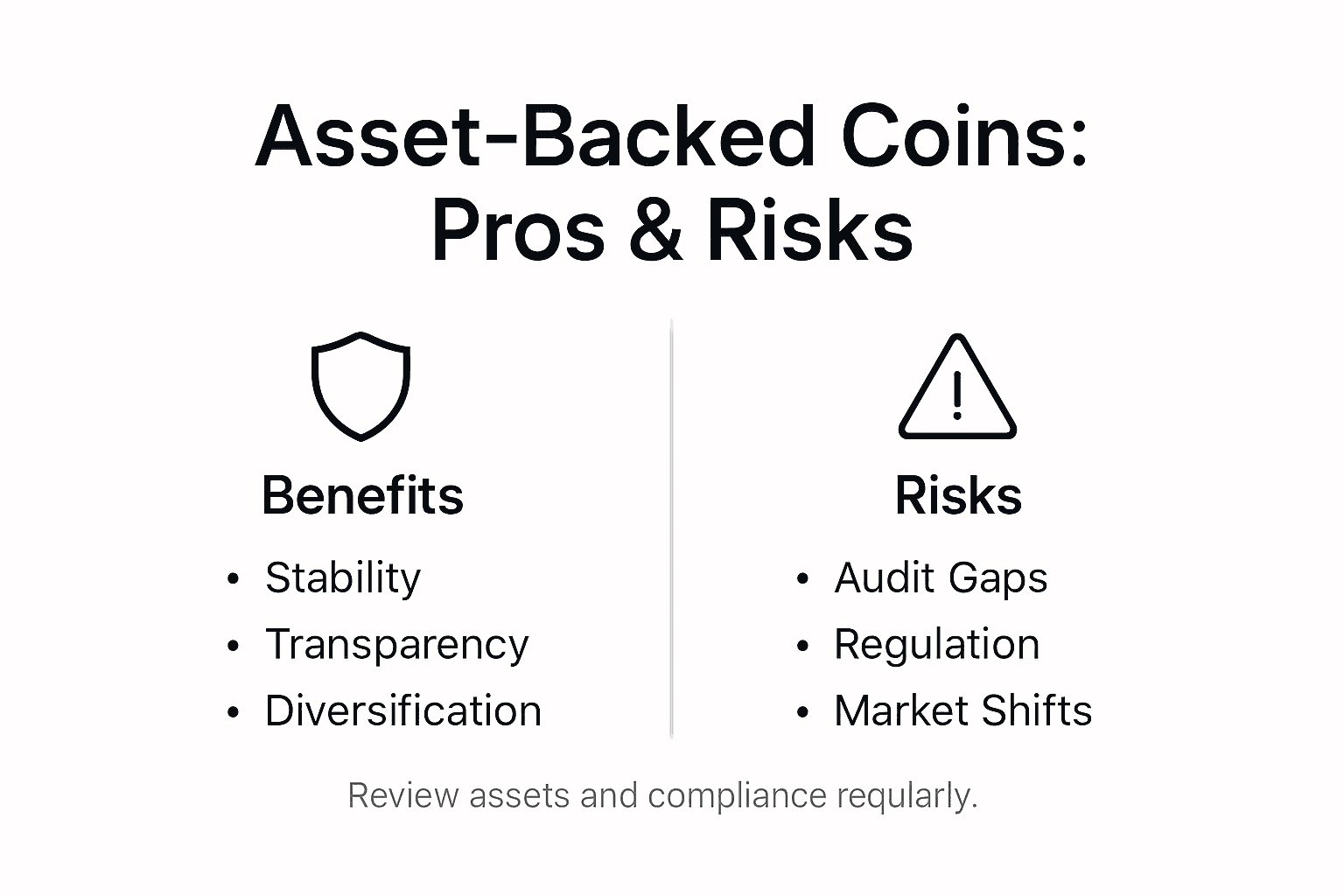
Strategic portfolio diversification involving asset-backed stablecoins offers a sophisticated approach to managing crypto market volatility, enabling investors to balance risk across different blockchain sectors and asset types. Effective diversification strategies require careful consideration of multiple factors, including asset correlation, volatility profiles, and long-term growth potential. By spreading investments across various tokenized holdings and real-world asset classes, investors can create resilient portfolios that mitigate sector-specific risks and optimize potential returns.
Investor obligations extend beyond simple asset selection, encompassing comprehensive due diligence and ongoing portfolio management. This requires a proactive approach to understanding underlying asset risks, regulatory compliance, and market dynamics. Sophisticated investors must continuously assess their asset-backed token holdings, considering factors such as reserve transparency, regulatory standing, and potential market disruptions. Risk management becomes a dynamic process that demands consistent monitoring, strategic rebalancing, and a deep understanding of the evolving digital asset landscape.
Pro tip: Implement a systematic quarterly review of your asset-backed token portfolio, analyzing individual token performance, reserve ratios, and regulatory compliance to maintain optimal risk management.
Secure Your Investment with Real Asset-Backed Digital Tokens
Investors seeking stability in the volatile cryptocurrency market face challenges like unclear asset backing and regulatory uncertainty. This article highlights the critical importance of transparency, rigorous audits, and tangible asset reserves for maintaining value and trust in asset-backed coins. If you want to move beyond speculation and embrace digital investments anchored by precious metals like gold and silver, understanding these concepts is essential.
At Maya Preferred, we address these pain points head-on by offering blockchain-based tokens such as MPRA, MPRD, and MCAT that are fully backed by real-world gold and silver reserves. We provide detailed proof documents, independent audits, and legal disclosures to build your confidence in our commitment to transparency and long-term stability.
Ready to discover how asset-backed tokens can protect your portfolio and provide reliable growth?
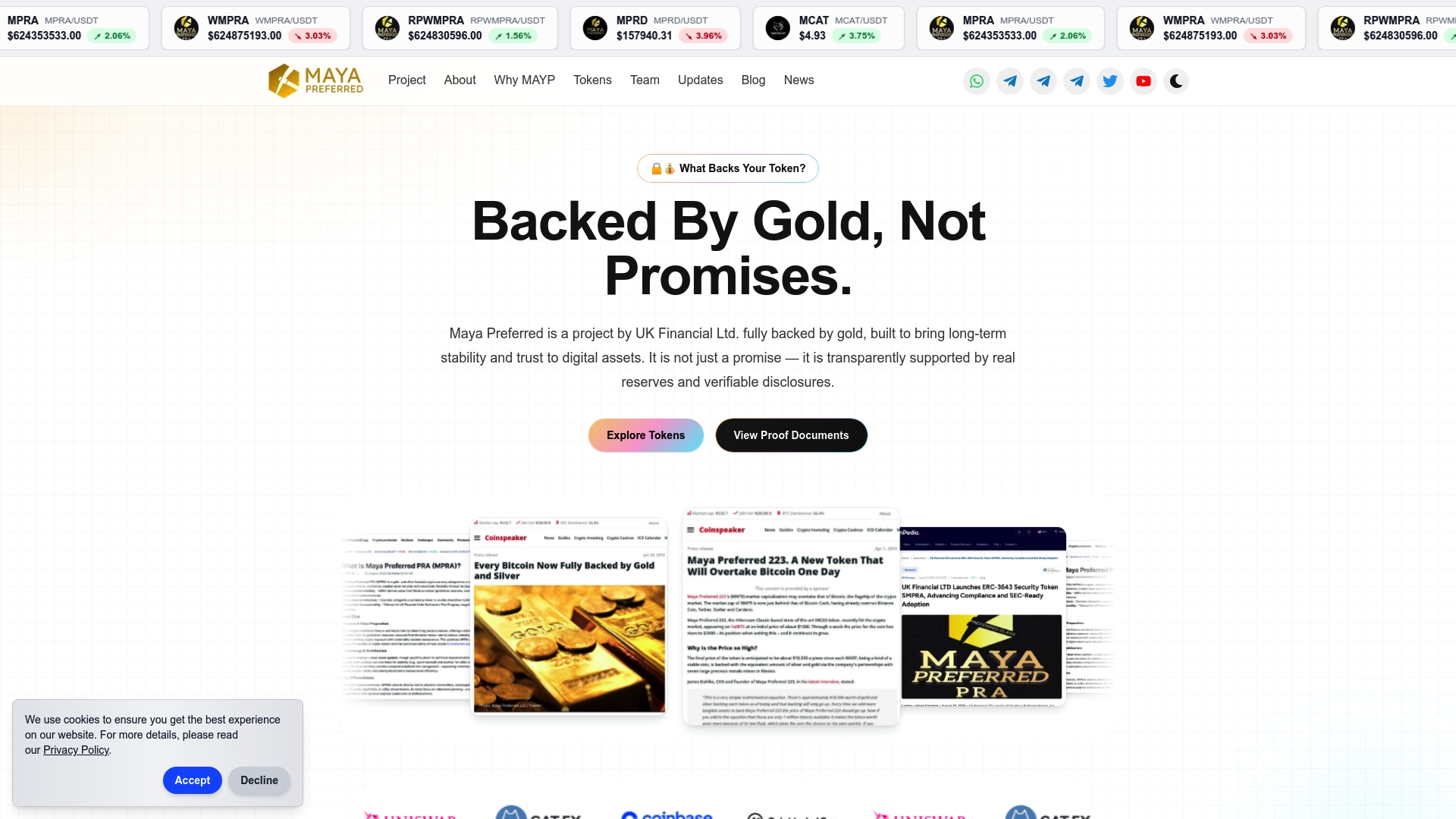
Explore our unique project that bridges traditional precious metals investment with modern blockchain technology at Maya Preferred. Dive deeper into our transparent reserve documentation and regulatory compliance updates by visiting https://mayapreferred.io today. Take the next step to safeguard your investments with trusted, gold and silver-backed digital assets now.
Frequently Asked Questions
What are asset-backed coins?
Asset-backed coins are digital tokens that represent ownership rights over real-world commodities, such as gold, real estate, or equities. They provide intrinsic value linked to tangible assets, offering investors more stability compared to traditional cryptocurrencies.
How do asset-backed coins maintain stability?
Asset-backed coins maintain stability through mechanisms like asset redeemability, supply adjustment, and minimum collateral requirements. These systems ensure that the tokens’ value aligns closely with the underlying assets, protecting against market volatility.
What types of assets back these cryptocurrencies?
Asset-backed coins can be backed by various assets, including fiat currencies, precious metals, real estate, equities, and other cryptocurrencies. Each type of asset offers different stability and risk characteristics, allowing investors to choose based on their investment strategies.
Are there risks associated with investing in asset-backed coins?
Yes, while asset-backed coins generally offer more stability, they still carry investment risks. Factors such as market volatility, regulatory compliance, and the quality of underlying assets can impact returns. Investors should conduct thorough due diligence before investing.