
Why Invest in Silver-Backed Tokens Today

Market volatility and asset protection are pressing concerns for many American and European investors exploring alternative digital investments. The emergence of silver-backed tokens delivers a direct link between cryptocurrency and physical silver ownership, introducing real-world asset security into blockchain finance. By combining fractional ownership, transparent reserve auditing, and blockchain efficiency, these innovative digital assets offer a bridge between traditional precious metals and modern technology without the complexity of managing physical silver on your own.
Table of Contents
- How Silver-Backed Tokens Work Today
- Main Types of Silver-Backed Digital Assets
- Asset Security and Blockchain Transparency
- Comparing Risks and Rewards to Other Crypto
- Investor Considerations and Regulatory Factors
Key Takeaways
| Point | Details |
|---|---|
| Investment Mechanism | Silver-backed tokens bridge traditional silver investing with cryptocurrency, offering fractional ownership and enhanced liquidity. |
| Token Types | Investors can choose between fully-backed stablecoins, algorithmic tokens, and hybrid instruments, each with unique risk and reward profiles. |
| Blockchain Security | The use of blockchain technology ensures transparency and security for transactions, reducing the risk of fraud and misrepresentation. |
| Regulatory Considerations | Investors should be aware of varying global regulations and conduct thorough due diligence on custody, compliance, and smart contract security. |
How Silver-Backed Tokens Work Today
Silver-backed tokens represent an innovative digital investment mechanism where cryptocurrency meets physical precious metal ownership. These blockchain-based digital assets create a direct bridge between traditional silver investing and modern financial technologies, enabling investors to own fractional silver interests with unprecedented transparency and accessibility.
At their core, silver-backed tokens function through a straightforward but sophisticated mechanism. Each token represents a defined quantity of physical silver, typically stored in secure, professionally managed vaults. Digital ownership of silver reserves allows investors to trade, transfer, and potentially redeem their tokens for physical silver or cash equivalents without the traditional logistical challenges of metal ownership.
The technological infrastructure behind these tokens relies on blockchain smart contracts that automate verification, trading, and redemption processes. These contracts provide critical advantages: transparent reserve auditing, instant transaction settlements, and reduced intermediary costs. Investors can verify their token’s silver backing through comprehensive digital audit trails, ensuring each token maintains direct correlation with its underlying physical silver reserve.
Tokenized silver investments offer multiple strategic advantages over traditional silver purchasing. Unlike physical silver, these tokens provide instant liquidity, fractional ownership possibilities, and lower storage/insurance expenses. Investors can quickly convert tokens to cash, trade globally 24/7, and maintain precise silver exposure without managing physical storage complexities.
Pro tip: When evaluating silver-backed tokens, always verify the custodian’s reputation, review their most recent independent vault audits, and understand the precise redemption mechanisms before investing.
Main Types of Silver-Backed Digital Assets
The landscape of silver-backed digital assets is diverse and complex, offering investors multiple approaches to gaining exposure to precious metal investments through blockchain technology. Crypto asset classifications757580_EN.pdf) reveal several distinct categories of silver-backed tokens that cater to different investor preferences and risk tolerances.
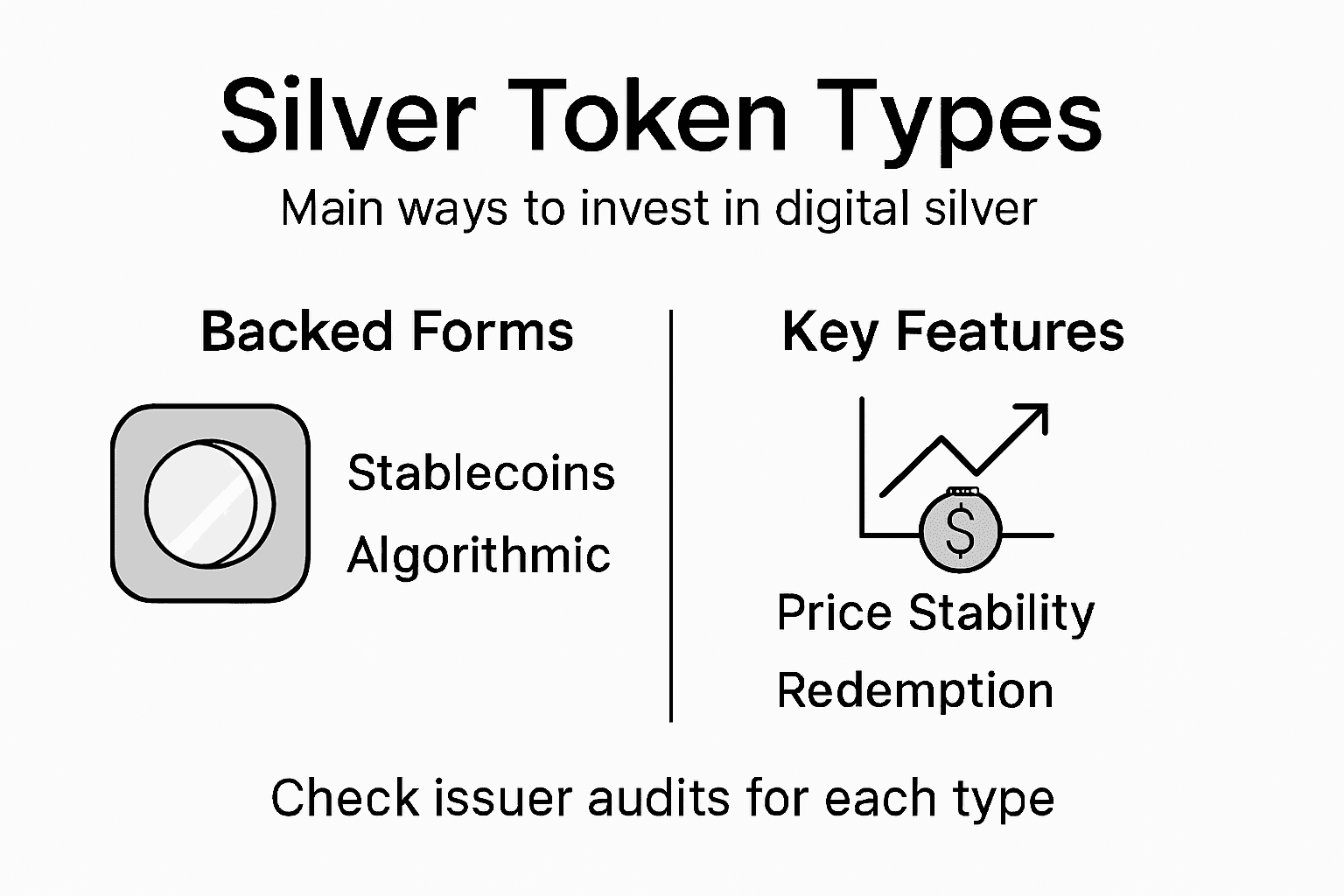
The primary categories of silver-backed digital assets include fully-backed stablecoins, algorithmic tokens, and hybrid investment instruments. Fully-backed stablecoins represent the most conservative approach, where each token is directly and comprehensively backed by physical silver reserves stored in secure vaults. These tokens provide investors with the highest level of transparency and direct asset correlation, enabling precise tracking of silver market values.
Algorithmic silver tokens represent a more complex investment mechanism. Unlike fully-backed stablecoins, these tokens use advanced mathematical algorithms to maintain price stability and silver market correlation. These digital assets dynamically adjust their supply and market mechanics to create price stability, offering a more sophisticated approach to silver-based digital investments. Hybrid tokens combine elements of both fully-backed and algorithmic models, providing flexible investment strategies that balance direct asset backing with dynamic market responsiveness.
Each silver-backed digital asset type carries unique characteristics in terms of liquidity, redemption possibilities, and regulatory compliance. Investors must carefully evaluate the underlying technological infrastructure, reserve verification processes, and legal frameworks supporting these innovative financial instruments. Understanding the nuanced differences between token types enables more informed investment decisions and effective portfolio diversification strategies.
Here’s a side-by-side comparison of digital silver asset types:
| Asset Type | Backing Method | Price Stability Mechanism | Typical Risk Level |
|---|---|---|---|
| Fully-Backed Stablecoin | 100% physical silver | Direct link to spot market | Low (direct asset tie) |
| Algorithmic Token | Algorithmic & partial asset | Market-driven supply/demand | Medium (complex controls) |
| Hybrid Instrument | Mix of asset and algorithm | Combined: partial and dynamic | Variable (blended exposure) |
Pro tip: Always conduct comprehensive due diligence by reviewing the token issuer’s most recent independent audits, understanding their precise silver reserve mechanisms, and assessing their regulatory compliance before making any investment.
Asset Security and Blockchain Transparency
Blockchain technology fundamentally transforms asset security for silver-backed digital tokens by creating an unprecedented level of transparency and verifiability. Tokenized assets on public blockchains provide investors with real-time visibility into transaction histories, ownership transfers, and asset backing, dramatically reducing the potential for fraud or misrepresentation.
The core security mechanism of blockchain technology lies in its distributed ledger system, which creates an immutable and decentralized record of all transactions. Each silver-backed token transaction is cryptographically sealed and recorded across multiple independent network nodes, making unauthorized modifications virtually impossible. This technological infrastructure ensures that every token’s provenance can be traced comprehensively, from initial minting through subsequent transfers, providing an unprecedented level of transparency that traditional asset management systems cannot match.
Smart contract technologies further enhance the security of silver-backed digital assets by automating critical verification processes. These programmable contracts enforce predefined rules about token issuance, redemption, and transfer, creating an additional layer of security beyond traditional transactional mechanisms. By embedding compliance and verification directly into the token’s technological architecture, smart contracts minimize human error and reduce the potential for unauthorized interventions or manipulative practices.
While blockchain provides robust security frameworks, investors must still exercise due diligence in evaluating the specific implementation of their chosen silver-backed tokens. Factors such as the quality of smart contract programming, the reputation of token issuers, and the comprehensiveness of reserve auditing remain critical considerations in assessing overall asset security. The transparency offered by blockchain is a powerful tool, but it must be complemented by rigorous institutional practices and ongoing regulatory compliance.
Pro tip: Always verify the smart contract code, review independent security audits, and understand the precise redemption mechanisms before investing in any blockchain-based silver token.
Comparing Risks and Rewards to Other Crypto
Silver-backed tokens represent a unique investment category that distinguishes itself from traditional cryptocurrency through enhanced stability and tangible asset foundations. Portfolio risks for cryptocurrency investments demonstrate that asset-backed tokens typically offer more predictable performance compared to speculative digital currencies like Bitcoin or Ethereum.
Unlike volatile cryptocurrencies that derive value solely from market sentiment, silver-backed tokens maintain intrinsic value through direct physical asset correlation. This fundamental difference provides investors with a more conservative digital asset option, bridging the gap between traditional precious metal investments and blockchain technologies. While standard cryptocurrencies can experience dramatic price swings based on market speculation, silver-backed tokens offer a more measured investment approach anchored to the underlying commodity’s actual market value.

Risk mitigation represents another significant advantage of silver-backed tokens. These digital assets introduce multiple layers of financial protection through physical silver reserves, comprehensive blockchain transparency, and smart contract mechanisms. Traditional cryptocurrencies expose investors to substantial market volatility and speculative risks, whereas silver-backed tokens provide a more structured investment environment with clearer value propositions. The asset-backing model reduces potential losses by creating a direct connection between token value and physical silver reserves, offering investors a more stable and predictable digital investment strategy.
Investors considering silver-backed tokens should conduct thorough comparative analyses, examining factors such as reserve verification processes, token liquidity, redemption mechanisms, and historical price stability. While these tokens generally present lower risk profiles compared to unanchored cryptocurrencies, individual token performance can vary significantly based on specific implementation strategies and market conditions. Understanding the nuanced differences between various digital asset classes enables more informed investment decisions.
Pro tip: Compare the specific reserve ratios, audit frequencies, and redemption mechanisms of different silver-backed tokens to identify the most robust and transparent investment options.
Investor Considerations and Regulatory Factors
Navigating the complex landscape of silver-backed tokens requires a comprehensive understanding of the evolving regulatory environment and critical investor safeguards. Tokenized asset investment perspectives underscore the importance of rigorous due diligence in assessing the legal and compliance frameworks surrounding these innovative digital assets.
Regulatory compliance represents a fundamental consideration for investors exploring silver-backed tokens. Different jurisdictions maintain varying approaches to digital asset regulation, creating a complex global landscape that demands meticulous investigation. Investors must evaluate key compliance elements, including anti-money laundering (AML) protocols, know-your-customer (KYC) requirements, and the specific legal frameworks governing token issuance and trading in their respective regions. The absence of standardized international regulations means that each investment requires careful, jurisdiction-specific analysis.
Custody and security mechanisms emerge as critical factors in assessing the reliability of silver-backed tokens. Professional investors should scrutinize the technical and legal infrastructure supporting these digital assets, examining the precision of reserve management, the transparency of asset verification processes, and the robustness of smart contract implementations. The quality of custody arrangements directly impacts the token’s credibility, with top-tier solutions featuring independent third-party audits, real-time reserve reporting, and comprehensive insurance protections against potential systemic risks.
The regulatory landscape for tokenized assets continues to evolve rapidly, presenting both opportunities and challenges for investors. Emerging regulatory frameworks aim to balance investor protection with technological innovation, creating a dynamic environment that requires continuous monitoring and adaptation. Sophisticated investors must remain agile, staying informed about regulatory developments across different jurisdictions and understanding how these changes might impact the valuation, liquidity, and overall investment potential of silver-backed tokens.
The following table summarizes key investor evaluation factors for silver-backed tokens:
| Area of Focus | What to Check | Why It Matters |
|---|---|---|
| Custody Protocols | Independent vault audits | Ensures silver reserves are real |
| Redemption Options | Physical vs. cash redemption | Impacts liquidity and flexibility |
| Regulatory Compliance | AML, KYC, jurisdictional oversight | Affects legal protection and recourse |
| Smart Contract Review | Security and code audits | Reduces technology and fraud risk |
Pro tip: Develop a comprehensive checklist that evaluates regulatory compliance, custody practices, and jurisdictional risks before making any investment in silver-backed digital tokens.
Secure Your Future with Transparent Silver-Backed Tokens Today
Investors seeking stability and trust in the evolving world of digital assets face the challenge of verifying authentic silver reserves and transparent custody. This article highlights the importance of understanding reserve audits, redemption mechanisms, and blockchain transparency to confidently invest in silver-backed tokens. At Maya Preferred, we focus on bridging this gap by offering blockchain tokens fully backed by real-world precious metals, supported by detailed proof documents, audits, and disclosures.
Discover the difference of investing in digital silver assets with clear reserve verification and regulatory compliance. Our platform provides not only access to asset-backed tokens like MPRA, MPRD, and MCAT but also ongoing transparency through community updates and legal filings. Build confidence in your investments by exploring our comprehensive resources and trading opportunities.
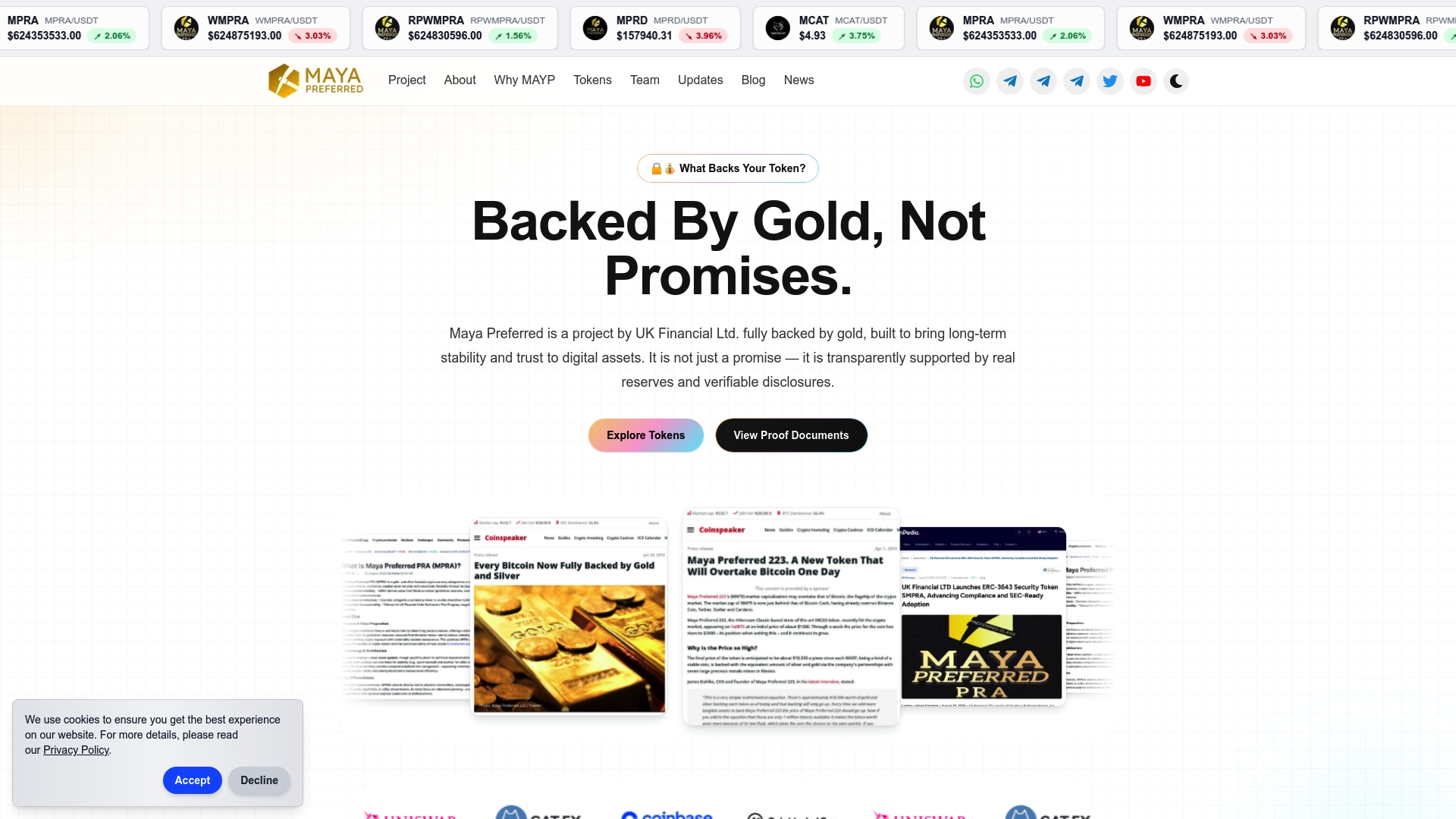
Are you ready to embrace a secure and transparent approach to silver-backed digital investments? Visit Maya Preferred now to learn more about our cutting-edge tokens and how they align with today’s market demands. Explore detailed audits and token utility on the landing page and start investing with confidence today.
Frequently Asked Questions
What are silver-backed tokens?
Silver-backed tokens are digital assets on the blockchain that represent ownership of physical silver held in secure vaults, allowing for easy trading and potential redemption for actual silver or cash equivalents.
How do silver-backed tokens ensure their value?
Each silver-backed token is directly correlated with a specific quantity of physical silver, providing intrinsic value. Smart contracts on the blockchain automate verification processes, ensuring transparency and trust in the asset backing.
What are the benefits of investing in silver-backed tokens compared to traditional silver?
Investing in silver-backed tokens offers benefits such as instant liquidity, fractional ownership, lower storage and insurance costs, and 24/7 trading capabilities, in contrast to the logistical challenges of physical silver ownership.
How do the types of silver-backed digital assets differ?
Silver-backed digital assets include fully-backed stablecoins, algorithmic tokens, and hybrid instruments. Fully-backed stablecoins are directly tied to silver, while algorithmic tokens rely on mathematical algorithms for price stability, and hybrid instruments combine features of both.