
Master Workflow for Secure Digital Asset Investment

Securing real-world value in a digital ecosystem presents unique challenges for investors seeking both growth and peace of mind. With the rise of asset-backed tokens, trust hinges on more than just innovation—it relies on rigorous due diligence, legal oversight, and transparent reporting. This overview highlights the structured blockchain due diligence process, helping you confidently evaluate, verify, and safeguard your investment choices in markets from gold to crypto, while keeping regulatory integrity front and center.
Table of Contents
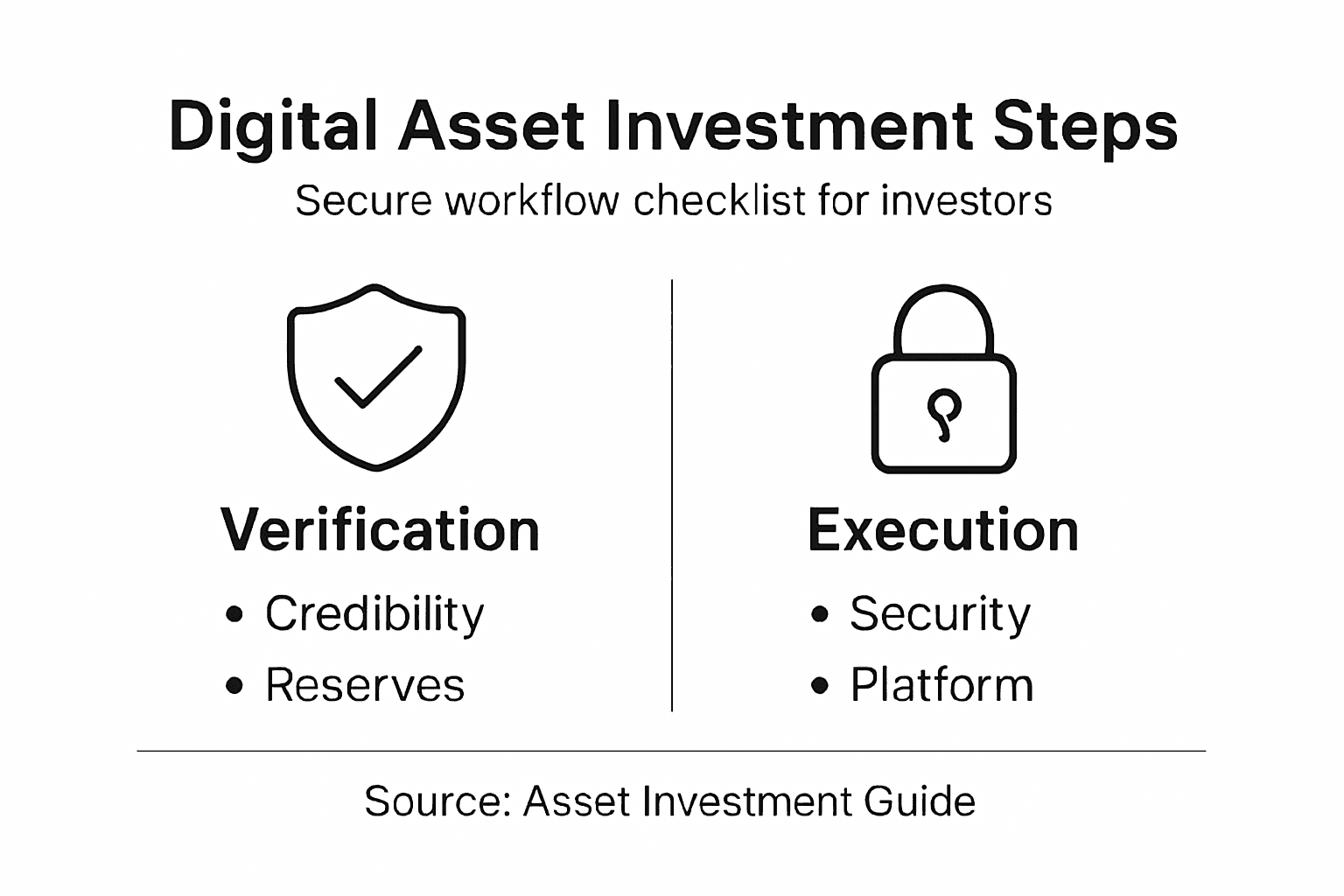
- Step 1: Assess Asset-Backed Token Credibility
- Step 2: Verify Reserves and Legal Compliance
- Step 3: Set Up Secure Trading Environment
- Step 4: Execute Investment With Trusted Platforms
- Step 5: Monitor and Audit Asset Security
Quick Summary
| Key Insight | Explanation |
|---|---|
| 1. Verify Legal Compliance | Ensure asset-backed tokens meet regulatory standards to reduce investment risks and legal issues. |
| 2. Conduct Thorough Asset Verification | Confirm the authenticity of asset backing through transparent documentation and third-party audits. |
| 3. Establish a Secure Trading Environment | Use dedicated devices and advanced security measures to protect your digital assets from threats. |
| 4. Select Reliable Investment Platforms | Choose platforms with regulatory compliance and operational transparency to safeguard transactions. |
| 5. Implement Continuous Monitoring | Regularly track transactions and conduct audits to maintain asset integrity and respond to risks quickly. |
Step 1: Assess asset-backed token credibility
Investing in digital assets requires a systematic approach to evaluating token credibility and underlying value. This step provides a comprehensive framework to scrutinize asset-backed tokens and determine their investment potential.
To effectively assess token credibility, investors must examine multiple critical dimensions. Structured blockchain due diligence involves analyzing several key factors:
- Legal Compliance: Verify regulatory adherence and jurisdictional approvals
- Technical Architecture: Evaluate blockchain infrastructure and smart contract security
- Asset Verification: Confirm authentic backing through transparent documentation
- Financial Metrics: Analyze token valuation, liquidity, and market positioning
- Governance Structure: Review management transparency and decision-making processes
Successful asset-backed token assessment requires deep research beyond surface-level claims. Investors should request and thoroughly examine:
Here’s a summary of the key dimensions affecting asset-backed token credibility:
| Dimension | Potential Risks | Investor Benefit |
|---|---|---|
| Legal Compliance | Jurisdictional uncertainty | Reduces regulatory investment risk |
| Technical Architecture | Smart contract vulnerabilities | Enhances transaction security |
| Asset Verification | Fake or misrepresented backing | Confirms tangible asset support |
| Financial Metrics | Overstated valuation or liquidity | Enables accurate asset pricing |
| Governance Structure | Poor decision-making transparency | Promotes responsible management |
- Comprehensive asset reserve documentation
- Independent third-party audits
- Detailed smart contract security assessments
- Regulatory compliance certificates
- Historical performance and market data
Credible asset-backed tokens demonstrate complete transparency, providing investors with verifiable evidence of their underlying asset reserves and operational integrity.
Pro tip: Develop a standardized checklist for evaluating digital asset tokens to maintain consistent and objective investment decision-making processes.
Step 2: Verify reserves and legal compliance
Ensuring the legitimacy of digital asset investments requires a rigorous process of verifying reserves and confirming legal compliance. This critical step protects investors from potential financial risks and regulatory complications.
Global regulatory frameworks provide essential guidelines for validating asset-backed tokens. Investors should focus on several key verification strategies:
- Documentation Review: Examine comprehensive reserve certificates
- Third-Party Audits: Request independent financial verification
- Regulatory Compliance: Check securities law adherence
- Custody Arrangements: Validate transparent asset storage mechanisms
- Legal Jurisdiction: Confirm regulatory status in relevant markets
Specific verification steps include:
- Request official reserve documentation from token issuer
- Obtain independent financial audits
- Verify regulatory registration and approvals
- Cross-reference asset claims with official records
- Analyze detailed financial disclosures
Legal and financial transparency are not optional – they are fundamental requirements for credible digital asset investments.
The Federal Reserve’s digital asset oversight highlights the importance of systematic verification to mitigate systemic financial risks. Token investors must conduct thorough due diligence to protect their investments.

Pro tip: Develop relationships with independent financial auditors who specialize in digital asset verification to streamline your compliance research process.
Step 3: Set up secure trading environment
Creating a robust and secure trading environment is fundamental to protecting your digital asset investments from potential cybersecurity threats and operational vulnerabilities. This step involves implementing multiple layers of technical and strategic safeguards to ensure a resilient investment platform.
Blockchain transaction security requires comprehensive protection strategies that go beyond traditional financial security measures. Key components of a secure trading environment include:
- Hardware Selection: Use dedicated devices for crypto transactions
- Network Protection: Implement advanced firewall and encryption protocols
- Authentication: Enable multi-factor authentication systems
- Smart Contract Verification: Conduct thorough code audits
- Operational Security: Maintain strict access control protocols
Specific implementation steps include:
- Select a reputable hardware wallet
- Configure advanced security settings
- Establish isolated trading network
- Implement robust password management
- Regularly update security infrastructure
Digital asset security is not a one-time setup but an ongoing commitment to protecting your financial investments.
The cybersecurity risk management approach emphasizes continuous monitoring and adaptive security strategies to mitigate emerging technological risks.
Pro tip: Create a dedicated, air-gapped computer exclusively for cryptocurrency transactions to minimize exposure to potential online security breaches.
Step 4: Execute investment with trusted platforms
Selecting and executing investments through reliable digital asset platforms requires careful evaluation and strategic decision-making. This critical step ensures your digital asset transactions occur within a secure and compliant ecosystem.
Platform regulatory compliance demands comprehensive assessment of the trading infrastructure. Investors should prioritize platforms that demonstrate robust operational standards:
- Regulatory Licensing: Verify official financial market registrations
- Operational Transparency: Confirm detailed transaction reporting mechanisms
- Security Infrastructure: Assess technological protection frameworks
- Custody Services: Evaluate asset storage and management protocols
- Compliance Documentation: Review comprehensive legal disclosures
Specific platform selection steps include:
- Research platform regulatory status
- Analyze historical transaction performance
- Test platform user interface
- Review fee structures
- Validate cybersecurity measures
Trusted platforms are not just transaction conduits – they are critical guardians of your financial investments.
The tokenized asset investment landscape emphasizes the importance of selecting platforms that align with international regulatory standards and provide comprehensive investor protections.
Pro tip: Maintain a spreadsheet tracking platform performance metrics and compliance credentials to streamline your due diligence process.
Step 5: Monitor and audit asset security
Continuous monitoring and strategic auditing are critical for maintaining the integrity and performance of your digital asset investments. This step helps you proactively protect your financial interests by establishing robust oversight mechanisms.
Digital asset risk assessment requires comprehensive tracking and transparent evaluation strategies. Investors should implement systematic monitoring approaches that cover multiple dimensions:
- Transaction Tracking: Log and analyze all asset movements
- Performance Metrics: Monitor token value and market trends
- Compliance Verification: Check ongoing regulatory adherence
- Security Assessments: Regularly evaluate technological vulnerabilities
- Financial Reporting: Review detailed asset documentation
Specific monitoring steps include:
Use this reference table to understand common monitoring tools for digital asset security:
| Monitoring Tool | Function | Investment Impact |
|---|---|---|
| Transaction Alerts | Real-time movement tracking | Immediate fraud detection |
| Performance Dashboard | Automated value monitoring | Optimizes asset management |
| Cybersecurity Scan | Continuous vulnerability checks | Prevents unauthorized access |
| Quarterly Audit | Comprehensive process reviews | Ensures ongoing compliance |
- Set up real-time transaction alerts
- Establish quarterly comprehensive audits
- Create automated performance dashboards
- Configure cybersecurity monitoring tools
- Develop detailed reporting templates
Consistent monitoring transforms passive investment into an actively managed financial strategy.
The blockchain monitoring capabilities demonstrate how technology enables unprecedented transparency and real-time oversight of digital asset investments.
Pro tip: Develop a standardized monthly review checklist to ensure consistent and thorough asset security monitoring.
Strengthen Your Digital Asset Investments with Proven Gold and Silver Backing
Navigating the complex workflow for secure digital asset investment involves challenges like verifying asset credibility, ensuring legal compliance, and maintaining rigorous security. This article highlights the importance of transparent reserve verification, continuous auditing, and trusted trading platforms to protect your investments and build confidence.
At Maya Preferred, we address these exact pain points by offering blockchain-based tokens backed by real-world gold and silver reserves. Our commitment to full transparency with detailed audits, legal disclosures, and up-to-date regulatory compliance creates the trustworthy environment every investor seeks. Discover how our asset-backed cryptocurrencies like MPRA, MPRD, and MCAT integrate real tangible assets with blockchain technology to meet your investment goals.
Take the leap toward a more secure and transparent investment strategy. Visit Maya Preferred today, explore our detailed asset documentation, and join a community dedicated to bridging precious metals with modern digital finance.
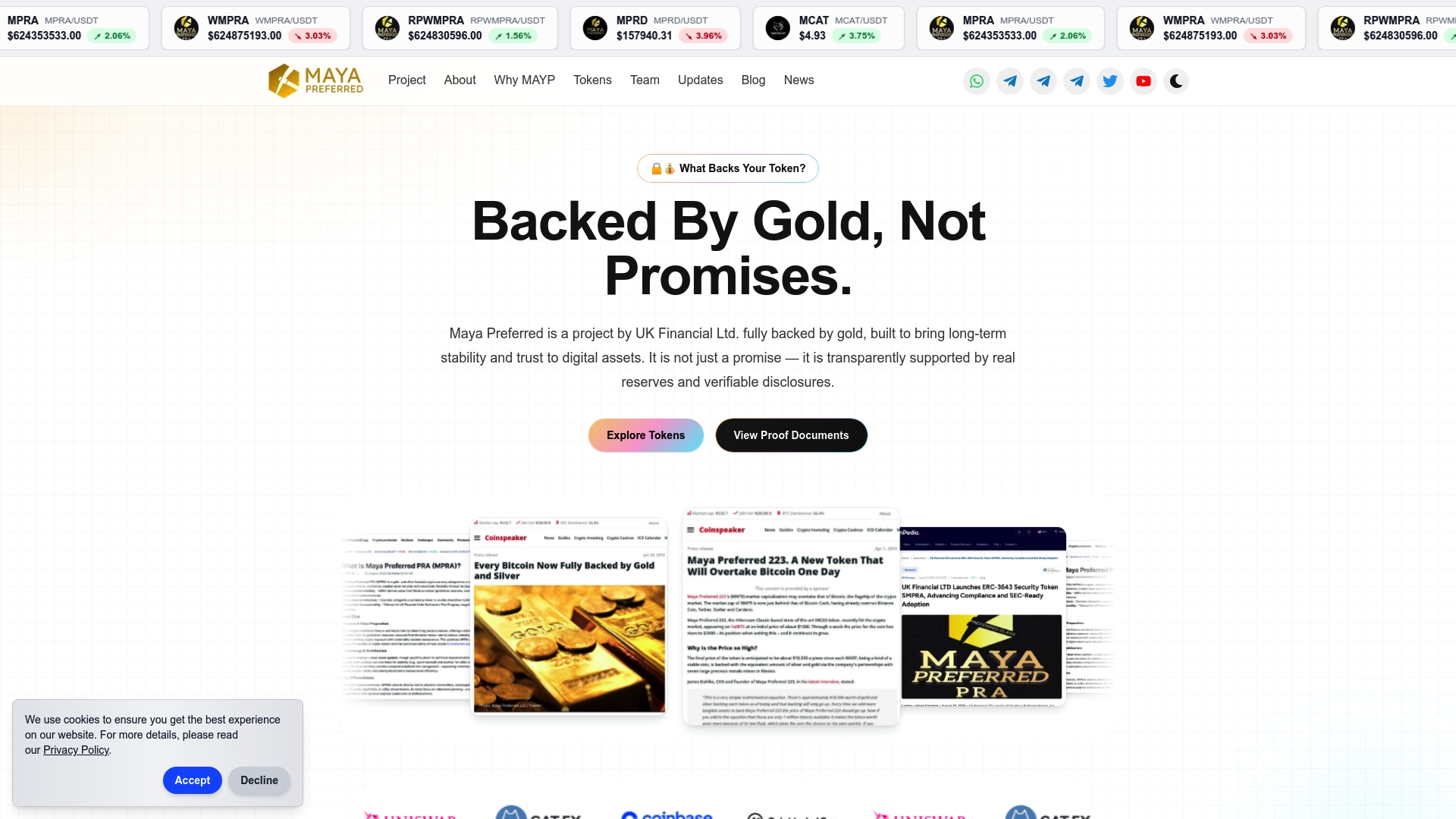
Ready to invest with confidence that goes beyond promises? Start your journey now by exploring the full scope of our transparency initiatives, audit proofs, and secure digital asset solutions at Maya Preferred. Secure your future with trustworthy, asset-backed digital investments confirmed by real gold and silver reserves.
Frequently Asked Questions
How can I assess the credibility of an asset-backed token?
To assess the credibility of an asset-backed token, analyze its legal compliance, technical architecture, asset verification, financial metrics, and governance structure. Start by reviewing documentation and conducting thorough research to ensure the token is backed by legitimate assets.
What steps should I follow to verify the reserves and legal compliance of a digital asset?
Begin by examining the reserve documentation provided by the token issuer and request independent financial audits. Also, confirm their compliance with relevant regulations to protect your investment from potential risks.
How can I create a secure trading environment for digital asset investments?
To create a secure trading environment, implement hardware wallets, ensure network protection with advanced security measures, and enable multi-factor authentication. Take action by regularly updating your security settings and monitoring potential vulnerabilities to safeguard your assets.
What are the key features to look for in a reliable digital asset trading platform?
When evaluating a trading platform, verify its regulatory licensing, assess its security infrastructure, and confirm operational transparency. Research the platform’s historical performance and user reviews to ensure a safe investment experience.
How can I effectively monitor and audit my digital asset security?
Establish a robust monitoring system that includes real-time transaction tracking, quarterly audits, and performance dashboards. Set specific metrics and action items to review your asset performance regularly and adjust your investment strategy as needed.
Recommended
- Maya Preferred – Backed By Gold, Not Promises
- UK Financial Ltd Executes Compliance Tasks Ahead Of First-Ever ERC-3643 Exchange-Traded Token, SMCAT & Sets Date For Online Investor Governance Vote | Maya Preferred
- Maya Preferred – Backed By Gold, Not Promises
- Maya Preferred – Backed By Gold, Not Promises